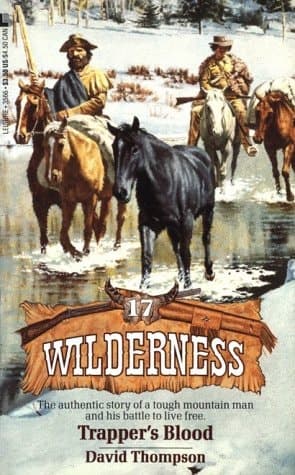
Trapper's Blood
David ThompsonPublished1994
Pages168
Formatpaperback
PublisherDorchester Publishing Company, Incorporated
Synopsis
In the wild Rockies, a man had to act as judge, jury, and executioner against his enemies. Only strong mountain men like Nathaniel King could outfight the savage Indians and bloodthirsty renegades roaming the unexplored territory. And when trappers started turning up dead, their bodies horribly mutilated, Nate and his friends vowed to hunt down the ruthless killers. Taking the law into their own hands, they soon found that one hasty decision could make them as guilty as the murderers they wanted to stop.
Recommendations
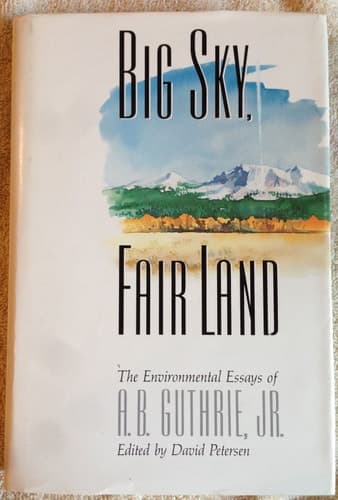
Big Sky, Fair Land: The Environmental Essays of A. B. Guthrie, Jr.
by Alfred Bertram, Jr. Guthrie
Guthrie captures that same frontier lawlessness you loved in Trapper's Blood, but he's writing from the 1940s with a novelist's attention to character psychology rather than action beats. His trappers face the same moral ambiguity—how civilization corrupts the wilderness and the men in it—but the prose lingers on what that corruption costs them internally, making their violence feel consequential rather than justified.
View book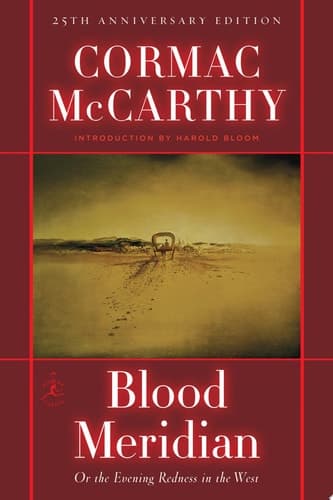
Blood Meridian, Or, The Evening Redness in the West
by Cormac McCarthy
McCarthy takes the frontier violence you enjoyed and strips away the heroism entirely—his scalp hunters are brutal, amoral, and the landscape itself becomes a character that judges them. Where Thompson's Nate King wrestles with doing the right thing in a lawless land, McCarthy's protagonists are caught in something closer to biblical reckoning, making every act of violence feel weighted with consequence rather than adventure.
View book
The Brothers and Sisters Learn to Write Popular Literacies in Childhood and School Cultures
by Anne Haas Dyson
This is your surprise pick—it's a literary western that reads like a character study of two hitmen rather than a traditional adventure. DeWitt writes with dark humor about men trying to survive by violence, but he's interested in their loneliness and the way killing hardens you from the inside. The relationship between the brothers gives emotional weight to the bloodshed in ways that feel earned rather than melodramatic.
View book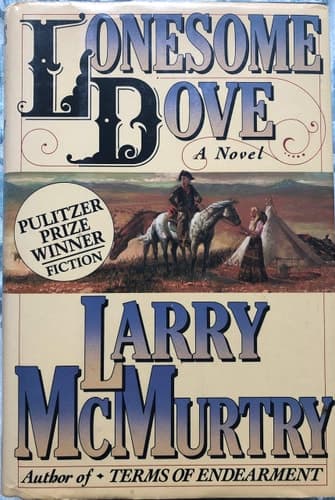
Lonesome Dove A Novel
by Larry McMurtry
McMurtry builds an entire world of flawed men trying to impose order on chaos, much like Thompson does, but he takes his time letting you understand why these men make the choices they do. The cattle drive becomes a crucible where past sins catch up with everyone, and the violence—when it comes—feels like the inevitable result of character rather than plot convenience.
View book
Blood Covenant The Michael Franzese Story
by Michael Franzese
Punke grounds his survival narrative in obsession and revenge the way Thompson explores justice taken into one's own hands, but he's working from historical records that make the brutality feel documentary-real. His Hugh Glass is driven by a single-minded need for vengeance that forces you to question whether survival and revenge are worth the cost—a question that haunts the entire narrative.
View bookAbout David Thompson
Biography coming soon.
View author page