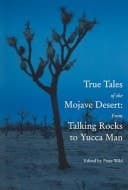
True Tales of the Mojave: From Talking Rocks to Yucca Man
Peter WildPublished2005
Pages250
Formatpaperback
PublisherCenter for American Places
Synopsis
Burnished copper mesas, pricked cacti, and hunched Joshua trees in the Mojave Desert stand as timeless witnesses to the evolution of the Western landscape, once the territory of ancient native tribes and now a high speed transportation corridor linking the sleek metropolises of Los Angeles and Las Vegas. Rising from the Mojave sands along with those more familiar physical elements are fifty-five narratives gathered here by Peter Wild that chronicle the evolving character and landscape of a legendary region of the American West.
True Tales of the Mojave is the first literary anthology to explore the place of the Mojave Desert, both past and present, in the American imagination. Wild provides engaging readings—ranging chronologically from prehistoric origin myths of native people to contemporary literature—that will delight readers drawn to the rich lore of the Mojave. The volume also captures the alien yet arresting beauty of the desert with a thirty-two-page galley of black-and-white illustrations and photographs featuring the people and places of the Mojave. True Tales of the Mojave unearths evocative writings that plumb the depths of this mythic desert of the American West.
Recommendations
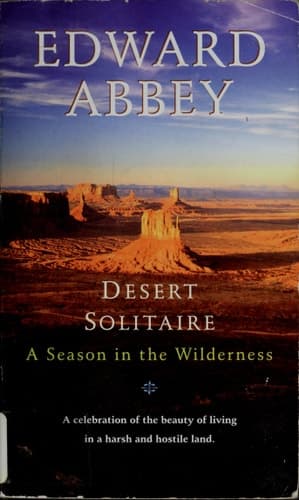
Desert Solitaire A Season in the Wilderness
by Edward Abbey
Abbey's lyrical essays about the American Southwest share Wild's reverence for desert landscapes, but where Wild gathers multiple voices across time, Abbey gives you one passionate, cantankerous guide wrestling with how to preserve wild places in an increasingly developed West. You'll recognize the same tension between the Mojave's mythic past and its modern transformation, but filtered through Abbey's fierce, sometimes angry love letter to the land.
View book
The Moviegoer
by Walker Percy
This is my curveball for you—a philosophical novel rather than landscape writing—but Percy's protagonist is obsessed with how stories shape our understanding of place and identity, which is exactly what Wild's anthology does with the Mojave. Where Wild shows you how the desert has been imagined across centuries, Percy explores how a single person constructs meaning from the narratives around them. It's introspective where Wild is expansive, but both books ask: what does a place *mean* to us?
View book![Cover of [The works ] ; The works of Mark Twain. 2. Roughing it](/_next/image?url=https%3A%2F%2Fcovers.whatshouldireadnext.com%2Feditions%2F9780520024786%2Flg.jpg&w=3840&q=75)
[The works ] ; The works of Mark Twain. 2. Roughing it
by Mark Twain
Published in 1872, Twain's memoir of his journey through the Nevada and California deserts gives you the historical depth Wild's anthology reaches for, but in one irreverent, hilarious voice. Where Wild presents fifty-five different perspectives on the Mojave, Twain offers a single traveler's eye for the absurd—the exaggerated tall tales, the failed mining schemes, the collision between Eastern expectations and Western reality. It's a different era's take on the same mythmaking impulse.
View book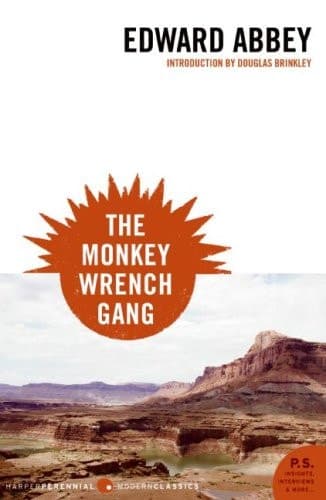
The Monkey Wrench Gang
by Edward Abbey
I know I'm recommending Abbey twice, but this novel (rather than essay collection) lets you see the Mojave and Southwest as a living character in a story about people willing to fight for it. Where Wild's anthology is contemplative and historical, this is urgent and fictional—but it's driven by the same deep knowledge of how the desert's identity is being erased by development. It's what happens when you stop documenting the Mojave's mythology and start fighting for its survival.
View bookAbout Peter Wild
Biography coming soon.
View author page