Synopsis
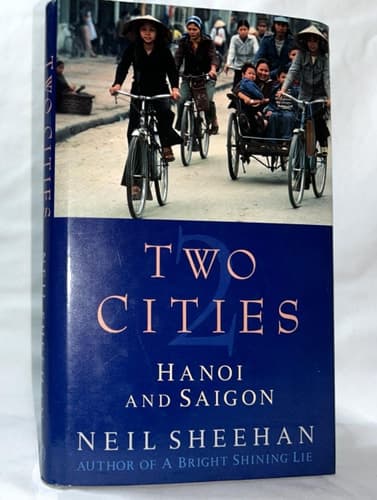
In 1989, nearly 15 years after the end of the Vietnam War, the author returned to Vietnam. This book is an account of that trip. Visiting Hanoi for the first time, he talks to the soldiers and politicians who won the war and catalogues the fruits of a continuing American trade embargo; crumbling hotels and govemment buildings, vestiges of the city's French colonial past; a ragged economy, and omnipresent shabbiness and squalor. In Saigon he is deluged with memories as he tracks down former acquaintances, ponders the transition from American-fed boomtown to vanquished backwater, and tries to piece together how people who fought for the South have fared under the rule of their former enemies. Filled with insight, emotion and brilliant reportage, this book is a shattering portrait of a country still reeling from the effects of American intervention.
Recommendations
Generating recommendations…
Our AI is preparing recommendations for Two Cities: Hanoi And Saigon. This usually takes under a minute.
About Neil Sheehan
N
Neil Sheehan
Born 1936
Cornelius Mahoney "Neil" Sheehan (born October 27, 1936) is an American journalist. As a reporter for The New York Times in 1971, Sheehan obtained the classified Pentagon Papers from Daniel Ellsberg. His series of articles revealed a secret United States Department of Defense history of the Vietnam War and led to a US Supreme Court case, *New York Times Co. v. United States*, 403 U.S. 713 (1971), when the United States government failed to halt publication. He received a Pulitzer Prize and a National Book Award for his 1988 book *A Bright Shining Lie*, about the life of Lieutenant Colonel John Paul Vann and the United States involvement in the Vietnam War. **Source**: [Neil Sheehan](https://en.wikipedia.org/wiki/Neil_Sheehan) on Wikipedia.
View author page