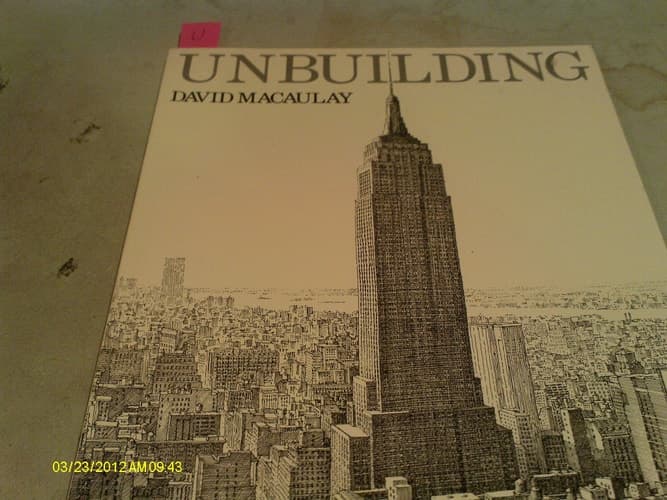
Synopsis
"It is not a work of nonfiction but a work of fantasy, and not the story of the making of the skyscraper but the story of the unmaking of a very particular one, the Empire State Building . . . The exquisite drawing style that marked Mr. Macaulay's earlier works on architecture remains as whimsical as ever." -- New York Times Book Review
Recommendations
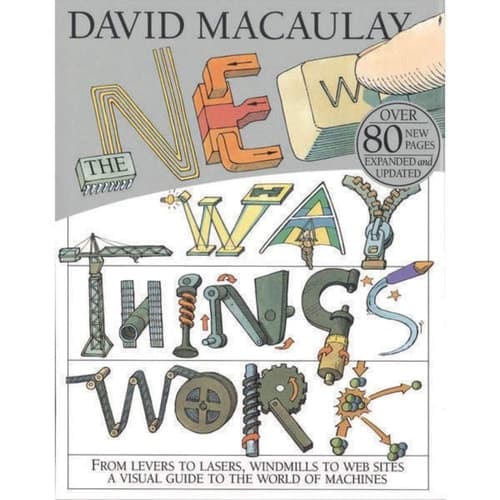
The New Way Things Work
by David Macaulay
Wait—I know you just finished Macaulay, but hear me out. If you loved the architectural deconstruction in *Unbuilding*, his exploration of mechanical systems uses that same playful, meticulous illustration style to show you how everyday objects actually function. It's the same intellectual curiosity about how things are put together, just applied to pulleys and levers instead of skyscrapers.
View book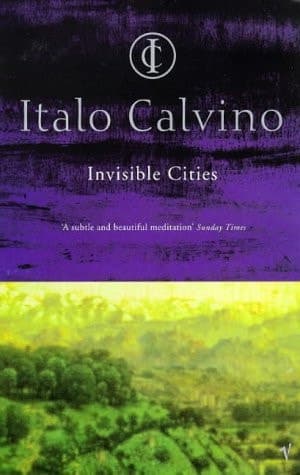
Invisible Cities
by Italo Calvino
Calvino does something similar to what Macaulay does with the Empire State Building—he takes the idea of a city and deconstructs it into its essential, imaginative components. But instead of drawings, he uses prose poetry to describe impossible cities that somehow feel more real than actual ones. It's architectural thinking applied to language itself, and it has that same sense of playful precision.
View book
The Phantom Tollbooth
by Norton Juster
Juster pairs witty, intricate illustrations with a story that treats abstract concepts—like the Kingdoms of Wisdom and the Mountains of Ignorance—as actual places you can visit and navigate. Like *Unbuilding*, it takes something you might think is boring (in this case, learning itself) and makes it a grand, illustrated adventure with real stakes and surprising emotional depth.
View book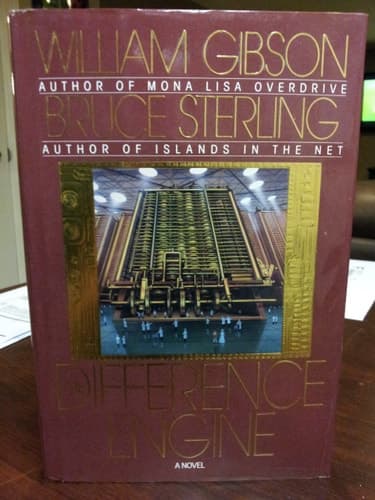
The Difference Engine
by William Gibson
This is your "surprise" pick—it's a steampunk alternate history rather than architecture-focused, but it shares *Unbuilding*'s obsession with how complex systems actually work and what happens when you change one piece. Gibson and Sterling build an entire Victorian world around a different technological history, the way Macaulay builds narrative around a single building's deconstruction. Both are exercises in rigorous, imaginative engineering.
View book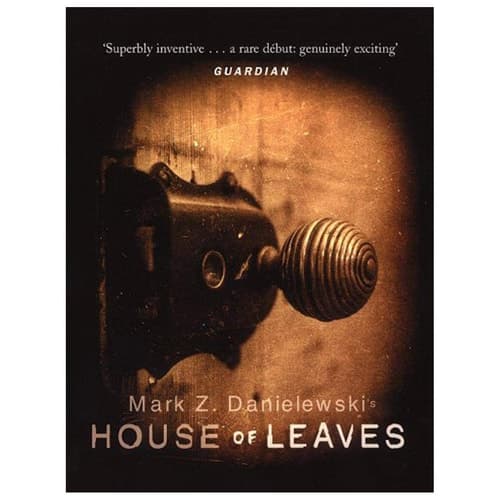
Mark Z. Danielewski's House of Leaves
by Mark Z. Danielewski
Here's a book that's essentially *Unbuilding* inverted and made genuinely unsettling—it's about a house that's larger on the inside than the outside, and the narrative itself deconstructs as you read it, with footnotes, multiple typefaces, and architectural diagrams that become increasingly disorienting. Danielewski shares Macaulay's fascination with how buildings contain and reveal meaning, but he uses that idea to create something that feels like reading a building rather than a book.
View bookAbout David Macaulay
D
David Macaulay
Born 1946
David Macaulay (born 2 December 1946) is a British-born American illustrator and writer. His works include Cathedral (1973), The Way Things Work (1988) and The New Way Things Work (1998). His illustrations have been featured in nonfiction books combining text and illustrations explaining architecture, design and engineering, and he has written a number of children's fiction books. Macaulay was a 2006 recipient of a MacArthur Fellows Program award and received the Caldecott Medal in 1991 for Black and White (1990). https://en.wikipedia.org/wiki/David_Macaulay
View author page