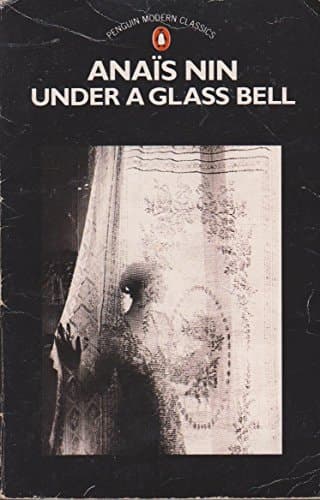
Synopsis
"Under a Glass Bell" is one of Nin's finest collections of stories. First published in 1944, it attracted the attention of Edmond Wilson, who reviewed the collection in "The New Yorker." It was in these stories that Nin's artistic and emotional vision took shape. This edition includes a highly informative and insightful foreword by Gunther Stuhlmann that places the collection in its historical context as well as illuminates the sequence of events and persons recorded in the diary that served as its inspiration.
Although Under a Glass Bell is now considered one of Anais Nin s finest collections of stories, it was initially deemed unpublishable. Refusing to give up on her vision, in 1944 Nin founded her own press and brought out the first edition, illustrated with striking black-and-white engravings by her husband, Hugh Guiler. Shortly thereafter, it caught the attention of literary critic Edmund Wilson, who reviewed the collection in the New Yorker. The first printing sold out in three weeks.
This new Swallow Press edition includes an introduction by noted modernist scholar Elizabeth Podnieks, as well as editor Gunther Stuhlmann s erudite but controversial foreword to the 1995 edition. Together, they place the collection in its historical context and sort out the individuals and events recorded in the diary that served as its inspiration. The new Swallow Press edition also restores the thirteen stories to the order Nin specified for the first commercial edition in 1948."
Recommendations
Relations Ethics and the Modernist Subject in James Joyce's Ulysses, Virginia Woolf's The Waves, and Djuna Barnes's Nightwood
by AnnKatrin Jonsson
Barnes shares Nin's gift for rendering the interior emotional landscape through dreamlike, fragmented prose—but where Nin's stories feel intimate and confessional, Nightwood is denser, more baroque, almost hallucinatory. Both writers were modernist contemporaries working outside mainstream publishing, and both use narrative disruption as a form of emotional honesty rather than mere stylistic flourish.
View book
The Savage Detectives A Novel
by Roberto Bolaño
This is the surprise pick: it's a sprawling, unconventional novel rather than short stories, and it's from 1998 rather than the 1940s. But Bolaño captures something essential that Nin understood—how obsession and artistic vision can reshape reality itself. The novel's nested narratives and diary-like passages echo Nin's blending of lived experience with artistic transformation, though Bolaño's tone is wilder, more chaotic, almost manic where Nin is controlled.
View book
Virginia Woolf: The Waves
by Eric Warner
Woolf's experimental approach to consciousness—where six characters' interior monologues flow together like waves—shares Nin's fascination with capturing the texture of thought and feeling rather than plot. Both writers dissolve the boundary between self and world; reading Woolf after Nin, you'll notice how they're both reaching for the same ineffable quality of lived experience, though Woolf's method is more formally radical.
View book
Die Wiederkehr der Zeichen: Eine psychoanalytische Studie zu Knut Hamsuns «Hunger» (Texte und Untersuchungen zur Germanistik und Skandinavistik) (German Edition)
by Thomas Fechner-Smarsly
Hamsun's 1890 novel predates Nin by decades, but it's the spiritual ancestor of her psychological intensity. Both works track the minute fluctuations of consciousness—hunger, desire, shame, creative impulse—with almost clinical precision. Where Nin's stories often shimmer with sensuality and dream-logic, Hamsun's narrator is more brutally self-aware, but both writers refuse to sentimentalize their characters' inner lives.
View book
The Book of Disquiet
by Fernando Pessoa
Pessoa's fragmented, aphoristic meditation on existence—written as diary entries and philosophical fragments—mirrors the way Nin's stories blur the line between autobiography and invention. Both writers understood that the self is multiple and unstable; Pessoa explores this through his heteronyms and philosophical musings, while Nin does it through narrative, but they're both after the same elusive truth about identity and artistic creation.
View bookAbout Anaïs Nin
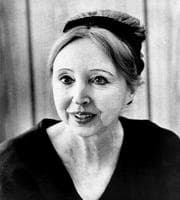
Anaïs Nin is known internationally for her diary, eleven volumes of which have been published. The 35,000 handwritten pages of her journals are currently located in the UCLA library. She was born in Paris to Cuban parents, and spent her early years in Cuba and Spain. Her young adulthood was spent in Paris and she and her husband, Hugo Guiler, moved to the United States in 1939 to avoid World War II. After meeting Rupert Pole in 1947 she engaged in a "bicoastal trapeze" living with him in Los Angeles as a married couple and maintaining her marriage with Guiler in New York. She died of cervical cancer in 1977.
View author page