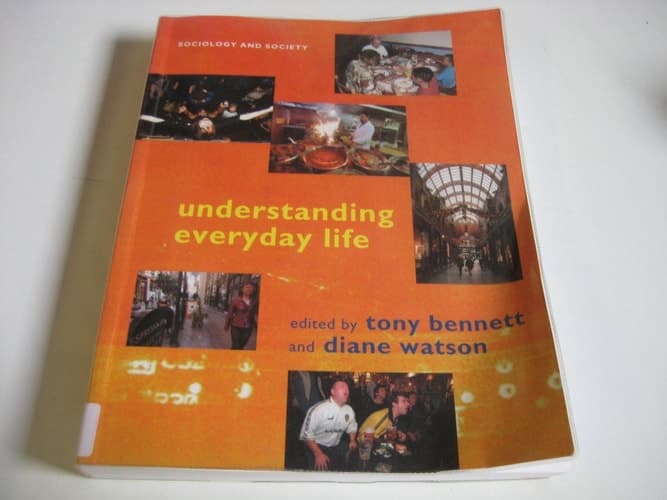
Synopsis
By focusing on familiar sites and scenes – the home, the pub, the street – this text introduces students to contemporary debates about the social organisation of everyday life.
• Introduces debates about the sociology of everyday life in an accessible, student-friendly manner.
• Covers major topics in the sociology of daily life from the private sphere through to work, consumption and the community.
• Shows how the perspectives of sociology, cultural studies and feminism can shed new light on everyday life.
• Employs a wide range of richly-worked examples to illustrate the debates.
• Forms part of a four-book series on sociology and society.
For more information about this book and the Sociology & Society series, visit the accompanying website at
Recommendations
The Social Life of Things Commodities in Cultural Perspective
by Arjun Appadurai
Where Bennett uses the pub and home as entry points to understanding social organization, Appadurai takes everyday objects—a gift, a commodity, a souvenir—and traces how their *meanings* shift depending on context and culture. You'll find the same sociological curiosity about how ordinary things structure our lives, but filtered through material culture rather than physical spaces.
View book
The Presentation of Self in Everyday Life
by Erving Goffman
This is the foundational text that Bennett builds on, but reading it after Bennett actually works better—you'll recognize his references and see how Goffman's dramaturgical approach (life as performance) illuminates those familiar scenes you just explored. It's from 1959, so you'll see how contemporary debates about everyday life have evolved since then.
View book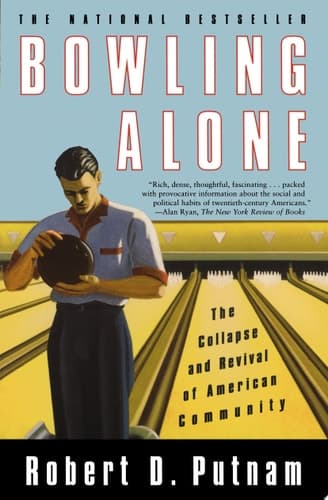
Bowling Alone The Collapse and Revival of American Community
by Robert D. Putnam
Putnam takes Bennett's interest in community spaces—those pubs and streets—and asks what happens when they disappear. His data-driven argument about declining civic participation reads almost like a detective story, and he's genuinely concerned with how ordinary people actually spend their time, which is exactly Bennett's preoccupation.
View book
The Argonauts
by Aleister Crowley
This is the surprise one: it's a genre-bending meditation on family, gender, and domesticity that reads part theory, part memoir, part art history. Nelson does what Bennett does—makes the intimate and everyday philosophically rich—but through a much more personal, lyrical lens. If you appreciated how feminism reshapes our understanding of home and daily life in Bennett, Nelson takes that insight and makes it visceral and strange.
View book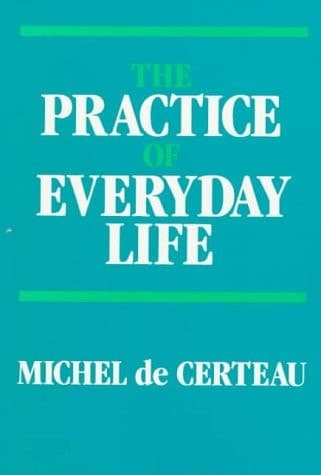
The Practice of Everyday Life
by Michel de Certeau
De Certeau is obsessed with how ordinary people *use* spaces and systems—how someone navigates a city, reads a text, cooks a meal—and finds creativity and resistance in these mundane acts. It's denser than Bennett, but it's the natural next step if you want to deepen your understanding of how everyday practices actually work, not just how spaces are organized.
View bookAbout Tony Bennett
Biography coming soon.
View author page