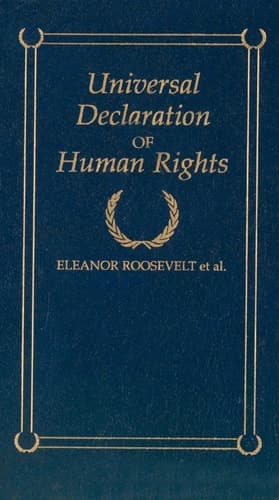
Universal Declaration of Human Rights
Eleanor RooseveltPublished2001
Pages32
Formathardcover
PublisherApplewood Books
Synopsis
The United Nations General Assembly adopted the Universal Declaration of Human Rights on December 10, 1948 in the midst of an especially bitter phase of the Cold War. Many people contributed to this remarkable achievement, but most observers believe that the UN Commission on Human Rights, which drafted the Declaration, would not have succeeded in reaching agreement without the leadership of the Commissionʹs chair: Eleanor Roosevelt. ER herself regarded her role in drafting and securing adoption of the Declaration as her greatest achievement. As she readily admitted, she had no legal training or expert knowledge of parliamentary procedure, but she brought to her job as chair the skills she had acquired as political activist, reformer, and advocate for those excluded from power and an understanding of the meaning of freedom earned through a deep engagement in the struggle in her own country for social and economic justice, civil rights, and womenʹs rights. She possessed not only a passionate commitment to human rights, but a hard-earned knowledge of the political and cultural obstacles to securing them in a divided world. -- from (Nov. 20, 2015).
Recommendations
Generating recommendations…
Our AI is preparing recommendations for Universal Declaration of Human Rights. This usually takes under a minute.
About Eleanor Roosevelt
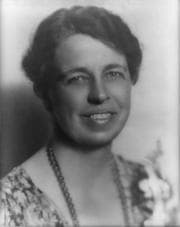
Eleanor Roosevelt
1884–1962
First Lady of the United States from 1933 to 1945. She supported the New Deal policies of her husband, [Franklin Delano Roosevelt][1], and became an advocate for civil rights [1]: /authors/OL26478A
View author page