Synopsis
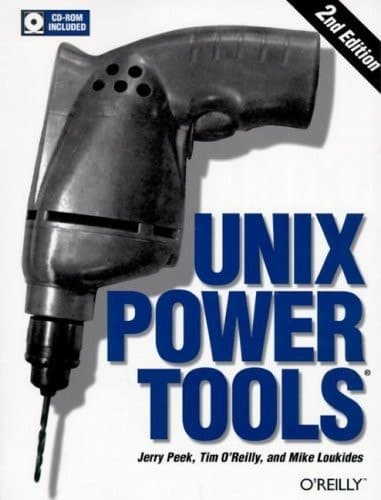
Ideal for UNIX users who hunger for technical -- yet accessible -- information,UNIX Power Tools, 2nd Edition, consists of tips, tricks, concepts, and freeware (CD-ROM included). It also covers add-on utilities and how to take advantage of clever features in the most popular UNIX utilities.Loaded with even more practical advice about almost every aspect of UNIX, this edition addresses the technology that UNIX users face today, differing from the first edition in a number of important ways.First, it slants the blend of options and commands more toward the POSIX utilities, including the GNU versions; the bash and tcsh shells have greater coverage, but we've kept the first edition's emphasis on the core concepts of sh and csh that will help you use all UNIX shells; and, Perl is more important than awk these days, so we've de-emphasizedawk in this edition.This is a browser's book...like a magazine that you don't read from start to finish, but leaf through repeatedly until you realize that you've read it all. The book is structured so that it bursts at the seams with cross references. Interesting "sidebars" explore syntax or point out other directions for exploration, including relevant technical details that might not be immediately apparent. You'll find articles abstracted from other O'Reilly books, new information that highlights program "tricks" and "gotchas," tips posted to the Net over the years, and other accumulated wisdom.The 53 chapters in this book discuss topics like file management, text editors, shell programming -- even office automation. Overall, there's plenty of material here to satisfy even the most voracious appetites. The bottom line? UNIX Power Tools is loaded with practical advice about almost every aspect of UNIX. It will help you think creatively about UNIX, and will help you get to the point where you can analyze your own problems. Your own solutions won't be far behind.The CD-ROM includes all of the scripts and aliases from the book, plusperl, GNU emacs, netpbm (graphics manipulation utilities),ispell,screen, the sc spreadsheet, and about 60 other freeware programs. In addition to the source code, all the software is precompiled for Sun4, Digital UNIX, IBM AIX, HP/UX, Red Hat Linux, Solaris, and SCO UNIX.
Recommendations
The Scheme Programming Language, ANSI Scheme
by R. Kent Dybvig
Since you've just absorbed Peek's philosophy that UNIX is about composing small, powerful tools into elegant solutions, this book takes that exact mindset and applies it deeply to one tool. Aho co-created AWK, and he writes with the clarity of someone explaining not just syntax but the *thinking* behind why this particular language exists—you'll recognize the same practical problem-solving ethos that made PowerTools click for you.
View book
Programming Ruby The Pragmatic Programmers' Guide
by David Thomas
This book takes the scattered wisdom you've been collecting from PowerTools and organizes it into a coherent philosophy of how to *think* like a craftsperson in software. Rather than tips and tricks, it's about the mindset behind them—why certain approaches scale, how to debug your own thinking, and how to build tools that solve real problems. It's PowerTools' philosophical cousin.
View book
The UNIX Philosophy
by Mike Gancarz
You've been *using* the Unix philosophy throughout PowerTools without necessarily seeing it articulated as a coherent set of principles. Gancarz distills the actual design philosophy that created the tools you've been learning—small, composable, focused programs that do one thing well. It's the conceptual scaffolding that makes all those tips and tricks actually *cohere* into something beautiful.
View book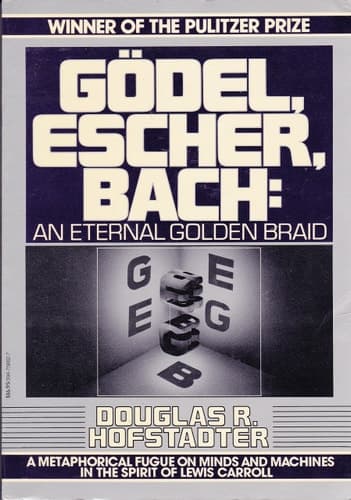
Gödel, Escher, Bach: An Eternal Golden Braid
by Douglas Hofstadter
Here's the surprise: Hofstadter explores recursive patterns, self-reference, and emergent complexity through music, art, and mathematics in ways that will fundamentally change how you think about the layered abstractions you've been navigating in UNIX. The book mirrors how shell scripts call other scripts, how systems nest within systems—it's not about computers, but it'll rewire how you understand them. Published in 1979, it's from a different era entirely, yet feels prophetic about computational thinking.
View book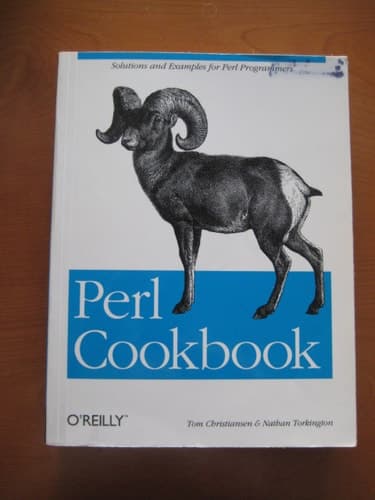
Perl Cookbook: Tips and Tricks for Perl Programmers
by Tom Christiansen
Since PowerTools emphasizes that Perl has become more important than AWK in modern UNIX work, this book gives you exactly what you loved about PowerTools—practical, immediately-applicable solutions to real problems—but focused entirely on Perl. Christiansen writes in the same "here's what you actually need to do" voice, with the same browser-through-it-repeatedly structure, making it a natural continuation rather than a departure.
View bookAbout Jerry Peek
Biography coming soon.
View author page