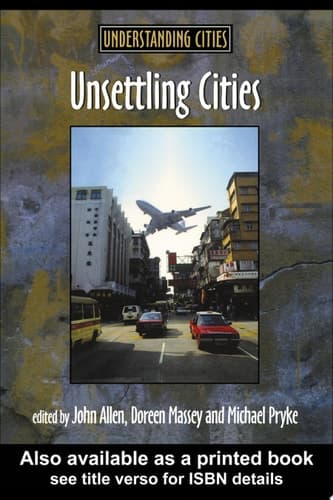
Unsettling Cities Movement/settlement
John AllenPublished1999
Pages354
Formatpaperback
PublisherPsychology Press
Synopsis
This text examines the global nature of cities - cities whose openness has shaped their dynamism and character.
It explores cities as sites of movement, migration and settlement where different peoples, cultures and environments combine. Unsettling Cities explores the mix of proximity and difference that exists in the rich and diverse texture of city life. The contributors reveal the association between the changing fortunes of cities and the power and influence of global networks.
Recommendations
Deconstructing Post-WWII New York City The Literature, Art, Jazz, and Architecture of an Emerging Global Capital
by Robert Bennett
Sassen does for global networks what Allen does for city dynamism—she traces how financial and informational flows reshape urban hierarchies and create unexpected connections between distant cities. Where Allen emphasizes cultural mixing and settlement, Sassen reveals the economic architecture underneath, showing how three seemingly different cities function as nodes in a single system. It's the perfect intellectual companion piece that deepens your understanding of what makes contemporary cities tick.
View book
The Death and Life of Great American Cities
by Jane Jacobs
Published in 1961, Jacobs writes with the observational precision of someone who actually walks neighborhoods and watches how strangers become neighbors through sidewalk life. While Allen examines cities through the lens of global movement, Jacobs zooms into the street level where that movement actually happens—the corner store, the park bench, the informal networks that make proximity feel like community rather than crowding. Her arguments about diversity and vitality will make you see the 'mix' Allen describes in concrete, lived terms.
View book
The Savage Detectives A Novel
by Roberto Bolaño
Here's the surprise: this sprawling novel is essentially a detective story about movement, migration, and the traces people leave across cities and continents. Bolaño captures the texture of urban life—the overlapping conversations, the chance encounters, the way different worlds collide in the same space—with the same attentiveness Allen brings to his analysis. It's Allen's themes translated into fiction, where you experience the unsettling energy of cities through fragmented narratives and wandering characters rather than academic argument.
View book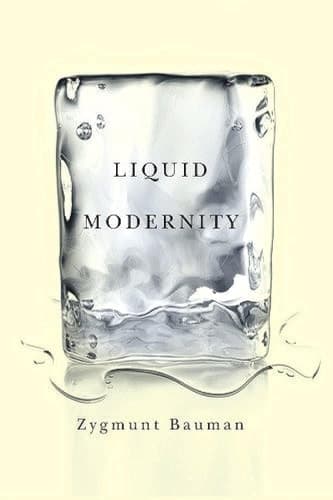
Liquid Modernity
by Zygmunt Bauman
Bauman extends Allen's interest in movement and settlement by arguing that contemporary life itself has become 'liquid'—less rooted, more fluid, constantly in flux. He explores how this affects not just cities but identity, community, and belonging in an age of global mobility. Where Allen describes the phenomenon of unsettled cities, Bauman diagnoses what it means psychologically and socially to live in them, making this a natural theoretical progression from your last read.
View bookAbout John Allen
J
John Allen
Born 1941
John L. Allen is a former chairman of the Department of Geography and emeritus professor of geography at the University of Wyoming in Laramie. His publications, numbering more than thirty titles to date, reflect his broadly varied interests, including the exploration of the American West, human impacts on natural environments and related landscape changes, and images of the West. Among students of the Lewis and Clark expedition, Professor Allen’s best-known work is Lewis and Clark and the Image of the American Northwest (reprint, New York: Dover, 1975). Originally published under the title Passage through the Garden: Lewis and Clark and the Image of the American Northwest, it remains among the most authoritative and frequently-referenced works in the literature.-Discover Lewis&Clark
View author page