Upton Sinclair's The Jungle
Eric F. OatmanPublished1984
Pages118
Formatpaperback
PublisherBarron's Educational Series, Incorporated
Synopsis
A highly respected scholar and collector, DeGruson has undertaken the textual restoration of one of the most famous turn-of-the-century literary masterpieces. He provides an introduction based on rare documents and materials.
Recommendations
The Octopus A Story of California
by Frank Norris
Norris was Sinclair's literary contemporary and fellow muckraker, but where Sinclair focuses on industrial labor, Norris trains his unflinching eye on agricultural monopolies and their stranglehold on farmers. You'll find the same documentary precision and moral outrage, but applied to a different sector of American exploitation—and Norris's narrative structure is even more ambitious, weaving multiple characters into an epic that feels almost Shakespearean in scope.
View book
The Grapes of Wrath John Steinbeck
by John Steinbeck
Published in 1939, this shifts your timeline forward but stays in Sinclair's territory of ordinary people crushed by economic systems beyond their control. Where Sinclair documents the slaughterhouse, Steinbeck documents the Dust Bowl migration—but both writers use individual family stories to indict entire structures. Steinbeck's prose is more lyrical, almost biblical, which gives the brutality a different kind of weight.
View book
The remains of the day de Kazuo Ishiguro
by Gallix/François
Here's your genre surprise: this is a quiet, introspective novel about a butler reflecting on his life, not a fiery exposé. But Ishiguro does something Sinclair does too—he reveals systemic corruption and moral compromise through accumulated small details. The way Stevens gradually realizes how he's been complicit in his employer's fascist sympathies mirrors how Sinclair's readers gradually grasp the full horror of the meat industry. Both novels trust readers to connect dots rather than spell everything out.
View book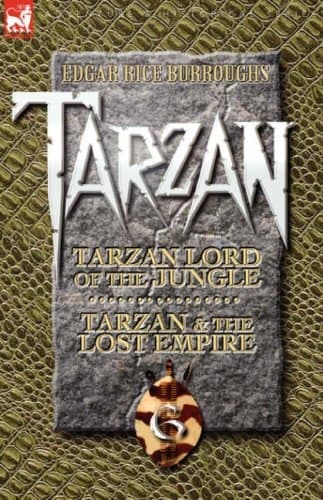
Tarzan Tarzan, Lord of the Jungle and Tarzan and the Lost Empire
by Edgar Burroughs
Conrad's novella (1900) shares Sinclair's era and his interest in how systems—in this case, colonial commerce and maritime law—grind individuals into moral compromise. But where Sinclair's jungle is industrial Chicago, Conrad's is literal and psychological, exploring how a man becomes trapped by circumstance and his own choices. Both writers use immersive, almost suffocating prose to make readers feel the weight of the world their characters inhabit.
View bookAbout Eric F. Oatman
Biography coming soon.
View author page