Synopsis
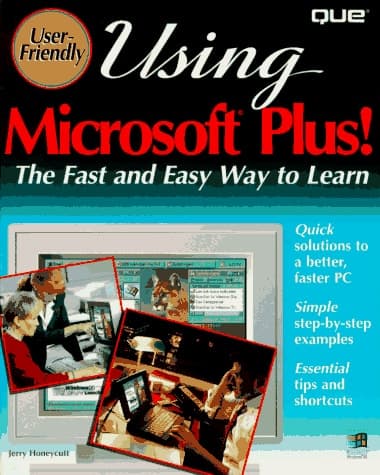
Showing users how to take advantage of Plus! to be productive with the Internet, to better utilize their systems with DriveSpace and System Agent, and to personalize their computers with Desktop themes, this comprehensive guide covers all parts of Microsoft Plus!
Recommendations
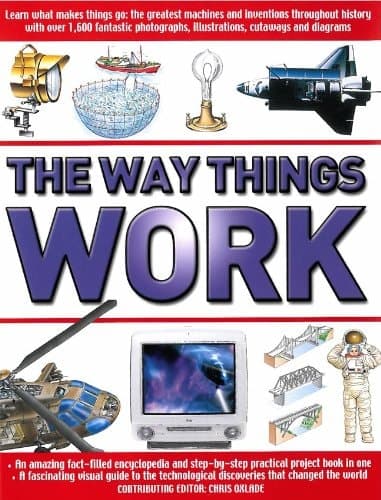
The Way Things Work The Complete Illustrated Guide to the Amazing World of Technology
by Chris Oxlade
Like Honeycutt breaking down Plus! into digestible modules, Hixson takes complex mechanical concepts and makes them approachable through hands-on explanation. Both books share that 1990s enthusiasm for demystifying technology—one for software, one for physics—with the same patient, systematic teaching style that assumes curiosity rather than prior expertise.
View book
A Passion for Ideas How Innovators Create the New and Shape Our World
by Heinrich von Pierer
This 2014 book traces the actual human stories behind the tools Honeycutt was teaching readers to use—it's the 'why' behind the 'how.' Isaacson writes with the same respect for technical detail that Honeycutt brings to his guide, but zooms out to show how Microsoft Plus! itself fits into decades of computing evolution. It's a natural companion that contextualizes what you were learning.
View book
Programming Ruby The Pragmatic Programmers' Guide
by David Thomas
While Honeycutt teaches you *what* Plus! does, Thomas teaches you *how to think* like someone who builds these tools. Both books are fundamentally about efficiency and getting the most from your digital environment, but Thomas approaches it from a developer's mindset—practical wisdom about problem-solving that applies whether you're configuring DriveSpace or writing code.
View book
Quilting and Braiding The Feminist Christologies of Sallie McFague and Elizabeth A. Johnson in Conversation
by Shannon Schrein
Here's the curveball: Kimmerer writes about systems and relationships—how everything connects and influences everything else—but through ecology rather than software. If you appreciated Honeycutt's systematic approach to showing how DriveSpace and System Agent work *together*, you'll find Kimmerer doing something similar with natural systems. Both authors are teachers who help you see the architecture underneath what appears simple.
View book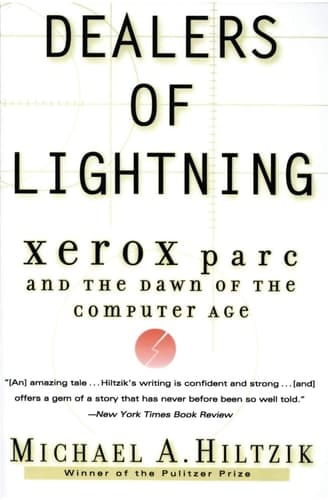
Dealers of Lightning Xerox PARC and the Dawn of the Computer Age
by Michael A. Hiltzik
This book tells the story of where many of the technologies Honeycutt was documenting actually originated—the graphical user interface, the mouse, networked computing. It's a narrative history that reads like a thriller, but it gives you the intellectual genealogy of the very features you were learning to optimize in Plus!, making every chapter feel like discovering the origin story of tools you thought you already understood.
View bookAbout Jerry Honeycutt
Biography coming soon.
View author page