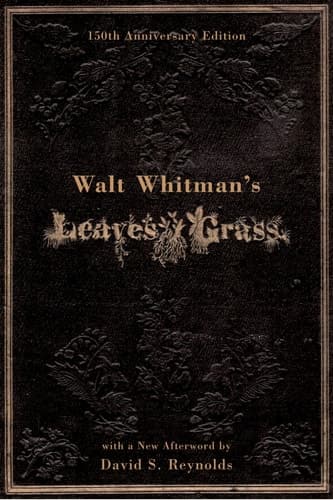
Walt Whitman's Leaves of Grass
Walt WhitmanPublished2005
Pages167
Formathardcover
PublisherOxford University Press, USA
Synopsis
"I celebrate myself,And what I assume you shall assume,For every atom belonging to me as good belongs to you.I loafe and invite my soul,I lean and loafe at my ease....observing a spear of summer grass."So begins Leaves of Grass, the first great American poem and indeed, to this day, the greatest and most essentially American poem in all our national literature.The publication of Leaves of Grass in July 1855 was a landmark event in literary history. Ralph Waldo Emerson judged the book "the most extraordinary piece of wit and wisdom America has yet contributed." Nothing like the volume had ever appeared before. Everything about it--the unusual jacket and title page, the exuberant preface, the twelve free-flowing, untitled poems embracing every realm of experience--was new. The 1855 edition broke new ground in its relaxed style, which prefigured free verse; in its sexual candor; in its images of racial bonding and democratic togetherness; and in the intensity of its affirmation of the sanctity of the physical world.This Anniversary Edition captures the typeface, design and layout of the original edition supervised by Whitman himself. Today's readers get a sense of the "ur-text" of Leaves of Grass, the first version of this historic volume, before Whitman made many revisions of both format and style. The volume also boasts an afterword by Whitman authority David Reynolds, in which he discusses the 1855 edition in its social and cultural contexts: its background, its reception, and its contributions to literary history. There is also an appendix containing the early responses to the volume, including Emerson's letter, Whitman's three self-reviews, and the twenty other known reviews published in various newspapers and magazines.This special volume will be a must-have keepsake for fans of Whitman and lovers of American poetry.
Recommendations
Walt Whitman's "Song of Myself" A Sourcebook and Critical Edition
by Walt Whitman
I notice you've finished the 1855 edition—this is actually the poem that became the centerpiece of later editions, but experiencing how Whitman revised and expanded his vision across decades will deepen your appreciation for how he kept reimagining American identity. It's like watching a poet argue with his younger self across forty years of publication.
View book
The Prelude and Selected Poems, William Wordsworth Notes by Martin Gray
by Martin Gray
Wordsworth's autobiographical epic shares Whitman's conviction that the everyday—a walk through nature, a moment of perception—contains profound spiritual truth. Where Whitman celebrates the democratic masses, Wordsworth celebrates the individual consciousness encountering the world, but both poets fundamentally trust that direct experience, not inherited doctrine, is where meaning lives.
View book
William Carlos Williams' "Paterson": Language and Landscape (Anniversary Collection)
by Joel Osborne Conarroe
Williams took Whitman's democratic vision and made it even more radical—his poem is built from newspaper clippings, letters, and fragments of ordinary speech from a New Jersey industrial city. If Leaves of Grass celebrates what America could be, Paterson celebrates what America actually is, warts and all, using the fragmented form that Whitman's free verse made possible.
View book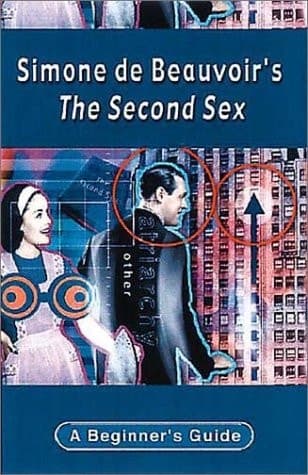
Simone de Beauvoir's the Second Sex
by George Myerson
Here's your surprise recommendation: de Beauvoir's philosophical essay shares Whitman's radical insistence on celebrating the body and rejecting inherited restrictions on human possibility—but she applies that vision to gender and freedom in ways that challenge Whitman's own blind spots. It's a conversation with Whitman across decades, asking what true democratic celebration actually requires.
View book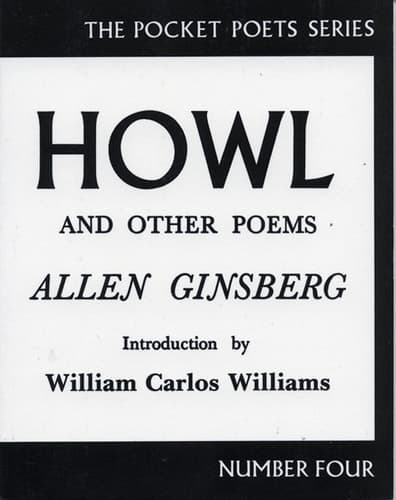
Howl and Other Poems Pocket Poets Number 4
by Allen Ginsberg
Ginsberg explicitly modeled his long, breath-driven lines on Whitman's technique, but channeled them through 1950s countercultural rage and ecstasy. Reading this after Leaves of Grass shows you how a later poet inherited Whitman's formal revolution and his democratic impulse, then weaponized both against conformity and war—it's Whitman's vision meeting a very different America.
View bookAbout Walt Whitman
W
Walt Whitman
1819–1892
Walt Whitman was an American poet, essayist, journalist, and humanist. He was a part of the transition between Transcendentalism and realism, incorporating both views in his works. Whitman is among the most influential poets in the American canon, often called the father of free verse.[1] His work was very controversial in its time, particularly his poetry collection Leaves of Grass, which was described as obscene for its overt sexuality. ([Source][1].) [1]:https://en.wikipedia.org/wiki/Walt_Whitman
View author page