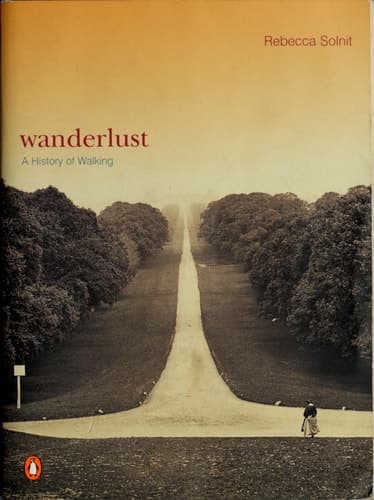
Synopsis
"In Wanderlust: A History of Walking, Rebecca Solnit draws together many histories -- of anatomical evolution and city design, of treadmills and labyrinths, of walking clubs and sexual mores -- to create a portrait of the range of possibilities for this most basic act. Arguing that walking as history signifies walking for pleasure and for political, aesthetic, and social meaning, Solnit hones in on the walkers whose everyday and extreme acts have shaped our culture, from the peripatetic philosophers of ancient Greece to the poets of the Romantic Age, from the perambulations of the Surrealists to the ascents of the mountaineers." "Solnit's book finds a profound relationship between walking and thinking, walking and culture, and argues for the necessity of preserving the time and space in which to walk in an evermore automobile-dependent and accelerated world. Book jacket."--BOOK JACKET.
Recommendations
Ghost Train to the Eastern Star On the Tracks of the Great Railway Bazaar
by Paul Theroux
Like Solnit, Theroux uses a mode of travel as a lens for cultural observation and self-discovery, but where she examines walking philosophically across centuries, he documents a single train journey across continents with the eye of an anthropologist. Both writers argue that slowness—whether on foot or by rail—reveals truths that speed obscures, and both find the journey itself to be the real subject.
View book
The Savage Detectives A Novel
by Roberto Bolaño
This is your surprise pick: a sprawling, unconventional novel that's essentially about movement through space and time—two poets wandering Mexico City and beyond, leaving traces, creating meaning through their perambulations. Bolaño shares Solnit's fascination with how walking and movement generate culture and narrative, but he approaches it through fragmented, experimental fiction rather than cultural history.
View book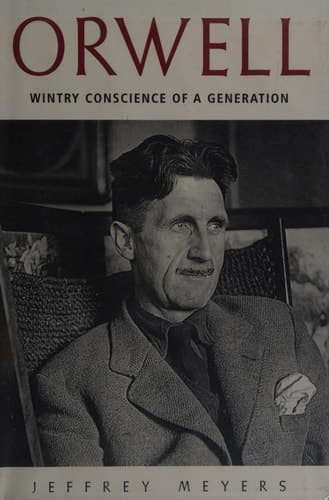
Orwell Wintry Conscience of a Generation
by Jeffrey Meyers
Meyers traces Orwell's life through his walking—his rambles through English countryside, his tramping through Burma and Spain, his belief that political clarity came from direct observation on foot. This biography resonates with Solnit's argument that walking shapes thinking and politics, and it gives you a deep biographical study of someone who embodied that philosophy.
View book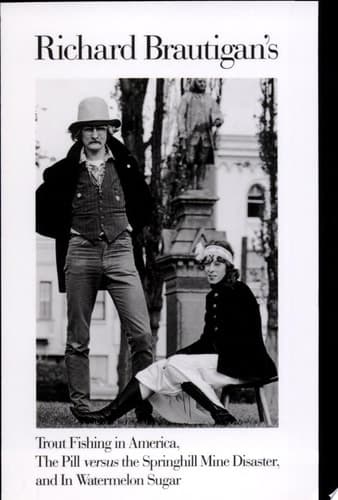
Richard Brautigan's Trout Fishing in America ; The Pill Versus the Springhill Mine Disaster ; And, In Watermelon Sugar
by Richard Brautigan
Published in 1968, this slim, meditative novel explores how a community organizes itself around slowness, simplicity, and intentional movement through space—it's almost a utopian thought-experiment about what happens when you reject speed and acceleration. Brautigan's prose has Solnit's lyrical quality, and both writers are fundamentally concerned with how we structure our relationship to time and place.
View book
The Art of Travel
by Alain De Botton
De Botton examines how travel—including walking—shapes perception and mood, drawing on philosophy, art history, and personal anecdote much as Solnit does. Where Solnit gives you the grand historical sweep, de Botton offers intimate, essayistic meditations on why we move through the world and what we're actually looking for when we do.
View bookAbout Rebecca Solnit
R
Rebecca Solnit
Born 1961
A writer who lives in San Francisco. She has written on a variety of subjects including the environment, politics, place, and art.
View author page