Synopsis
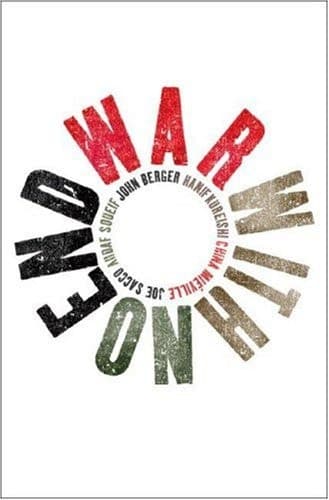
On October 7th 2001, US-led forces invaded Afghanistan, marking the start of George Bush and Tony Blair’s “War on Terror.” Six years on, where have the policies of Bush and Blair left us? Bringing together some of the finest contemporary writers, this wide-ranging anthology, from reportage and “faction” to fiction, explores the impact of this “long war” throughout the world, from Palestine to Iraq, Abu Ghraib, the curtailment of civil liberties and manipulation of public opinion.
Published in conjunction with Stop the War coalition and United for Peace and Justice, War With No End provides an urgent, necessary reflection on the causes and consequences of the ideological War on Terror.
Recommendations

Utopia Guide to Indonesia (2nd Edition) The Gay and Lesbian Scene in 43 Cities Including Jakarta and the Island of Bali
by John Goss
Where Berger's anthology captures the human cost of post-9/11 interventionism through literary voices, Mattei gives you the documented mechanics—the declassified operations, the pattern recognition across decades. You'll recognize the ideological throughlines that Berger's writers were responding to, but here you're reading the actual blueprint rather than its aftermath.
View book
The Apocalyptic Vision of Mikhail Bulgakov's the Master and Margarita (Studies in Slavic Language & Literature)
by Edward E. Ericson
This might seem like a left turn, but Bulgakov's 1967 novel is fundamentally about how propaganda, state power, and ideological certainty corrupt everything they touch—he's just using Soviet Moscow and a visit from the Devil as his lens rather than the War on Terror. The satirical precision with which he shows how lies become institutional truth will feel familiar after reading Berger's pieces on manufactured consent and public manipulation.
View book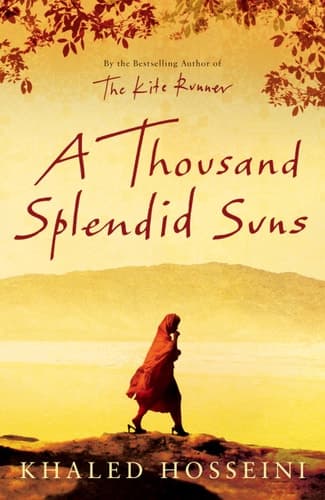
A Thousand Splendid Suns
by Khaled Hosseini
Rather than stepping back from Afghanistan like most post-2001 analysis does, Hosseini embeds you in the intimate, generational weight of living through successive occupations and wars. His two female protagonists experience the Taliban, then the US invasion—the novel refuses the comfortable Western narrative that one war was worse than the other, which is exactly the moral complexity Berger's anthology was reaching for.
View book
The Shock Doctrine The Rise of Disaster Capitalism
by Naomi Klein
Klein takes the economic logic underlying the wars Berger documents—how crisis becomes opportunity for capital—and traces it back through decades of US interventions. She's doing the investigative heavy lifting that some of Berger's contributors were gesturing toward, showing how the War on Terror wasn't aberrant but continuous with a longer American project.
View book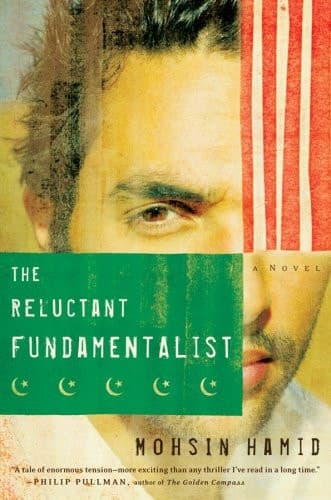
The Reluctant Fundamentalist
by Mohsin Hamid
Hamid does something formally clever that mirrors Berger's anthology approach—he gives you a single monologue from a Pakistani-American man in the post-9/11 world, and you're never quite sure if he's threat or victim, which is precisely the point. The ambiguity forces you to confront your own assumptions about who gets to be sympathetic in a War on Terror narrative, something Berger's various writers were all circling around.
View bookAbout Phyllis Bennis
P
Phyllis Bennis
Born 1951
Biography coming soon.
View author page