Synopsis
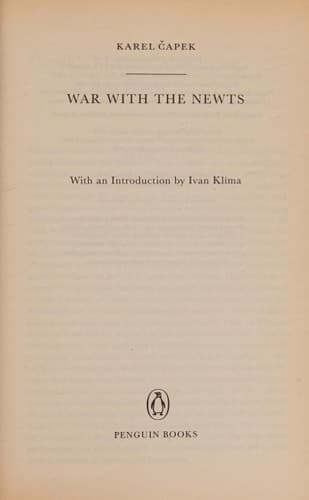
Originally written in 1936, two years before Capek's death and three years before the Nazi invasion of Czechoslovakia, War with the Newts is considered by many to be Capek's greatest book.
Working in the "fantastic" satiric tradition of Wells, Orwell, and Vonnegut, Capek chronicles the discovery of a colony of highly intelligent giant salamanders off the coast of an Indonesian island. Capek sardonically details all the reactions of the civilized world - from horror to skepticism, from intellectual fascination to mercantile opportunism - and the ultimate destruction from which it (and the newts) might not escape.
Recommendations
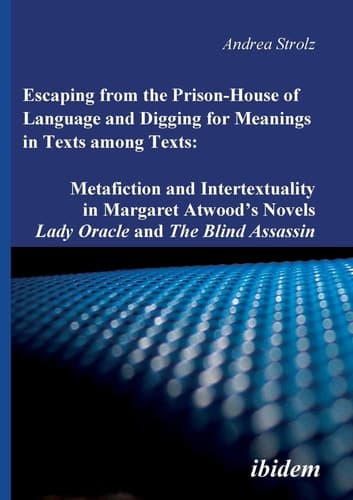
Escaping from the Prison-House of Language and Digging for Meanings in Texts Among Texts Metafiction and Intertextuality in Margaret Atwood's Novels Lady Oracle and the Blind Assassin
by Andrea Strolz
Atwood constructs her narrative like Capek does—through layered perspectives and unreliable accounts that gradually reveal how ordinary people rationalize extraordinary circumstances. Both authors use satire not as comedy but as a scalpel, examining how institutions and individuals collaborate in their own undoing, and both excel at making the reader complicit in seeing what the characters refuse to acknowledge.
View book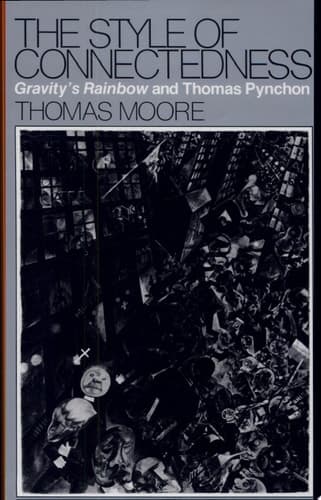
The Style of Connectedness Gravity's Rainbow and Thomas Pynchon
by Thomas Moore
Like War with the Newts, Pynchon's sprawling 1973 epic treats a world-altering threat (the V-2 rocket) through fragmented perspectives of governments, corporations, and ordinary people all scrambling to exploit or understand it. Both novels refuse neat resolutions and instead show how systems perpetuate themselves regardless of the chaos they create—though Pynchon's prose is deliberately labyrinthine where Capek's is deceptively clear.
View book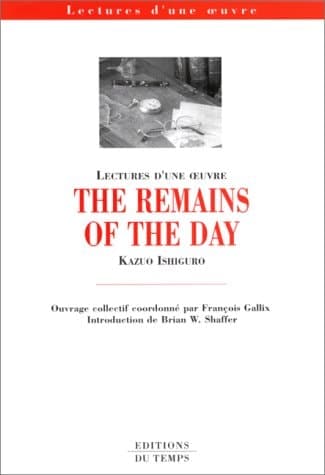
The remains of the day de Kazuo Ishiguro
by Gallix/François
This is the surprise pick, but hear me out: where Capek shows civilization's collective rationalization of catastrophe, Ishiguro shows it through one man's quiet, devastating personal complicity. Both works examine how intelligent people convince themselves that their passivity is pragmatism, and both use an almost polite narrative tone to make the reader increasingly uncomfortable with what's being justified.
View book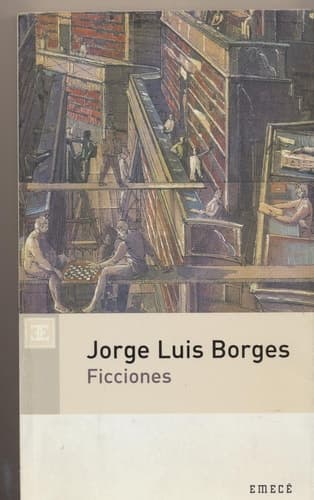
Ficciones
by Jorge Luis Borges
Borges shares Capek's gift for building entire worlds through intellectual premise—what if there were infinite libraries? What if a map were the size of the territory?—and both authors use these thought experiments to satirize human systems and knowledge itself. Where Capek's newts are a concrete invasion, Borges's impossible libraries are an invasion of meaning, but both leave you questioning what you thought you understood about order and chaos.
View book
The Apocalyptic Vision of Mikhail Bulgakov's the Master and Margarita (Studies in Slavic Language & Literature)
by Edward E. Ericson
Bulgakov's 1967 masterpiece (written decades before publication) shares Capek's darkly comic vision of how bureaucracy, ideology, and self-interest corrupt everything they touch. Both novels weave together multiple storylines to show how ordinary corruption and extraordinary events are really the same phenomenon, and both authors write with a kind of affectionate exasperation at human folly—you laugh even as you're horrified.
View bookAbout Karel Čapek
Biography coming soon.
View author page