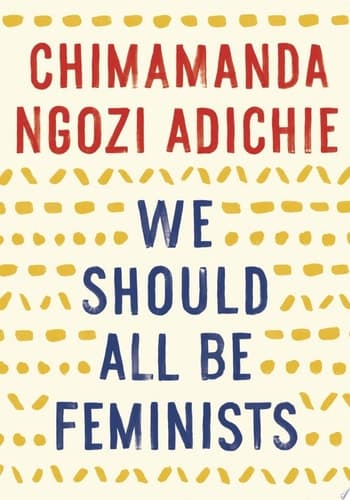
We Should All Be Feminists
Chimamanda Ngozi AdichiePublished2015
Pages64
Formatpaperback
PublisherKnopf Doubleday Publishing Group
Synopsis
In this essay -- adapted from her TEDx talk of the same name -- Chimamanda Ngozi Adichie, award-winning author of Americanah, offers readers a unique definition of feminism for the twenty-first century, one rooted in inclusion and awareness. Drawing extensively on her own experiences and her understanding of the often masked realities of sexual politics, here is one remarkable author's exploration of what it means to be a woman now -- and an of-the-moment rallying cry for why we should all be feminists.
Recommendations

Simone de Beauvoir's the Second Sex
by George Myerson
This is the philosophical ancestor of Adichie's essay—where Adichie gives you the lived, contemporary experience of gender politics, de Beauvoir gives you the existential framework that explains *why* those politics exist. Reading them together creates a conversation across decades about what it means to claim full humanity as a woman.
View book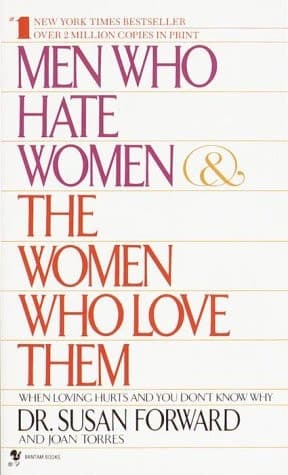
Men Who Hate Women and the Women Who Love Them When Loving Hurts And You Don't Know Why
by Susan Forward
Where Adichie diagnoses the problem with precision and grace, Bates does something riskier—she goes undercover into the darkest corners of online misogyny to show you exactly how the ideology spreads and metastasizes. It's investigative journalism that reads like a thriller, and it'll make you understand the urgency behind Adichie's call to action in a visceral way.
View book
The Argonauts
by Aleister Crowley
This is my surprise pick for you—it's part memoir, part theory, part love letter, and it expands the conversation about gender and identity beyond the binary framework. Nelson writes with the same intellectual rigor as Adichie but in a more lyrical, fragmented way that mirrors how identity actually *feels* rather than how it's typically explained.
View book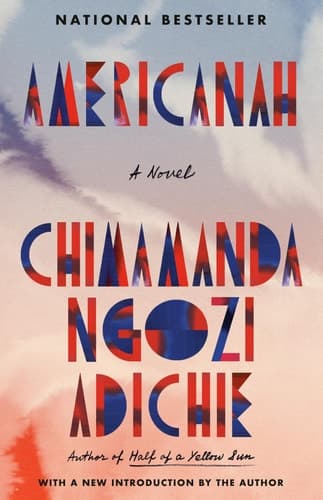
Americanah A novel
by Chimamanda Ngozi Adichie
Wait—I know she's the author you just read, but hear me out: her novel does something her essay can't. Through Ifemelu's story, Adichie shows you feminism *lived* across continents, complicated by race and class and immigration in ways that feel messier and more human than any manifesto. The essay is the argument; this is the proof.
View book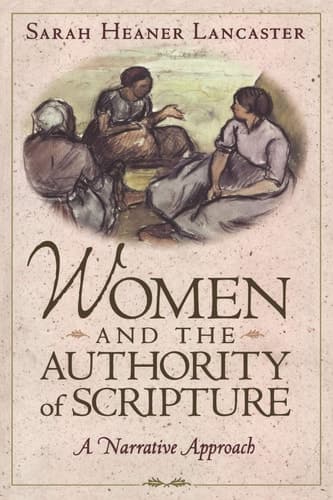
Women and the Authority of Scripture A Narrative Approach
by Sarah Heaner Lancaster
Sieghart takes one specific thread from Adichie's tapestry—that moment when women's voices and expertise are simply not believed—and pulls it until the entire structure of how we assign credibility comes unraveling. It's data-driven but never dry, and it explains why your female colleague's idea gets credited to her male boss.
View bookAbout Chimamanda Ngozi Adichie
C
Chimamanda Ngozi Adichie
Born 1977
Chimamanda Ngozi Adichie grew up in Nigeria. Her work has been translated into thirty languages and has appeared in various publications, including The New Yorker, Granta, The O. Henry Prize Stories, the Financial Times, and Zoetrope. She is the author of the novels Purple Hibiscus, which won the Commonwealth Writers’ Prize and the Hurston/Wright Legacy Award, and Half of a Yellow Sun, which won the Orange Prize and was a National Book Critics Circle Award Finalist, a New York Times Notable Book, and a People and Black Issues Book Review Best Book of the Year; and the story collection The Thing Around Your Neck. Her latest novel Americanah, was published around the world in 2013, and has received numerous accolades, including winning the National Book Critics Circle Award for Fiction and The Chicago Tribune Heartland Prize for Fiction; and being named one of The New York Times Ten Best Books of the Year. --http://chimamanda.com/about-chimamanda/
View author page