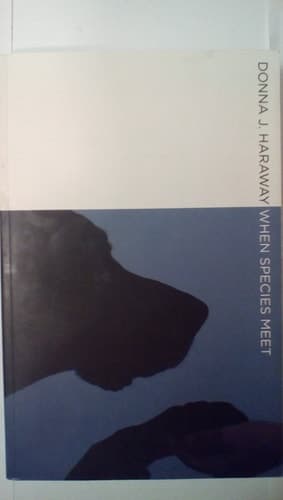
When Species Meet
Donna Jeanne HarawayPublished2008
Pages423
Formatpaperback
PublisherUniversity of Minnesota Press
Synopsis
“When Species Meet is a breathtaking meditation on the intersection between humankind and dog, philosophy and science, and macro and micro cultures.” —Cameron Woo, Publisher of Bark magazine
In 2006, about 69 million U.S. households had pets, giving homes to around 73.9 million dogs, 90.5 million cats, and 16.6 million birds, and spending over $38 billion dollars on companion animals. As never before in history, our pets are truly members of the family. But the notion of “companion species”—knotted from human beings, animals and other organisms, landscapes, and technologies—includes much more than “companion animals.”
In When Species Meet, Donna J. Haraway digs into this larger phenomenon to contemplate the interactions of humans with many kinds of critters, especially with those called domestic. At the heart of the book are her experiences in agility training with her dogs Cayenne and Roland, but Haraway's vision here also encompasses wolves, chickens, cats, baboons, sheep, microorganisms, and whales wearing video cameras. From designer pets to lab animals to trained therapy dogs, she deftly explores philosophical, cultural, and biological aspects of animal-human encounters.
In this deeply personal yet intellectually groundbreaking work, Haraway develops the idea of companion species, those who meet and break bread together but not without some indigestion. “A great deal is at stake in such meetings,” she writes, “and outcomes are not guaranteed. There is no assured happy or unhappy ending—socially, ecologically, or scientifically. There is only the chance for getting on together with some grace.”
Ultimately, she finds that respect, curiosity, and knowledge spring from animal-human associations and work powerfully against ideas about human exceptionalism.
One of the founders of the posthumanities, Donna J. Haraway is professor in the History of Consciousness Department at the University of California, Santa Cruz. Author of many books and widely read essays, including The Companion Species Manifesto: Dogs, People, and Significant Otherness and the now-classic essay “The Cyborg Manifesto,” she received the J. D. Bernal Prize in 2000, a lifetime achievement award from the Society for Social Studies in Science.
Recommendations
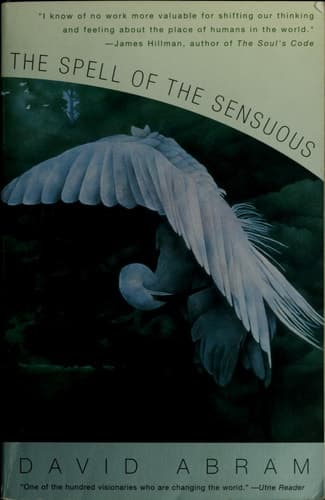
The Spell of the Sensuous: Perception and Language in a More-Than-Human World
by David Abram
Abram shares Haraway's commitment to dissolving the human/nature boundary, but approaches it through phenomenology and indigenous philosophy rather than posthumanist theory. Where Haraway finds grace in the messy encounters between species, Abram traces how written language itself estranged us from the sensory aliveness of the more-than-human world—it's like reading the philosophical prehistory of why we need Haraway's companion species concept in the first place.
View book
Friendship Bands Braiding, Weaving, Knotting
by Marlies Busch
Kimmerer, a botanist and Potawatomi author, writes essays that feel like Haraway's dog-training anecdotes but centered on plants and reciprocal relationships with the land. Both authors use personal observation to build toward larger philosophical arguments about kinship, but Kimmerer grounds hers in Indigenous knowledge systems—it's a different cultural vocabulary for the same radical reorientation toward non-human others.
View book
Simians, Cyborgs, and Women The Reinvention of Nature
by Donna Jeanne Haraway
This is your surprise pick—it's narrative biography rather than theory, but Wulf traces Alexander von Humboldt's revolutionary insight that nature is an interconnected web rather than a collection of specimens to catalog. Reading about Humboldt's 18th-century awakening to ecological relationality alongside Haraway's 21st-century posthumanism creates an unexpected dialogue across centuries about how we've learned (and are still learning) to see the world as composed of meeting points rather than hierarchies.
View book
Oryx and Crake
by Margaret Atwood
Atwood builds a speculative world where genetic engineering has blurred species boundaries in deeply unsettling ways—it's Haraway's companion species concept run through a dystopian lens. The novel forces you to sit with the consequences of human-animal entanglement when profit and control replace Haraway's ethic of "getting on together with some grace," making her philosophical arguments feel urgently necessary rather than abstract.
View book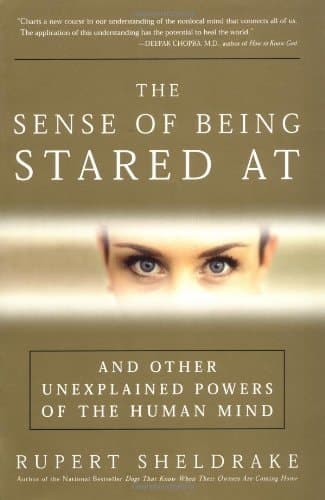
The Sense of Being Stared at And Other Aspects of the Extended Mind
by Rupert Sheldrake
Paul argues that thinking doesn't happen only in our heads but extends into our bodies, tools, and environments—a contemporary cognitive science perspective that echoes Haraway's insistence that knowledge emerges from embodied encounters rather than detached observation. If you found Haraway's agility-training anecdotes compelling, you'll appreciate how Paul shows cognition itself as a collaborative, multispecies affair involving our hands, our surroundings, and yes, sometimes our dogs.
View bookAbout Donna Jeanne Haraway
Biography coming soon.
View author page