
When Things Fall Apart Heart Advice for Difficult Times
Pema ChödrönPublished2000
Pages148
Formatpaperback
PublisherShambhala
Synopsis
The beautiful practicality of her teaching has made Pema Ch�dr�n one of the most beloved of contemporary American spiritual authors among Buddhists and non-Buddhists alike. A collection of talks she gave between 1987 and 1994, the book is a treasury of wisdom for going on living when we are overcome by pain and difficulties. Ch�dr�n discusses:
* Using painful emotions to cultivate wisdom, compassion, and courage
* Communicating so as to encourage others to open up rather than shut down
* Practices for reversing habitual patterns
* Methods for working with chaotic situations
* Ways for creating effective social action
Recommendations
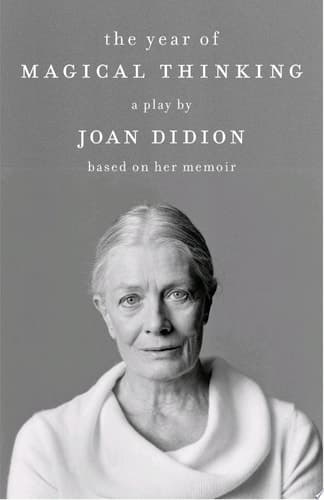
The Year of Magical Thinking A Play by Joan Didion Based on Her Memoir
by Joan Didion
Where Chödrön teaches you to work *with* grief and chaos, Didion shows you what it actually feels like to live inside them—her precise, unflinching prose dissects how the mind copes when everything collapses. You'll recognize Chödrön's wisdom about not shutting down in Didion's refusal to look away from her own pain, but experienced through the lens of a master essayist rather than a spiritual teacher.
View book
The Courage to be
by Paul Tillich
This Japanese dialogue between a philosopher and a young man tackles the same terrain as Chödrön—how to break free from patterns and live authentically—but through Socratic questioning rather than meditation instruction. The conversational format makes abstract ideas concrete, and you'll find yourself arguing with the philosopher just as you might challenge your own habitual thinking.
View book
Quilting and Braiding The Feminist Christologies of Sallie McFague and Elizabeth A. Johnson in Conversation
by Shannon Schrein
This is the surprise pick—it's part memoir, part botany, part indigenous philosophy—but it shares Chödrön's core insight that wisdom comes from paying attention to what's actually happening around you rather than what you expect to happen. Kimmerer shows how cultivating reciprocity and gratitude (themes Chödrön emphasizes) can reshape not just your inner life but your relationship with the world itself.
View book
Man's Search for Meaning
by Viktor E. Frankl
Written in 1946, this slim book predates Chödrön by decades but arrives at strikingly similar conclusions about suffering: that meaning-making is how we survive impossible circumstances. Frankl's account of finding purpose in a concentration camp provides the most extreme test case for Chödrön's teaching that our response to difficulty matters more than the difficulty itself.
View book
The Body Keeps the Score Brain, Mind, and Body in the Healing of Trauma
by Bessel A. Van der Kolk
Van der Kolk brings neuroscience to the emotional and somatic work Chödrön describes—he explains *why* the practices work, showing how trauma literally rewires the brain and how mindfulness, breathing, and movement can rewire it back. If you found yourself wondering about the mechanism behind Chödrön's advice, this book gives you the biological architecture underneath the spiritual framework.
View bookAbout Pema Chödrön
Biography coming soon.
View author page