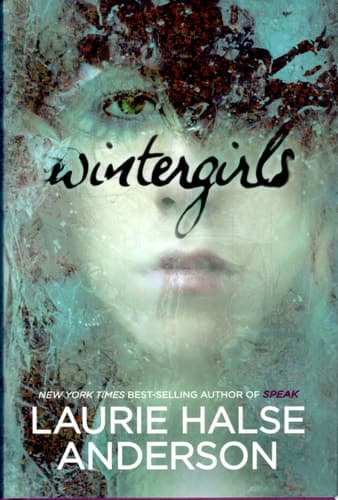
Synopsis
*“Dead girl walking,” the boys say in the halls.
“Tell us your secret,” the girls whisper, one toilet to another.
I am that girl.
I am the space between my thighs, daylight shining through.
I am the bones they want, wired on a porcelain frame.*
Lia and Cassie are best friends, wintergirls frozen in matchstick bodies, competitors in a deadly contest to see who can be the skinniest. But what comes after size zero and size double-zero? When Cassie succumbs to the demons within, Lia feels she is being haunted by her friend’s restless spirit.
Recommendations
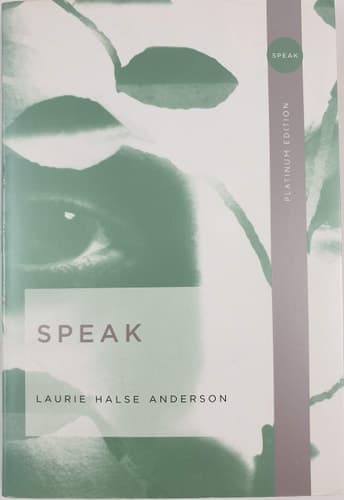
Speak
by Laurie Halse Anderson
Wait—I know you just finished Anderson, but this is essential if you haven't read it. Where Wintergirls explores self-destruction through the lens of eating disorders and obsession, Speak examines how trauma silences us from the inside out. Both protagonists are isolated by their own pain, but Anderson's approach here is rawer, more accusatory—Melinda's muteness feels like a scream trapped in her throat, which creates a different kind of haunting than Lia's internal monologue.
View book
Zwischen Selbstentwurf und Fremdbestimmung - Brüchige Identität bei J.D. Salinger ("The Catcher in the Rye"), Sylvia Plath ("The Bell Jar") und Christian Kracht ("Faserland")
by Florian Pottmeyer
This is the ancestor of Wintergirls—published in 1963, it's where the template for depicting mental illness through a young woman's fractured consciousness really began. Plath's Esther Greenwood experiences the same suffocating pressure to perform perfection that Lia does, but Plath's prose is denser, more hallucinatory. If Anderson's style felt like watching someone disappear, Plath's feels like being inside the disappearance itself.
View book
The Immortal Man A Treasury of Inspiration and Spiritual Comfort by One of America's Great New Thought Teachers
by Neville
This is the memoir that makes Wintergirls feel like fiction in the best way—Hornbacher's account of her own eating disorders and recovery is unflinching in ways that might actually help you process what Anderson was depicting. It's not a novel, which makes it your 'surprise recommendation,' but it reads with the same compulsive, confessional intensity. The two books together create a conversation between art and testimony.
View book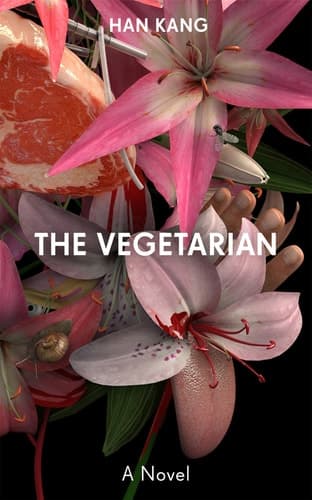
The Vegetarian A Novel
by Kang Han
Han Kang writes about bodily autonomy and self-destruction with a clinical precision that's almost more disturbing than Anderson's emotional rawness. Her protagonist's refusal to eat becomes an act of rebellion that fractures her entire family, and the narrative fragments across multiple perspectives—you never quite know if you're witnessing strength or illness, which is exactly the ambiguity that makes Wintergirls so unsettling. The prose style is spare and hypnotic in a completely different register.
View bookAbout Laurie Halse Anderson
L
Laurie Halse Anderson
Born 1961
American writer, known for children's and young adult novels.
View author page