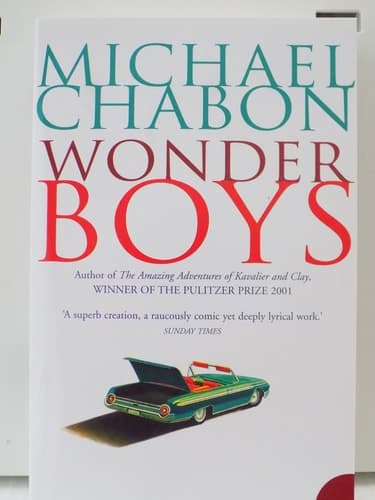
Synopsis
In his first novel since The Mysteries of Pittsburgh , Chabon presents a hilarious and heartbreaking work—the story of the friendship between the "wonder boys"—Grady, an aging writer who has lost his way, and Crabtree, whose relentless debauchery is capsizing his career.
Recommendations
The Corrections
by Jonathan Franzen
Like Chabon, Franzen captures the messy collision between artistic ambition and personal failure, but he zooms out to examine an entire family's delusions. Where Wonder Boys is intimate and darkly comic about two men in freefall, The Corrections sprawls across generations—yet both novels share that particular gift for making you laugh at characters' self-sabotage while your heart breaks for them.
View book
David Foster Wallace's Infinite Jest
by Stephen Burn
Wallace's maximalist approach to depicting addiction, friendship, and creative paralysis operates on a different scale than Chabon's tighter narrative, but both writers are obsessed with how intelligent people rationalize their own destruction. The footnotes and digressions might feel like a departure from Wonder Boys' relative accessibility, but the emotional core—watching brilliant people sabotage themselves—is remarkably similar.
View book
The Apocalyptic Vision of Mikhail Bulgakov's the Master and Margarita (Studies in Slavic Language & Literature)
by Edward E. Ericson
This is the surprise pick: a 1960s Soviet satirical novel that seems worlds away from contemporary Pittsburgh, yet it's fundamentally about a writer whose masterwork is suppressed and the chaos that ensues when he meets someone who truly understands his work. Bulgakov writes with Chabon's dark wit about the impossibility of artistic integrity in a corrupting world, but adds a layer of magical realism that transforms the tragedy into something almost transcendent.
View book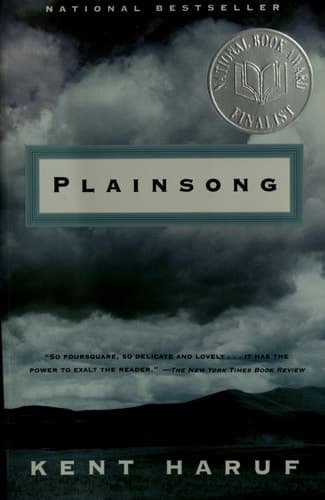
Plainsong
by Kent Haruf
Where Wonder Boys is frenetic and self-aware, Haruf's Colorado novel is quiet and observational—but both are fundamentally about how people fail each other and themselves with surprising grace. Haruf's sparse prose style and his focus on ordinary people's extraordinary emotional lives offer a completely different rhythm from Chabon, yet they're mining the same vein of American disappointment and resilience.
View book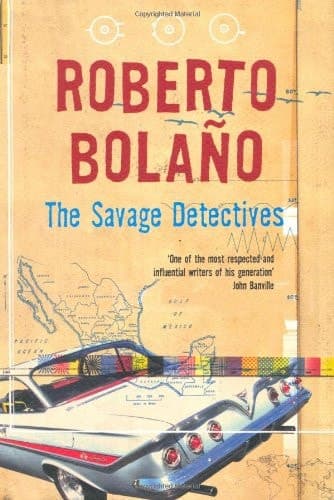
The Savage Detectives A Novel
by Roberto Bolaño
Bolaño's labyrinthine novel about a group of poets and their charismatic leader shares Wonder Boys' fascination with how talented people orbit around a magnetic figure and enable each other's self-destruction. It's structurally adventurous in ways that might challenge you after Chabon's more conventional narrative, but the emotional payoff—watching these friendships fray across decades—hits with similar force.
View bookAbout Michael Chabon
M
Michael Chabon
Born 1963
Michael Chabon is an American author. Chabon's first novel, The Mysteries of Pittsburgh (1988), was published when he was 25. He followed it with a second novel, Wonder Boys (1995), and two short-story collections. In 2000, Chabon published The Amazing Adventures of Kavalier & Clay, a novel that John Leonard, in a 2007 review of a later novel, called Chabon's magnum opus. It received the Pulitzer Prize for Fiction in 2001. His novel The Yiddish Policemen's Union, an alternate history mystery novel, was published in 2007 and won the Hugo, Sidewise, Nebula and Ignotus awards; his serialized novel Gentlemen of the Road appeared in book form in the fall of that same year. Chabon's most recent novel, Telegraph Avenue, published in 2012 and billed as "a twenty-first century Middlemarch," concerns the tangled lives of two families in the Bay Area of San Francisco in the year 2004. Source: Wikipedia
View author page