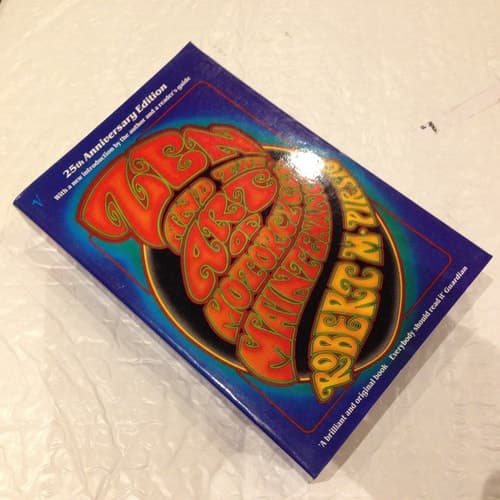
Zen and the Art of Motorcycle Maintenance An Inquiry Into Values
Robert M. PirsigPublished1999
Pages436
Formatpaperback
PublisherVintage
Synopsis
A narration of a summer motorcycle trip undertaken by a father and his son, this book becomes a personal and philosophical odyssey into fundamental questions on how to live. The narrator's relationship with his son leads to a powerful self-reckoning; the craft of motorcycle maintenance leads to an austerely beautiful process for reconciling science, religion, and humanism. Resonant with the confusions of existence, this classic is a touching and transcendent book of life--From publisher description.
Recommendations
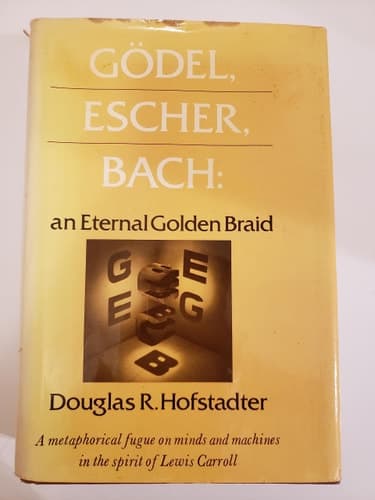
Gödel, Escher, Bach An Eternal Golden Braid
by Douglas R. Hofstadter
Like Pirsig, Hofstadter uses a deceptively simple framework—conversations between Achilles and the Tortoise—to explore how meaning emerges from pattern and structure. Both books wrestle with the apparent contradiction between mechanical systems (motorcycle parts, mathematical logic) and human consciousness, arriving at the insight that the distinction itself might be illusory. You'll find the same meditative quality here, though Hofstadter's approach is more playfully intellectual where Pirsig's is more emotionally raw.
View book
Hermann Hesse's Futuristic Idealism The Glass Bead Game and Its Predecessors
by Roger C. Norton
Hesse's final novel shares Pirsig's conviction that quality and meaning can be found in disciplined practice—here, an elaborate intellectual game becomes a meditation on how all knowledge connects. The protagonist's journey toward understanding what truly matters echoes the narrator's reckoning in Motorcycle Maintenance, and both books treat mastery of a craft as inseparable from spiritual development. This one's from 1943, giving you that different-decade requirement while maintaining thematic kinship.
View book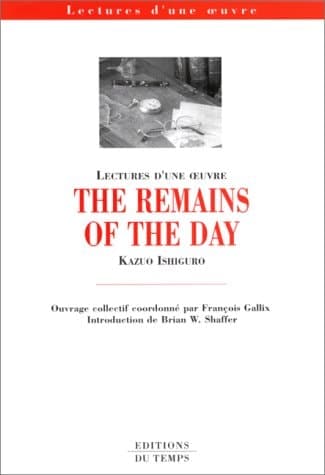
The remains of the day de Kazuo Ishiguro
by Gallix/François
This is the surprise pick: a quiet novel about a butler's life that operates like Pirsig's motorcycle maintenance—through meticulous attention to small, seemingly mundane details, it excavates profound questions about duty, authenticity, and whether we've lived well. Ishiguro's unreliable narrator slowly reveals the cost of his devotion to an abstract ideal of 'service,' which mirrors how Pirsig's narrator discovers his earlier pursuit of pure rationality had its own hidden damage. Both books trust the reader to feel the tragedy beneath the surface.
View book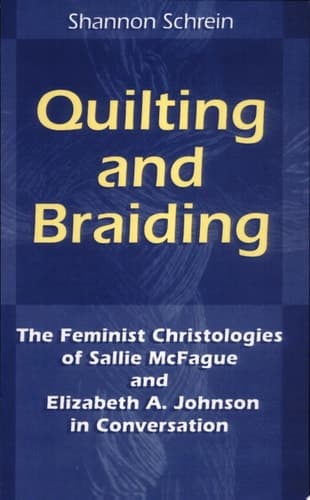
Quilting and Braiding The Feminist Christologies of Sallie McFague and Elizabeth A. Johnson in Conversation
by Shannon Schrein
Kimmerer does what Pirsig attempted—bridging the apparent gulf between scientific and spiritual ways of knowing—but from an Indigenous perspective that offers genuinely different frameworks rather than just reconciliation. Like the motorcycle journey, this is structured as a series of meditations on particular subjects (plants, reciprocity, gratitude) that accumulate into a philosophy of how to live. Where Pirsig's inquiry is intensely personal and sometimes anguished, Kimmerer's is grounded in relationship and generosity, offering a complementary answer to similar questions.
View bookAbout Robert M. Pirsig
R
Robert M. Pirsig
Born 1955
Biography coming soon.
View author page