“There is a time in every man's education when he arrives at the conviction that envy is ignorance; that imitation is suicide; that he must take himself for better, for worse, as his portion;...”
Book index
Work
Self-reliance, and Other Essays
<p>Essayist, poet, and philosopher, Ralph Waldo Emerson (1803–1882) propounded a transcendental idealism emphasizing self-reliance, self-culture, and individual expression. The six essays and one address included in this volume, selected from <i>Essays, First Series</i> (1841) and <i>Essays, Second Series</i> (1844), offer a representative sampling of his views outlining that moral idealism as well as a hint of the later skepticism that colored his thought. In addition to the celebrated title essay, the others included here are "History," "Friendship," "The Over-Soul," "The Poet," and "Experience," plus the well-known and frequently read Harvard Divinity School Address.</p>
Quotes
2 results
Showing 1-2 of 2
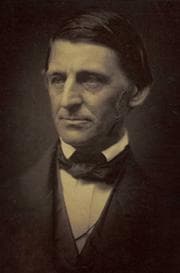
Ralph Waldo Emerson
Canonical work source
“Is it so bad, then, to be misunderstood? Pythagoras was misunderstood, and Socrates, and Jesus, and Luther, and Copernicus, and Galileo, and Newton, and every pure and wise spirit that ever...”