
A Book by Anselm Kiefer
Anselm KieferPublished1988
Pages85
Formathardcover
PublisherGeorge Braziller Inc.
Synopsis
Offers a brief profile of the German artist, reproduces a book of his watercolors, which include seascapes and nudes, and discusses the themes of his work
Recommendations

The Savage Detectives A Novel
by Roberto Bolaño
Like Kiefer's layered watercolors that accumulate meaning through fragmentation, Bolaño constructs his narrative through scattered voices and temporal jumps that gradually reveal a haunting portrait of artistic obsession. Both works demand active participation from the viewer—you're constantly assembling meaning from seemingly disparate pieces, and the gaps between them become as important as what's explicitly shown.
View book
Simone de Beauvoir's the Second Sex
by George Myerson
This is your surprise recommendation: a philosophical essay rather than an art book, but de Beauvoir's treatment of the body, representation, and how we're constructed by history shares Kiefer's preoccupation with how the physical form carries cultural and temporal weight. Her examination of the nude in art and society will deepen how you see those watercolors you just encountered.
View book
Austerlitz
by W. G. Sebald
Sebald's prose operates like Kiefer's visual language—both artists layer photographs, memory, and historical trauma into works that feel simultaneously intimate and monumental. The way Sebald weaves images throughout his text mirrors how Kiefer's watercolors accumulate associations; you'll find yourself rereading passages the way you'd return to a painting, discovering new resonances each time.
View book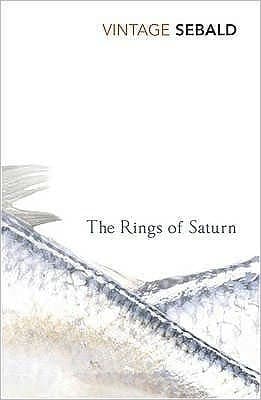
The Rings of Saturn
by Winfried Georg Sebald
Sinclair's meditation on landscape, decay, and cultural sedimentation echoes Kiefer's seascapes—both artists treat geography as a text written over by history. Where Kiefer uses watercolor to capture the ephemeral quality of memory, Sinclair uses prose to map the invisible currents of time moving through physical space, creating something that feels like walking through a landscape that's simultaneously present and haunted.
View book
Gertrude Steins Autobiographien The autobiography of Alice B. Toklas und Everybody's autobiography
by Monika Hoffmann
Published in 1933, this takes us back several decades from Kiefer's 1988 work, but it shares his interest in how artistic identity forms through accumulated relationships and historical moment. Stein's unconventional narrative voice—where she speaks as Toklas speaking about Stein—creates the same kind of layered, recursive meaning-making you experience with Kiefer's work: nothing is quite what it appears, and the form itself becomes inseparable from the content.
View bookAbout Anselm Kiefer
Biography coming soon.
View author page