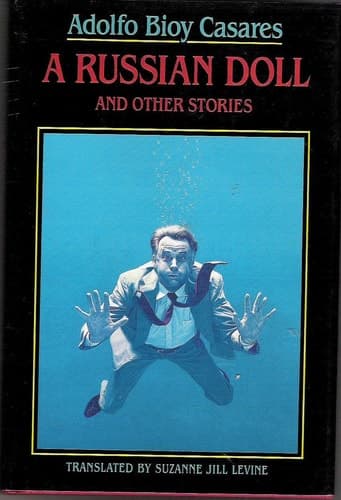
A Russian Doll and Other Stories
Adolfo Bioy CasaresPublished1992
Pages131
Formathardcover
PublisherNew Directions Publishing Corporation
Synopsis
A Russian Doll and Other Stories, published in Spanish in 1991 as Una muneca rusa, is the ninth collection of short fiction by one of this century's premier Argentinian writers who, with his fellow countrymen Julio Cortazar and Jorge Luis Borges, helped change the world's perception of Latin American literature. Bioy Casares' narratives are elegant and urbane, his style precise and streamlined, as he paces his characters through seriocomic traps of fate - ensnared by.
Love, impelled by lust, ambition, or plain greed, even metamorphosed by pharmaceuticals. These are not stories in a psychological mode but like the image of the Russian doll of the title piece are carefully wrought congeries of intractable selves within selves.
Recommendations
The Apocalyptic Vision of Mikhail Bulgakov's the Master and Margarita (Studies in Slavic Language & Literature)
by Edward E. Ericson
Like Bioy Casares, Bulgakov constructs narratives where reality fractures into nested stories—a novel within a novel within a novel—and uses that structure to explore how people become trapped by their own desires and circumstances. Both writers share that urbane, darkly comic sensibility where fate operates through absurdist logic rather than psychological realism, and both were masters at making the surreal feel inevitable.
View book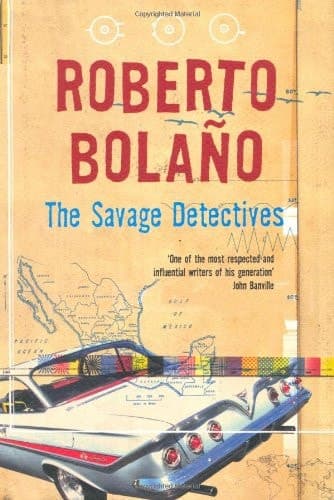
The Savage Detectives A Novel
by Roberto Bolaño
Bolaño shares Bioy Casares' precision of language and his interest in how characters become ensnared by ambition and circumstance, but he sprawls across a much larger canvas. If you appreciated the elegant architecture of Bioy Casares' short stories, this novel shows what happens when that same architectural intelligence gets applied to something vast and labyrinthine—it's like watching someone build Russian dolls at epic scale.
View book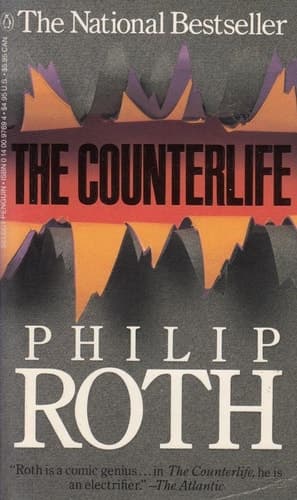
The Counterlife
by Philip Roth
Roth does something formally similar to Bioy Casares here—he creates multiple versions of the same characters living different lives, each one equally 'real,' exploring how identity fractures depending on circumstance and choice. The tone is more explicitly comic and American than Bioy Casares, but that same fascination with selves-within-selves and the seriocomic traps people set for themselves runs through both.
View book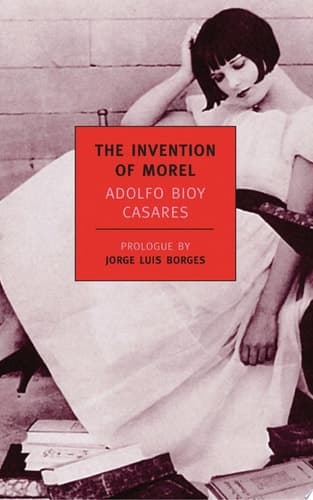
The Invention of Morel
by Adolfo Bioy Casares
I know this is the same author, but hear me out—if you haven't read Bioy Casares' most famous novel, it's essential. His short story collection shows his range, but this novella demonstrates his ability to compress an entire philosophical investigation into a tightly wound narrative where reality itself becomes unreliable. It's the perfect complement to what you've just read.
View bookAbout Adolfo Bioy Casares
A
Adolfo Bioy Casares
1914–1999
Adolfo Bioy Casares (Buenos Aires, 15 de septiembre de 1914-Buenos Aires, 8 de marzo de 1999) fue un escritor argentino, considerado uno de los autores más importantes de su país y de la literatura en español, siendo traducido a más de dieciséis idiomas y galardonado con el Premio Cervantes en 1990. Colaboró en varias ocasiones con Jorge Luis Borges bajo distintos pseudónimos, y, en menor medida, con su propia esposa, la escritora Silvina Ocampo. En su obra frecuentó géneros como la literatura fantástica, el policial y la ciencia ficción, destacando las novelas *La invención de Morel* (1940), *El sueño de los héroes* (1954) y *Dormir al sol* (1973). ---------- Adolfo Bioy Casares (Buenos Aires, September 15, 1914 – Buenos Aires, March 8, 1999) was an Argentine writer, considered one of the most important authors in his country and in Spanish-language literature. His work has been translated into more than sixteen languages, and he was awarded the Cervantes Prize in 1990. He collaborated on several occasions with Jorge Luis Borges under various pseudonyms, and, to a lesser extent, with his wife, the writer Silvina Ocampo. His work encompassed genres such as fantasy, detective fiction, and science fiction, with notable novels including *La invención de Morel* (1940), *El sueño de los héroes* (1954), and *Dormir al sol* (1973).
View author page