
A Thousand Plateaus Capitalism and Schizophrenia
Gilles DeleuzePublished1987
Pages610
Formatpaperback
PublisherU of Minnesota Press
Synopsis
Suggests an open system of psychological exploration to cut through accepted norms of morality, language, and politics
Recommendations

EPZ Deleuze and Guattari's 'Anti-Oedipus' A Reader's Guide
by Ian Buchanan
I know you've just finished the sequel, but this is where Deleuze and Guattari first develop the conceptual toolkit you've been wrestling with. The first volume is actually more accessible—it establishes the theoretical foundations before the plateau structure gets experimental, so you'll see how their critique of psychoanalysis and capitalism builds from the ground up.
View book
Comments on the Society of the Spectacle
by Guy Debord
Debord's working in a similar vein—dismantling how capitalism produces false consciousness through representation—but he's writing from the Situationist tradition with a more polemical edge. Where Deleuze and Guattari offer multiplicities and rhizomes, Debord gives you a more direct genealogy of how spectacle colonizes everyday life. It's shorter, more aphoristic, and will feel like a sharp counterpoint rather than repetition.
View book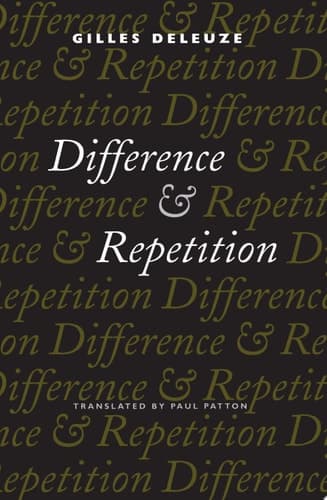
Difference and Repetition
by Gilles Deleuze
This is Deleuze's foundational metaphysics text from 1968, and it's the philosophical bedrock beneath *A Thousand Plateaus*. Reading it will make you see how the plateau structure itself enacts his theory of difference—each plateau repeating without returning, creating variation rather than reproduction. It's demanding, but it's the source code for everything you've just encountered.
View book
The Savage Detectives A Novel
by Roberto Bolaño
Here's the surprise: Bolaño's novel operates through the same kind of rhizomatic structure you've been reading—multiple voices, temporal loops, digressive genealogies that refuse linear narrative. But he's doing it through literary fiction set in the Latin American avant-garde poetry scene. If you want to see Deleuze's ideas about deterritorialization and nomadic thought *enacted* through prose rather than theorized, this is it—and it's genuinely gripping in a way theory papers aren't.
View book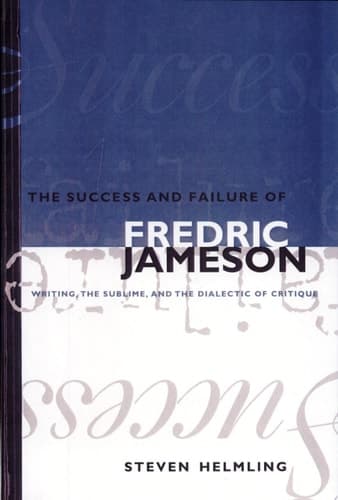
The Success and Failure of Fredric Jameson Writing, the Sublime, and the Dialectic of Critique
by Steven Helmling
Published in 1944, this gives you the Frankfurt School genealogy that Deleuze and Guattari are implicitly arguing against. Horkheimer and Adorno see instrumental reason as the problem; Deleuze and Guattari see the problem as *striated* thought itself. Reading them together creates productive tension—you'll understand what poststructuralism is actually rebelling against, and why the critique of normativity matters so much to the thinkers you've been reading.
View bookAbout Gilles Deleuze
Biography coming soon.
View author page