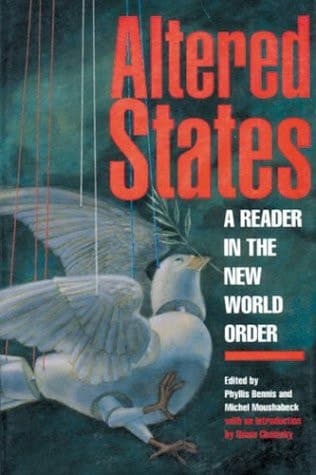
Altered States A Reader in the New World Order
Phyllis BennisPublished1999
Pages538
Formathardcover
PublisherInterlink Publishing Group Incorporated
Synopsis
Book by
Recommendations
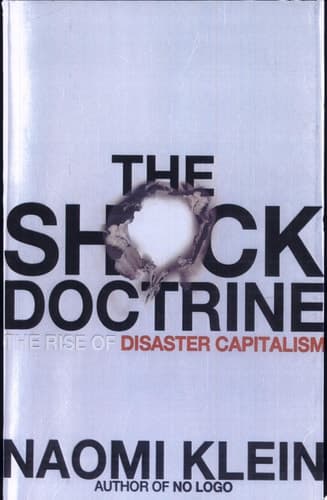
The Shock Doctrine The Rise of Disaster Capitalism
by Naomi Klein
Klein traces how global power structures exploit crises to reshape economies and societies—she's essentially examining the mechanics behind the 'new world order' Bennis critiques. Where Bennis maps the landscape of post-Cold War geopolitics, Klein shows you the playbook being executed on it, with the same unflinching eye for how institutions consolidate control.
View book
Utopia Guide to Indonesia (2nd Edition) The Gay and Lesbian Scene in 43 Cities Including Jakarta and the Island of Bali
by John Goss
Prashad catalogs the specific interventions and coups the U.S. orchestrated across the Global South—he's giving you the case studies that animate Bennis's theoretical framework. His approach is more granular and historical, moving chronologically through decades of destabilization, so you get both the pattern recognition Bennis offers and the concrete evidence of how it played out.
View book
Open Veins of Latin America Five Centuries of the Pillage of a Continent
by Eduardo Galeano
Published in 1971, this one predates your source book but remains essential context for understanding how the 'new world order' inherited colonial extraction patterns. Galeano writes with a poet's precision about economic plunder—his lyrical, aphoristic style is a departure from Bennis's analytical tone, but he's documenting the same systems of dependency, just from an earlier vantage point.
View book
From Survival to Significance The How-tos of Youth Ministry for the Twenty-first Century
by Troy Jones
This is your genre-shift: a climate fiction novel that functions as a thought experiment about global coordination and power. Robinson imagines how international institutions might actually respond to existential crisis—it's Bennis's concerns about world order translated into speculative fiction, where you see the political tensions play out through characters and scenarios rather than analysis. The fragmented narrative structure mirrors how global governance actually works: messy, contradictory, multiple perspectives.
View book
Teaching with Voices of a People's History of the United States by Howard Zinn and Anthony Arnove
by Gayle Olson-Raymer
Zinn rewrites American history from the ground up, showing how the U.S. imperial project developed domestically before going global—essential context for understanding what Bennis means by 'new world order.' His narrative technique (counternarrative, really) gives you the perspective of those displaced by American power, which complements Bennis's structural analysis with the human cost of the systems she describes.
View bookAbout Phyllis Bennis
P
Phyllis Bennis
Born 1951
Biography coming soon.
View author page