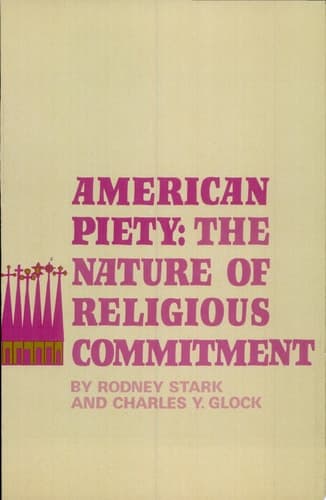
American Piety The Nature of Religious Commitment
Rodney StarkPublished1970
Pages246
Formatpaperback
PublisherUniversity of California Press
Synopsis
How religious are Americans these days? How many still believe in God, in Biblical miracles, in heaven and hell? Do people pray? How much money is being given to churches, by Episcopalians, Presbyterians, Roman Catholics, Lutherans, and other groups? American Piety, the first of a three-volume study of religious commitment, answers these and a host of other questions about the contemporary religious scene. Particularly startling are the contrasts in beliefs, practices, and experiences revealed among the eleven major Christian denominations whose membership is compared.
Recommendations
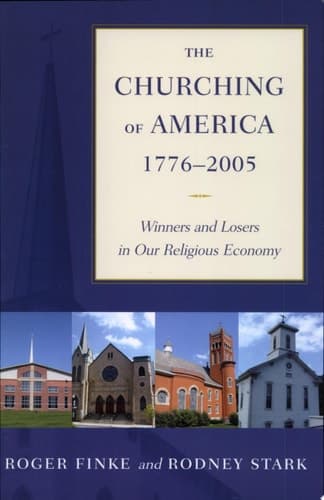
The Churching of America, 1776-2005 Winners and Losers in Our Religious Economy
by Roger Finke
Finke picks up where Stark left off, using the same empirical lens to trace how American denominations have actually *thrived or declined* over two centuries—it's like watching the snapshot Stark took in 1970 come alive as a full historical motion picture. You'll recognize Stark's rigorous statistical approach, but now applied to the question of why some churches grew while others withered.
View book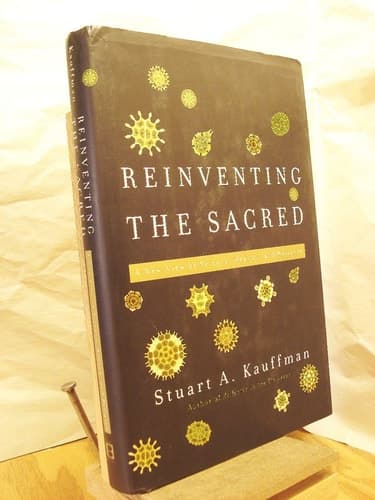
Reinventing the Sacred: A New View of Science, Reason, and Religion
by Stuart A. Kauffman
Where Stark gives you the *what* (Americans believe X, practice Y, donate Z), Berger gives you the *why*—exploring how religious belief systems actually function in society as meaning-making structures. It's more theoretical than American Piety, but written with the same clarity, and it'll deepen your understanding of the data Stark presented.
View book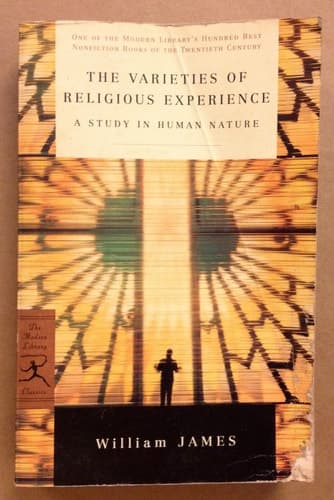
The Varieties of Religious Experience A Study in Human Nature
by William James
Published in 1902, this is the grandfather text that made religious experience a legitimate subject for rigorous inquiry—James was doing phenomenology before Stark was doing statistics. Reading it after American Piety creates an interesting dialogue: James captures the *texture* of individual religious experience through case studies, while Stark shows you the aggregate patterns. Together they give you both the forest and the trees.
View book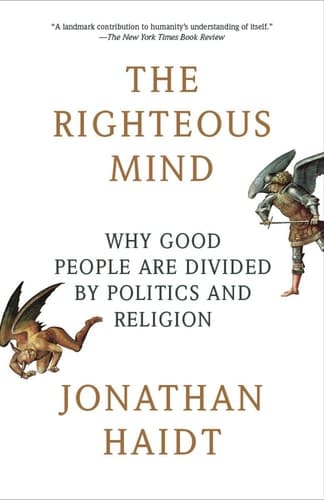
The Righteous Mind Why Good People Are Divided by Politics and Religion
by Jonathan Haidt
Here's the curveball: Haidt is a social psychologist, not a theologian, but he's obsessed with why religious *and* secular people believe what they do with such conviction. He uses Stark's kind of data but asks a different question—not 'what do Americans believe?' but 'what does our moral psychology reveal about why we believe it?' It's contemporary (2012) and will make you reconsider the denominational differences Stark catalogued.
View book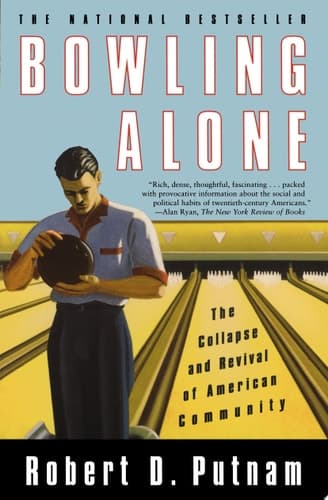
Bowling Alone The Collapse and Revival of American Community
by Robert D. Putnam
Putnam's 2000 study uses many of the same statistical methods as Stark to track something adjacent but distinct: the decline of civic participation, including church attendance and involvement. If you found yourself curious about *why* those donation and participation numbers matter, Putnam shows you the ripple effects—churches aren't just belief-delivery systems, they're social infrastructure, and their health reflects (and affects) broader American community life.
View bookAbout Rodney Stark
R
Rodney Stark
Born 1934
Biography coming soon.
View author page