
Any Way You Cut it Meat Processing and Small-town America : Conference Entitled "New Factory Workers in Old Farming Communities: Costs and Consequences of Relocating Meat Industries" : Papers
David D. StullPublished1995
Pages296
Formathardcover
PublisherKansas University Press
Synopsis
Product Description
In pursuit of jobs and economic development, many rural communities have attracted large meat, poultry, and fish processing plants owned by transnational corporations. But what they don't bargain for is the increase in crime, homelessness, school overcrowding, housing shortages, social disorder, cyclical migration, and poverty that inevitably follows.
To shed light on the forces that drive the meat industry and the communities where it locates, Donald Stull, Michael Broadway, and David Griffith have brought together the varying perspectives of anthropologists, geographers, sociologists, journalists, and industry specialists. Despite increased automation, these experts show that meat, poultry, and fish processing remain labor intensive create problems for employees, host communities, and government regulatory agencies.
Since 1906 when Upton Sinclair exposed the horrors of Chicago meat-packing in The Jungle, consumers have been wary of the process that--even under the best conditions--is an ugly business. Conversely, meat packers are often defensive and distrustful of outside advice and government intervention, even as they look for ways to cut costs and enhance low profit margins.
In an effort to lower costs, meat processors have moved from urban to rural areas, where plants are closer to the supply of raw materials. But rural communities lack a pool of surplus labor and companies end up recruiting immigrants, minorities, and women to work on the plant floors. By examining communities in Kansas, Nebraska, Iowa, Georgia, and North Carolina, the authors evaluate the impact rural plants have on regions with few employment opportunities adn the strain their presence places on social services, schools, and law enforcement agencies. They also investigate the underlying causes of high rates of injury and personnel turnover within the industry.
Providing an overview of structural and geographical changes occurring in meat processing, the authors explore the factors that sway industry and community decision making and subsequently influence the future of rural America. But more than just an analysis of the current circumstances, Any Way You Cut It proposes alternate routes communities and meat processors can take to reverse deteriorating conditions and avoid potentially explosive predicaments.
From the Back Cover
"The premise of this book is exciting and timely, touching on an industrial sector generally overlooked in discussions of the U.S. economy. This accessible and well-written book will be widely read and much debated."--Mark Moberg, author of
Citrus, Strategy, and Class: The Politics of Development in Southern Belize
About the Author
Donald D. Stull is professor of anthropology at the University of Kansas. Michael Broadway is associate professor of geography at SUNY-Geneseo. David Griffith is assistant professor of sociology and anthropology at East Carolina University.
Contributors: Steve Bjerklie, Michael J. Broadway, Lourdes Gouveia, Mark A. Grey, David Griffith, Robert A. Hackenberg, Bob Hall, Gary Kukulka, Donald D. Stull
Recommendations
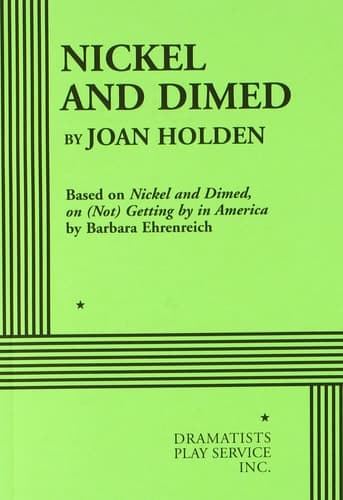
Nickel and Dimed - Acting Edition (Acting Edition for Theater Productions)
by based on NICKEL AND DIMED, ON GETTING BY IN AMERICA by Barbara Ehrenreich Joan Holden (NOT)
Ehrenreich does what Stull's team does through academic analysis, but she does it through lived experience—working minimum-wage jobs across America and documenting the impossible math of survival. Where Any Way You Cut It examines meat processing communities from multiple expert perspectives, Nickel and Dimed puts you inside the actual daily reality of low-wage workers, making the structural problems visceral rather than theoretical.
View book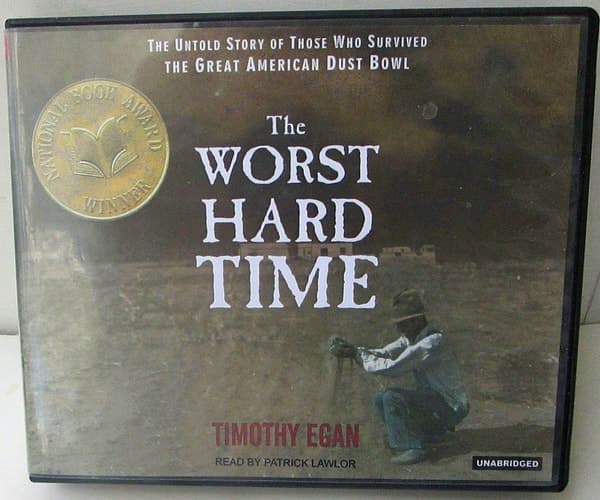
The Worst Hard Time: The Untold Story of Those Who Survived the Great American Dust Bowl
by Timothy Egan
Egan traces how agricultural decisions and economic forces transformed rural America in the 1930s—similar to how Stull examines how meat processing relocated to rural areas and transformed those communities. Both books show how large-scale economic shifts don't just affect markets; they reshape entire regions' social fabric, infrastructure, and the lives of people who had no say in the decision.
View book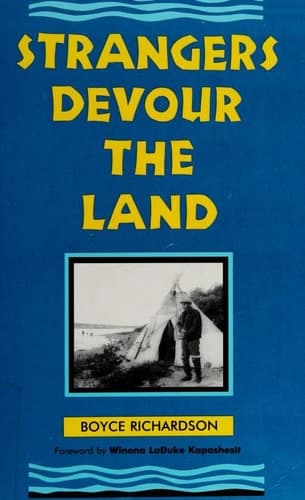
Strangers Devour the Land: A Chronicle of the Assault upon the Last Coherent Hunting Culture in North America, the Cree Indians of Northern Quebec, and Their Vast Primeval
by Boyce Richardson
Hochschild, a sociologist, spends years embedded in a Louisiana community affected by industrial pollution and economic decline—using deep ethnographic work similar to Stull's anthropological approach. But she's after something different: the emotional and political consequences when communities feel abandoned by institutions. If you appreciated how Any Way You Cut It examined the human cost of industrial relocation, Hochschild shows what happens to people's sense of belonging and trust afterward.
View book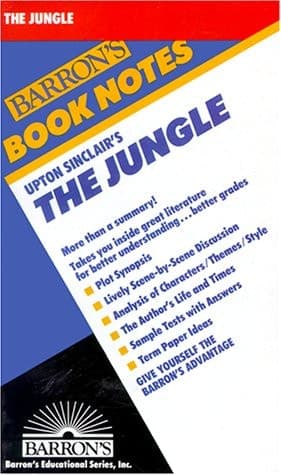
Upton Sinclair's The Jungle
by Eric F. Oatman
Since Stull's book explicitly references Sinclair's 1906 exposé as the touchstone for meat-industry criticism, reading the original is essential context—but here's the surprise: Sinclair's novel is also a story about immigrant labor, economic desperation, and how systems exploit vulnerable workers. Reading it alongside Any Way You Cut It creates a century-long conversation about whether anything has actually changed in how the industry treats its workforce.
View book
Evicted Poverty and Profit in the American City
by Matthew Desmond
Desmond follows eight families facing eviction in Milwaukee, documenting how housing instability cascades through every other part of life—employment, health, schooling. Stull's book mentions housing shortages as one consequence of meat plants arriving in rural areas; Desmond shows the granular, day-to-day reality of what that shortage means for actual families trying to survive, making the abstract 'housing problem' devastatingly concrete.
View bookAbout David D. Stull
Biography coming soon.
View author page