Synopsis
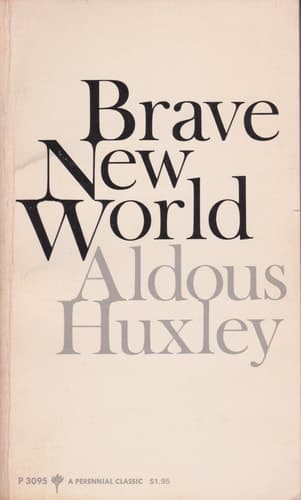
The astonishing novel Brave New World, originally published in 1932, presents Aldous Huxley's vision of the future -- of a world utterly transformed. Through the most efficient scientific and psychological engineering, people are genetically designed to be passive and therefore consistently useful to the ruling class. This powerful work of speculative fiction sheds a blazing critical light on the present and is considered to be Huxley's most enduring masterpiece. Following Brave New World is the nonfiction work Brave New World Revisited, first published in 1958. It is a fascinating work in which Huxley uses his tremendous knowledge of human relations to compare the modern-day world with the prophetic fantasy envisioned in Brave New World, including threats to humanity, such as overpopulation, propaganda, and chemical persuasion.
Recommendations
1984
by George Orwell
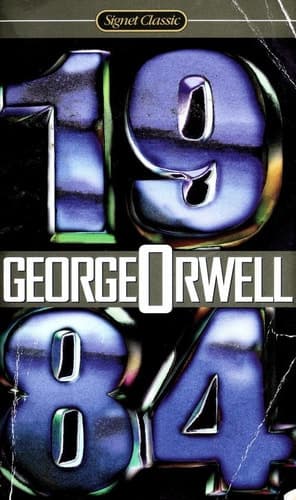
Like Brave New World, 1984 is a classic dystopian novel that explores themes of totalitarian control, social conditioning, and the erosion of individual freedom. Readers who enjoyed Huxley's chilling vision of the future will find Orwell's work to be a compelling and thought-provoking companion piece.
View bookWe
We
by Yevgeny Zamyatin
This early 20th-century Russian novel predates Brave New World and shares many of its core themes, including the conflict between individual liberty and societal control. Readers drawn to Huxley's innovative storytelling and exploration of human nature will appreciate Zamyatin's unique literary style and perspective.

The Handmaid's Tale
by Margaret Atwood
Atwood's dystopian masterpiece, like Brave New World, presents a chilling vision of a future society that has radically transformed in the name of stability and control. Readers who were captivated by Huxley's critiques of social engineering and the dehumanizing effects of technology will find much to explore in this modern classic.
View bookDo Androids Dream of Electric Sheep?
Do Androids Dream of Electric Sheep?
by Philip K. Dick
This science fiction novel, like Brave New World, grapples with questions of what it means to be human in a world increasingly dominated by technology and artificial intelligence. Readers drawn to Huxley's exploration of identity, empathy, and the nature of consciousness will find much to ponder in Dick's visionary work.
Fahrenheit 451
Fahrenheit 451
by Ray Bradbury
Bradbury's dystopian classic, like Brave New World, presents a future society where individuality and critical thinking are suppressed in the name of social stability. Readers who were captivated by Huxley's warnings about the dangers of conformity and the power of propaganda will find much to resonate with in this timeless science fiction novel.
About Aldous Huxley
Biography coming soon.
View author page