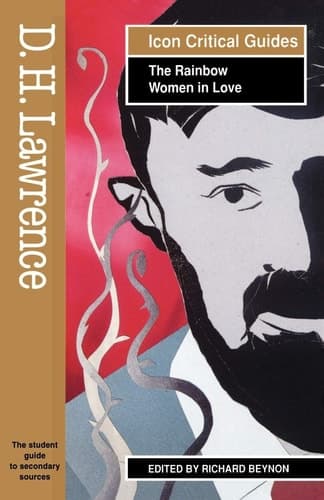
D.H. Lawrence - The Rainbow/Women in Love
Richard BeynonPublished1997
Pages188
Formatpaperback
PublisherMacmillan Education UK
Synopsis
In this Readers' Guide, Richard Beynon explores some of the most significant critical material to have been written about these novels since their publication in 1915 and 1920. The book provides readers with a clear introduction to Lawrence's place in literary studies, and offers a comprehensive account of the many shifts of critical opinion that have affected his literary reputation. Beginning with the early reviews and critical responses to the novels, the Guide moves on to consider Lawrence's declining reputation during the thirties and forties, followed by the so-called 'Lawrence Revival 'of the Fifties, with critical material reproduced from some outstanding studies of the decade. The enormous growth of interest in Lawrence during the Sixties is reflected in essays and extracts that tackle some of the central critical questions raised by the novels. The final chapters discuss the radical revaluation of the novels in the light of feminist criticism in the Seventies, and leave the reader with a sense of the 'postmodern Lawrence' of the late Eighties and early Nineties.
Recommendations
The Savage Detectives A Novel
by Roberto Bolaño
Like Beynon's guide, this novel is fundamentally about how we interpret and reinterpret meaning—but Bolaño puts you inside that process rather than analyzing it from outside. The way his characters obsessively track literary movements and reputations mirrors how Lawrence's own critical standing shifted across decades, except here you're experiencing the confusion and passion of that pursuit in real time.
View book
The remains of the day de Kazuo Ishiguro
by Gallix/François
Ishiguro's narrator is unreliable in ways that echo Lawrence's own contradictions about desire, duty, and self-deception—but instead of exploring these through romantic relationships, he does it through a butler's lifelong service. The novel's structure of gradual revelation, where you slowly realize what the protagonist has been avoiding, creates that same unsettling recognition of how we misread our own lives that feminist critics found so provocative in Lawrence.
View book
Toni Morrison - Beloved
by Carl Plasa
Morrison writes about bodies, desire, and trauma with an intensity that recalls Lawrence's visceral approach to human connection, but she's asking entirely different questions about who gets to claim agency and love. Her prose style—dense, mythic, sensual—shares Lawrence's refusal to sanitize the physical and emotional, while her engagement with how history haunts the present offers a counterpoint to the gender dynamics that feminist critics found so troubling in Lawrence's work.
View book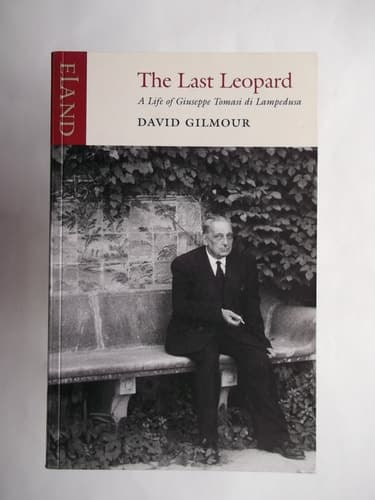
The Last Leopard: A Life of Giuseppe Tomasi di Lampedusa
by David Gilmour
Published in 1958 but set during Italy's unification, this novel captures that same moment of social upheaval and personal transformation that Lawrence explored—the collision between old certainties and new possibilities. Lampedusa's protagonist navigates desire, family obligation, and historical change with a melancholic wisdom that suggests Lawrence's concerns about modernity were part of a broader European crisis, not just an English one.
View book
If on a Winter's Night a Traveler Introduction by Peter Washington
by Italo Calvino
Here's your surprise: a metafictional puzzle-box that seems nothing like Lawrence until you realize it's actually about the same thing Beynon's guide is—how we read, how we construct meaning, how a text changes depending on who's interpreting it. Calvino plays with narrative perspective and reader expectation in ways that illuminate exactly why Lawrence's reputation kept shifting; this novel is a playful demonstration of how literary meaning is never fixed.
View bookAbout Richard Beynon
Biography coming soon.
View author page