
Die Geschichte meines Sohnes Roman
Nadine GordimerPublished1994
Pages317
Formatpaperback
PublisherFischer-Taschenbuch-Verlag
Synopsis
Playing truant, Will slips off to a movie theatre near Johannesburg and is shocked to see his father there--with a woman he doesn't know. The father is a "colored" schoolteacher who has become a hero in the struggle against apartheid; his companion is a white activist fiercely dedicated to the cause.
Recommendations
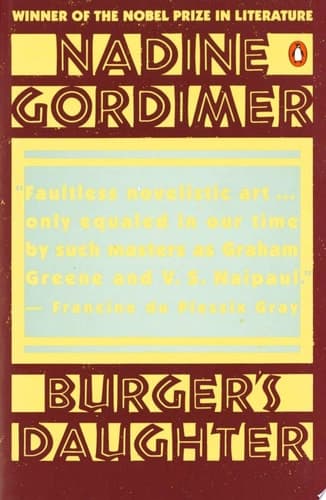
Burger's Daughter
by Nadine Gordimer
I know—you just finished Gordimer—but hear me out. This 1979 novel operates in the same moral universe as *Die Geschichte meines Sohnes*, but from a completely different angle: a young white woman grappling with her inheritance of her parents' anti-apartheid activism. Where your last book explored a father's divided loyalties, this one asks what it means when you *inherit* someone else's political conscience and have to decide if it's actually yours.
View book
The Conservationist
by Unknown
Anand writes about class and caste in 1970s India with the same unflinching eye Gordimer brings to race in South Africa—but his prose is more lyrical, almost elegiac. A wealthy man's attempt to 'conserve' a rural village becomes a portrait of how power operates through paternalism rather than overt force. You'll recognize that tension between good intentions and structural complicity that haunts Gordimer's work.
View book
The Apocalyptic Vision of Mikhail Bulgakov's the Master and Margarita (Studies in Slavic Language & Literature)
by Edward E. Ericson
This is my surprise pick—a 1960s Russian novel that seems nothing like yours on the surface (it's got the Devil visiting Moscow, for heaven's sake), but it shares Gordimer's obsession with how individuals navigate impossible political systems. Bulgakov uses magical realism and dark comedy to explore what happens when you try to create or preserve something beautiful under totalitarianism. The emotional core—watching good people compromise—will feel familiar, but the method is wildly different.
View book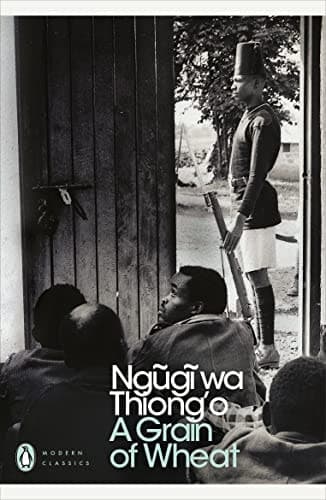
A Grain of Wheat
by Ngugi wa Thiong'o
Published in 1967, this Kenyan novel examines the aftermath of colonial struggle through interconnected lives in a single village—much like how Gordimer uses Will's discovery to open up questions about his father's public and private selves. Ngũgĩ is particularly brilliant at showing how independence movements create their own moral complexities and betrayals. The structure mirrors your book's technique of revelation through a child's perspective.
View book
The remains of the day de Kazuo Ishiguro
by Gallix/François
Here's a quieter book about a man confronting what he's sacrificed for loyalty—in this case, to an employer rather than a cause, but the emotional architecture is similar. Ishiguro reveals Will's father's inner life through gaps and silences; Ishiguro does the same with Stevens, his English butler. Both explore how people rationalize their choices when ideology and personal desire collide. It's less overtly political than Gordimer, but psychologically it's asking the same hard questions.
View bookAbout Nadine Gordimer
N
Nadine Gordimer
1923–2014
South Africa's first Nobel laureate in Literature (1991). Exceedingly polished, creative writer.
View author page