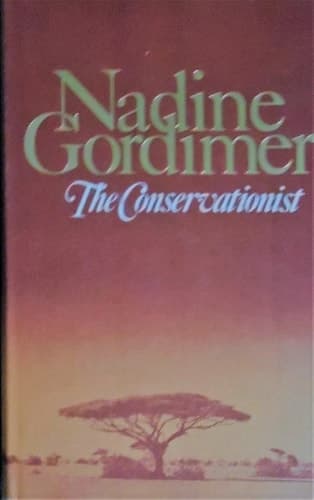
The Conservationist
Unknown
Published1987
Synopsis
The winner of the 1991 Nobel Prize in Literature paints a fascinating portrait of a "conservationist" left only with the possibility of self-preservation, a subtle and detailed study of the forces and relationships that seethe in South Africa today.
Recommendations
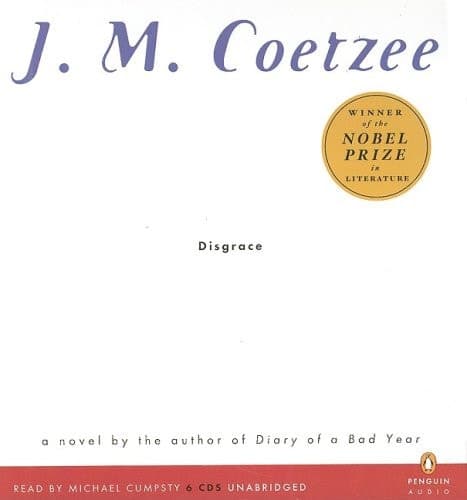
Disgrace
by J. M. Coetzee
Since you've just finished Gordimer's unflinching look at South African power dynamics, Coetzee's exploration of a man stripped of status and forced into moral reckoning will feel like a natural continuation of that conversation. Both authors dissect how personal survival instincts collide with the weight of historical guilt, though Coetzee's protagonist experiences a more visceral, almost physical humiliation that makes the psychological unraveling impossible to ignore.
View book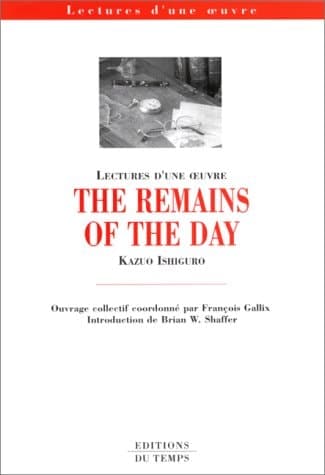
The remains of the day de Kazuo Ishiguro
by Gallix/François
What draws me to recommend this is how Ishiguro mirrors Gordimer's technique of revealing a character's self-deception through meticulous observation—his butler's careful narration slowly exposes the compromises he's made, much like Gordimer's conservationist discovers what he's actually conserving. The quiet, controlled prose style masks an increasingly tragic portrait of a life organized around the wrong priorities.
View book
Toni Morrison - Beloved
by Carl Plasa
I'm suggesting this partly because it operates in a different register—Morrison's prose is incantatory where Gordimer's is precise—but both writers are obsessed with how historical trauma embeds itself in individual bodies and relationships. Morrison examines what people will do to survive and what survives in them afterward, using a haunted landscape (literal and psychological) to explore possession and ownership in ways that echo Gordimer's South African tensions.
View book
The Apocalyptic Vision of Mikhail Bulgakov's the Master and Margarita (Studies in Slavic Language & Literature)
by Edward E. Ericson
Here's the surprise that might seem sideways at first: this 1960s Russian novel shares Gordimer's interest in how power corrupts relationships and how individuals navigate systems that demand compromise, but Bulgakov wraps it in satire and magical realism. The parallel narratives—one set in Soviet Moscow, one in ancient Jerusalem—create the same effect as Gordimer's layered social observation: you're watching characters trapped in structures larger than themselves, but Bulgakov lets you see the absurdity more clearly.
View book
Mulata
by Miguel Angel Asturias
Published in 1963, this novel offers a different geographical and temporal perspective on similar themes—a man's attempt to preserve his position and identity in a society where power is fluid and morality is negotiable. Asturias writes with a baroque density that contrasts with Gordimer's restraint, but both are interrogating what it means to be a 'conservationist' in a world where the old orders are collapsing, and what gets sacrificed in the attempt to hold on.
View bookAbout Unknown
U
Unknown
Biography coming soon.