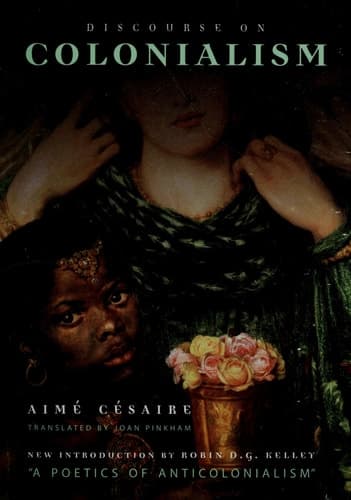
Synopsis
"Césaire's essay stands as an important document in the development of third world consciousness--a process in which [he] played a prominent role."
This classic work, first published in France in 1955, profoundly influenced the generation of scholars and activists at the forefront of liberation struggles in Africa, Latin America, and the Caribbean. Nearly twenty years later, when published for the first time in English, Discourse on Colonialism inspired a new generation engaged in the Civil Rights, Black Power, and anti-war movements and has sold more than 75,000 copies to date.
Aimé Césaire eloquently describes the brutal impact of capitalism and colonialism on both the colonizer and colonized, exposing the contradictions and hypocrisy implicit in western notions of "progress" and "civilization" upon encountering the "savage," "uncultured," or "primitive." Here, Césaire reaffirms African values, identity, and culture, and their relevance, reminding us that "the relationship between consciousness and reality are extremely complex. . . . It is equally necessary to decolonize our minds, our inner life, at the same time that we decolonize society." An interview with Césaire by the poet René Depestre is also included.
Recommendations
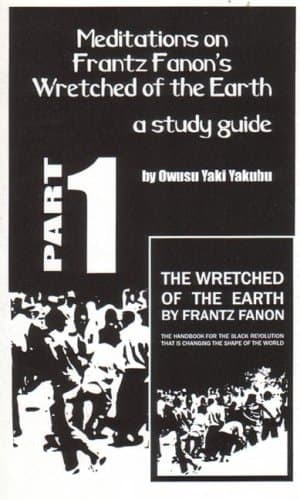
Meditations on Frantz Fanon's Wretched of the Earth, Part One A Study Guide
by Owusu Yaki Yakubu
Fanon takes Césaire's critique and pushes it into the psychological and political dimensions of decolonization—he's examining not just the systems of oppression but how colonialism rewires the minds of both colonizer and colonized. Where Césaire eloquently diagnoses the disease, Fanon is mapping the path toward cure, making this a natural intellectual continuation that deepens rather than repeats.
View book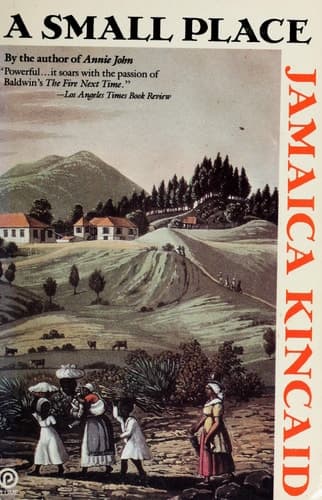
A Small Place
by Jamaica Kincaid
Kincaid does something Césaire couldn't quite do in essay form—she embeds the rage and clarity of decolonial critique into a lyrical, almost poetic meditation on Antigua that reads like a letter written directly to you, the tourist, the inheritor of colonial systems. It's Césaire's arguments about hypocrisy and false 'civilization' made visceral and intimate, with a narrator who refuses your comfort.
View book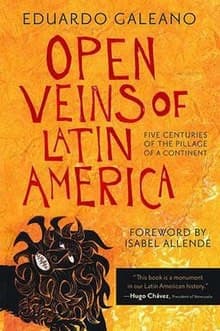
Open Veins of Latin America Five Centuries of the Pillage of a Continent
by Eduardo Galeano
Galeano applies Césaire's framework to the specific economic plundering of Latin America, but he does it with a lyricist's touch—short chapters, aphorisms, and a narrative style that feels almost like prose poetry. If you appreciated Césaire's ability to make political economy readable and moving, Galeano extends that gift across a continent's worth of material.
View book
The Apocalyptic Vision of Mikhail Bulgakov's the Master and Margarita (Studies in Slavic Language & Literature)
by Edward E. Ericson
This is the surprise one—a 1960s Soviet novel that seems far from Césaire, but hear me out: Bulgakov is doing something structurally similar, using narrative to expose the contradictions and hypocrisies embedded in a system that claims moral authority while committing absurdities. The magical realism and dark comedy become a tool for the same kind of ideological critique Césaire employs, just through fiction rather than essay.
View book
Killing Mister Watson
by Peter Matthiessen
Matthiessen's novel reconstructs a historical murder through multiple unreliable narrators, each with their own stake in the story—it's a meditation on how power, race, and colonial violence shape the narratives we tell about history itself. Published in 1990, it shows how Césaire's insights about consciousness and decolonization have evolved into contemporary fiction that questions whose version of history gets believed.
View bookAbout Aimé Césaire
Biography coming soon.
View author page