Synopsis
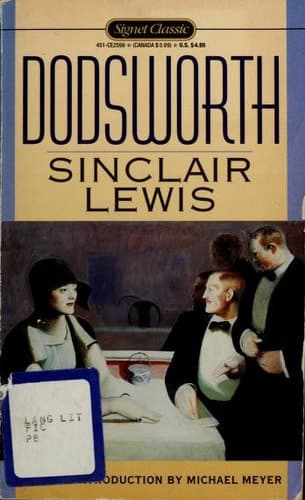
First published in 1929, Dodsworth tells the story of a young American couple who moves to Europe. When the woman becomes involved with another man, her husband must choose between forgiving his wife or abandoning the relationship, and Europe, forever.
Recommendations
F. Scott Fitzgerald The Great Gatsby
by Nicolas Tredell
Both Lewis and Fitzgerald were writing about the American experience in the Jazz Age, but where Dodsworth follows a man watching his marriage dissolve abroad, Gatsby captures that same era's obsession with reinvention and the impossibility of recapturing the past. You'll find the same sharp social observation and the tension between American values and European sophistication, but filtered through a more lyrical, tragic lens.
View book
The remains of the day de Kazuo Ishiguro
by Gallix/François
This one's from 1989, so it gives you that temporal shift you need. Like Dodsworth, it's fundamentally about a man confronting what he's sacrificed for duty and propriety—but Ishiguro does it through an unreliable narrator whose self-deceptions become the real story. The restraint in both works is almost painful; what's *not* said matters as much as what is.
View book
A.S. Byatt's Possession A Reader's Guide
by Catherine Burgass
Here's your surprise pick: it's a literary mystery wrapped in metafiction, but at its heart it's about two couples—one historical, one contemporary—grappling with infidelity, obsession, and what we owe to the people we love. Byatt writes with the same intelligent social awareness as Lewis, but she layers in literary criticism and Victorian poetry, making the intellectual stakes feel as high as the emotional ones.
View book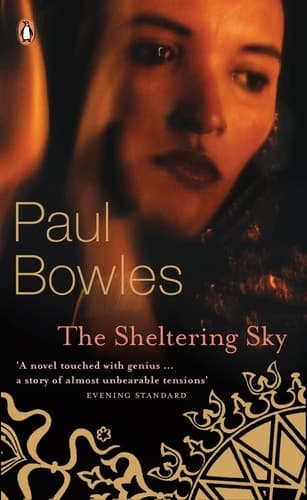
Paul Bowles: The Sheltering Sky, Let It Come Down, The Spider's House (LOA #134) (Library of America Paul Bowles Edition)
by Paul Bowles
Bowles takes the American-abroad setup that Lewis uses and makes it genuinely unsettling—a couple travels into North Africa and slowly comes undone, but the real dissolution is psychological and spiritual, not just marital. Where Lewis observes his characters with satirical distance, Bowles pulls you into their disorientation; the landscape becomes almost a character itself, indifferent to their American assumptions about how life should work.
View book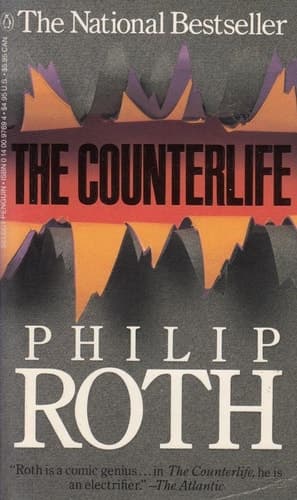
The Counterlife
by Philip Roth
Roth plays with narrative structure in ways that let him explore the same marital tensions as Lewis, but from multiple angles—literally, the story keeps restarting with different versions of events. It's metafictional without being cute about it, and Roth's characters argue and rationalize and seduce themselves with the same self-aware American energy that makes Dodsworth so readable, just with more neurosis and Jewish humor underneath.
View bookAbout Sinclair Lewis
S
Sinclair Lewis
1885–1951
American novelist, short-story writer, and playwright
View author page