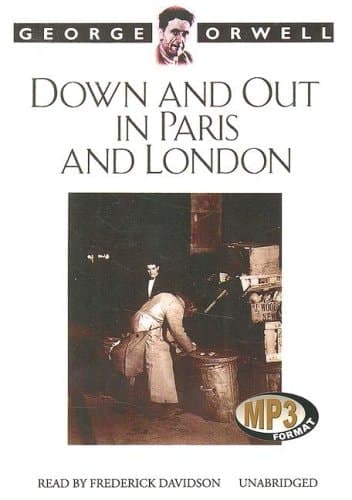
Down and Out in Paris and London
George OrwellPublished2007
Pages200
FormatMP3 CD
PublisherBlackstone Audio Inc.
Synopsis
Orwell's own experiences inspire this semi-autobiographical novel about a penniless man living in Paris in the early 1930s. The narrator's poverty brings him into contact with strange incidents and characters, which he manages to chronicle with great sensitivity and graphic power. The latter half of the book takes the English narrator to his home city, London, where the world of poverty is different in externals only. A socialist who believed that the lower classes were the wellspring of world reform, Orwell actually went to live among them in England and on the continent. His novel draws on his experiences of this world, from the bottom of the echelon in the kitchens of posh French restaurants to the free lodging houses, tramps, and street people of London. In the tales of both cities, we learn some sobering Orwellian truths about poverty and society.
Recommendations
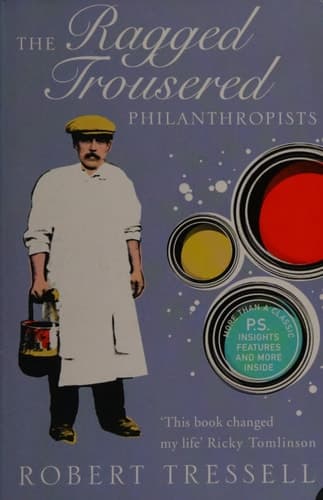
The Ragged Trousered Philanthropists
by Robert Tressell
Tressell spent years as a working man himself, and his novel captures the daily indignities of manual labor with the same unflinching eye Orwell brings to his poverty narrative. Where Orwell observes from the outside looking in, Tressell writes from within the working class experience itself—following house painters in Edwardian England whose wages barely keep them alive. You'll recognize Orwell's later socialist convictions taking shape here, but filtered through the voices of men who have no choice but to live them.
View book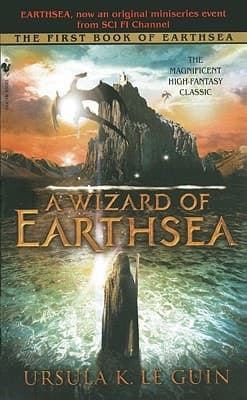
A Wizard of Earthsea
by Ursula K. Le Guin
This is the surprise pick, but hear me out: Le Guin's fantasy operates on the same principle as Orwell's realism—she builds her world from the ground up with meticulous attention to how ordinary people actually live. A young wizard's education isn't glamorous; it involves hard work, failure, and learning humility among fishermen and farmers. The prose has that same clarity and moral seriousness you loved in Orwell, just applied to a world with magic instead of Paris kitchens.
View book
Upton Sinclair's The Jungle
by Eric F. Oatman
Published in 1906, this novel predates Orwell's work but shares his investigative approach—Sinclair embedded himself in Chicago's meatpacking plants the way Orwell worked in restaurant kitchens. Both writers use their firsthand accounts to expose systems that grind people down, and both refuse to sentimentalize poverty or its victims. The difference is Sinclair's rage burns hotter, but the documentary precision is unmistakably kindred.
View book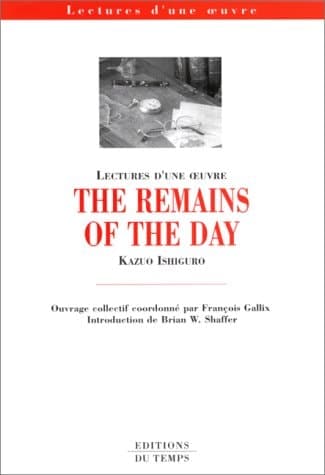
The remains of the day de Kazuo Ishiguro
by Gallix/François
Ishiguro's butler narrator is the inverse of Orwell's penniless wanderer—he's spent decades in service within a grand house—but both narrators are observing the world from the margins, seeing truths that the comfortable people around them refuse to acknowledge. Where Orwell documents poverty directly, Ishiguro documents the quiet desperation of someone who's sacrificed everything for a system that never valued him. The restraint in the prose mirrors Orwell's, and both books are ultimately about what we refuse to see.
View bookAbout George Orwell
G
George Orwell
1903–1950
George Orwell, originally born as Eric Arthur Blair, was an English novelist and journalist. His work is marked by keen intelligence and wit, a profound awareness of social injustice, an intense, revolutionary opposition to totalitarianism, a passion for clarity in language and a belief in democratic socialism. ([Source][1].) [1]:https://en.wikipedia.org/wiki/George_Orwell
View author page