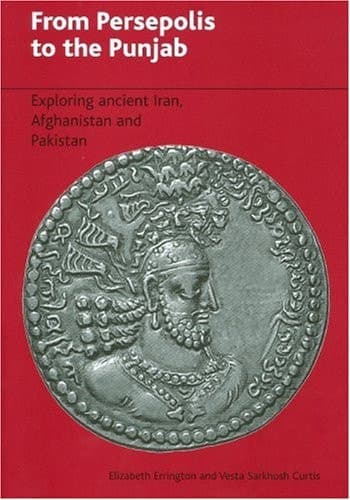
From Persepolis to the Punjab: Exploring the Past in in Iran, Afghanistan and Pakistan
Elizabeth ErringtonPublished2007
Pages280
Formathardcover
PublisherBritish Museum Press
Synopsis
The phrase 'from Persepolis to the Punjab' refers to the vast Iranian empires of the Achaemenids (550-331 BC), Parthians (238 BC-AD 224) and the Sasanians (AD 224-651), which extended eastwards through Afghanistan to the north-western borderlands of the Indian subcontinent. The interest of 19th-century European powers in this region has been called 'the Great Game' and its effects are explored in this book, which is based on contributions to a study day and conference held in the British Museum, supplemented with additional material.
Recommendations
The Silk Roads A Route and Planning Guide
by Paul Wilson
Frankopan does for trade routes what Errington does for empires—he traces how the movement of goods, ideas, and power across Asia fundamentally shaped world history. Where Errington focuses on the archaeological and imperial narrative of the Iranian plateau and beyond, Frankopan zooms out to show how these same regions were the connective tissue binding civilizations together, making this a natural companion that reframes the geography you've just explored.
View book
The Conquest of New Spain
by Bernal Diaz Del Castillo
This is a curveball, but hear me out: like Errington's book, this is a firsthand account filtered through 19th-century European interests and colonial perspectives, yet it's also a primary source that reveals how empires actually functioned on the ground. Reading Díaz's account of Aztec administration alongside your understanding of Achaemenid bureaucracy creates an unexpected dialogue about how vastly different societies solved similar problems of scale and control.
View book
Modern Afghanistan A History of Struggle and Survival
by Amin Saikal
Since Afghanistan appears as a crucial throughline in Errington's narrative—the bridge between Persian and Indian worlds—this focused study lets you drill deeper into a region that's often treated as a crossroads rather than a center. Crampton examines how Afghan identity formed precisely through these imperial pressures you've just read about, giving texture and continuity to what might otherwise feel like a distant historical abstraction.
View book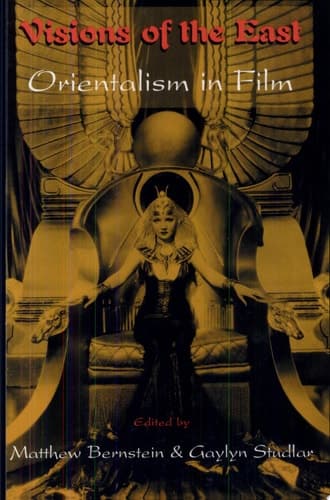
Visions of the East Orientalism in Film
by Matthew Bernstein
Here's your surprise pick: a lavishly illustrated art history that directly addresses the 'Great Game' obsession Errington mentions—but through the lens of how 19th-century European painters and collectors actually *imagined* these Persian and Afghan worlds. It's a meta-commentary on the very colonial gaze that shaped Errington's source material, and reading them together reveals how knowledge about the East was constructed as much as discovered.
View book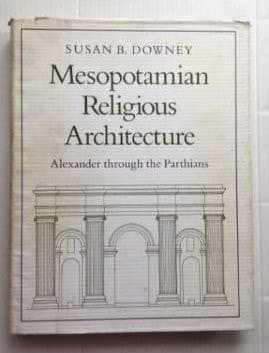
Mesopotamian Religious Architecture Alexander Through the Parthians
by Susan B. Downey
Errington mentions the Parthians almost in passing as one of three great empires, but Kia gives them the monographic treatment they deserve—showing how they maintained control across those same vast distances and how they functioned as the crucial middlemen in Silk Road trade. It's the deep-dive sequel to one thread of your book, written by someone who treats the Parthians as protagonists rather than a historical interlude.
View bookAbout Elizabeth Errington
Biography coming soon.
View author page