
God the Invisible King
H. G. WellsPublished2003
Pages200
Formatpaperback
PublisherKessinger Publishing, LLC
Synopsis
This scarce antiquarian book is a facsimile reprint of the original. Due to its age, it may contain imperfections such as marks, notations, marginalia and flawed pages. Because we believe this work is culturally important, we have made it available as part of our commitment for protecting, preserving, and promoting the world's literature in affordable, high quality, modern editions that are true to the original work.
Recommendations

The Open Society and Its Enemies
by Karl Raimund Popper
Like Wells, Popper was grappling with how to build a rational, progressive society in the shadow of totalitarianism—but where Wells offers spiritual metaphysics, Popper dismantles utopian thinking with surgical precision. If you appreciated Wells's attempt to reconcile science with faith, you'll find Popper's rigorous critique of both dogmatic religion and dogmatic politics equally thought-provoking, just from the opposite angle.
View book
The Apocalyptic Vision of Mikhail Bulgakov's the Master and Margarita (Studies in Slavic Language & Literature)
by Edward E. Ericson
Bulgakov writes a novel that's simultaneously a spiritual allegory, a political satire, and a love story—much like Wells attempting to fuse theology with social commentary. The Devil's visit to Soviet Moscow has that same quality of using the fantastic to interrogate what we actually believe about morality and power, but Bulgakov's prose is far more baroque and playful where Wells is earnest.
View book
Find what the Sailor Has Hidden Vladimir Nabokov's Pale Fire
by Priscilla Meyer
Here's your surprise pick: a metafictional puzzle-box that deconstructs the very act of interpretation and belief-making. While Wells asks 'what should we believe about God?', Nabokov asks 'how do we know what we believe at all?'—and he does it through an unreliable narrator's obsessive annotations of a poem. It's playful where Wells is solemn, but both writers are fundamentally concerned with how human consciousness constructs meaning.
View book
Fyodor Dostoevsky's the Brothers Karamazov (Bloom's Modern Critical Interpretations)
by Unknown
Dostoevsky's novel is essentially a prolonged theological argument—particularly the Grand Inquisitor section—where characters debate faith, doubt, and divine justice with the same intensity Wells brings to his invisible king. But where Wells theorizes, Dostoevsky dramatizes through suffering and passion, making the same questions feel urgent and personal rather than abstract.
View book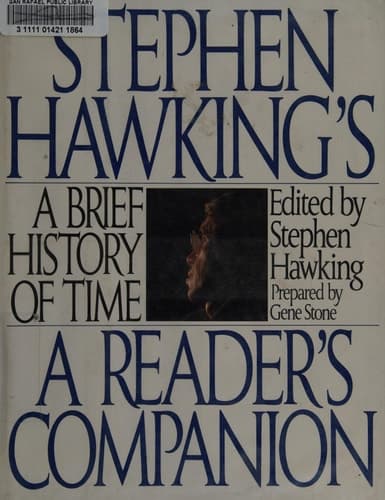
Stephen Hawking's A Brief History of Time A Reader's Companion
by Stephen Hawking
If Wells's invisible king represents his attempt to marry science with spirituality, Hawking's accessible cosmology does something similar for a later age—explaining the universe's deepest mysteries while remaining genuinely humble about what we cannot know. It's non-fiction where Wells is fiction, but both writers share that rare ability to make abstract physics feel numinous rather than cold.
View bookAbout H. G. Wells
Biography coming soon.
View author page