
Synopsis
Esker spends her days teaching math at a private school in Brooklyn. At thirty- one, after early loss and romantic disappointment, she has found refuge in the neat solutions of geometry and algebra. But when her favorite student, Ann, is mysteriously injured and is confined indoors while she recovers, Esker begins home-tutoring the precocious teenager. Soon, much to her chagrin, Esker finds herself falling edgily, haltingly in love with Anns father. As Leah Hager Cohen uses this unlikely triangle to chart the complexities of affection, each of her endearing characters draws urgently closer to making a decision that will have irrevocable effects on the others. Quirky, moving, and exquisitely written, "Heart, You Bully, You Punk" will resonate with anyone who has struggled with an unruly heart.
Recommendations

Securing the Commonwealth Debt, Speculation, and Writing in the Making of Early America
by Jennifer J. Baker
Like Cohen's novel, Offill constructs emotional architecture from fragments—here, the interior life of a marriage told in crystalline, precise observations. Both writers use restraint as their greatest tool, letting what's unsaid carry as much weight as dialogue, and both understand how intellectual people (Esker with her geometry, this narrator with her literary ambitions) navigate the messiness of desire.
View book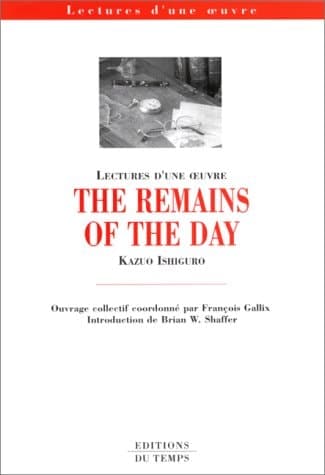
The remains of the day de Kazuo Ishiguro
by Gallix/François
This 1989 novel shares Cohen's fascination with how people construct narratives around their own emotional paralysis—Stevens, like Esker, has built a life of careful control that begins to crack when confronted with what he's denied himself. Both explore the particular loneliness of people who are articulate about everything except their own hearts, and both use a single relationship as the lens to examine a lifetime of choices.
View book
The Vanishing
by Tim Krabbé
Bennett weaves together multiple timelines and perspectives to show how love and identity are inseparable—much like Cohen's exploration of how Esker's carefully constructed self begins to dissolve around Ann and her father. Both novels treat their characters with genuine tenderness while refusing to let them off the hook for their choices, and both understand that the most devastating moments are often the quiet ones.
View book
The Last Leopard: A Life of Giuseppe Tomasi di Lampedusa
by David Gilmour
A surprise recommendation, but stay with me: this 1958 Sicilian epic is fundamentally about a man watching his world transform while he remains fixed in place—thematically echoing Esker's attempt to remain static in her geometric certainties while life insists on change. Lampedusa's prose is sensuous and digressive where Cohen is spare, but both writers understand that the most poignant human dramas happen in the spaces between grand historical or emotional events.
View book
Promise You Won't Freak Out A Teenager Tells Her Mom the Truth About Boys, Booze, Body Piercing and Other..
by Doris A. Fuller
This story collection uses speculative and surreal elements to examine intimacy and vulnerability in ways that feel more emotionally true than realism could achieve—similar to how Cohen uses the precise language of mathematics to describe the imprecision of falling in love. Machado's characters, like Esker, are often caught between what they think they should feel and what they actually feel, and both writers excel at rendering that specific, aching gap.
View bookAbout Leah Hager Cohen
Biography coming soon.
View author page