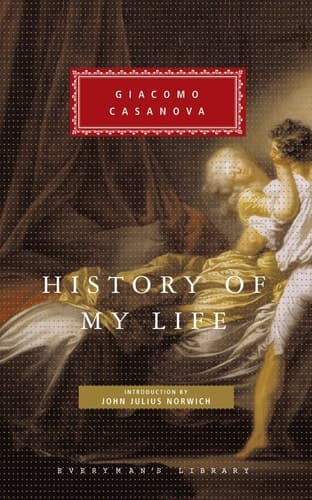
Synopsis
The name of Giacomo Casanova, Chevalier de Seingalt (1725-1798), in now synonymous with amorous exploits, and there are plenty of these, vividly narrated, in him memoirs. But Casanova was not just an energetic lover. In his time he was diplomat, business man, trainee priest, traveller, prisoner, magician, confidence trickster, gambler, professional entertainer and chalatan. He financed business projects, organised lotteries, wrote opera libretti and dabbled in high politics. Above all he was an autobiographer of enduring brilliance and subtlety who left behind him what is probably the most remarkable confession ever written. Casanova was a Venetian who explored to the full all the possibilities 18th century Venice offered by way of love and profit before being imprisoned, escaping from gaol, and fleeing from the city to begin travels which took him across Europe. In Moscow and London, Berlin and Constantinople, he met the famous men and women of the time - Catherine the Great, Voltaire, Louis XV, Rousseau - and recorded his encounters for the memoirs he wrote in retirement at the end of his life. These memoirs are by turns subtle, touching, thrilling, wonderfully comic and quite irresistible. Although the present edition includes one third of Casanova's enormous (though unfinished) book, it contains all his major adventures and all is greatest affairs of the heart. 'Casanova is unsurpassed as the recreator of the daily talking interests of 18th century Europe. he ranges from slut to patrician, from closet to cabinet, waterfront to palace.' - V S PRITCHETT
Recommendations
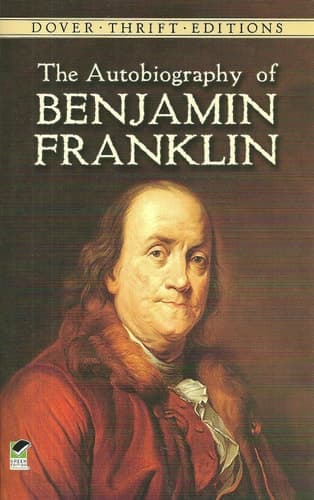
The Autobiography of Benjamin Franklin
by Benjamin Franklin
Franklin was Casanova's contemporary and equally restless—diplomat, inventor, printer, ladies' man, and schemer across multiple continents. What makes this pairing special is that Franklin writes with similar wit and self-awareness about his own contradictions, but from an American pragmatist's angle rather than a Venetian libertine's. You'll recognize the same sharp eye for human nature and the same pleasure in recounting narrow escapes and clever negotiations.
View book
The Moonstone, by Wilkie Collins
by Jean-Pierre Naugrette
This is my surprise pick for you—it's a Victorian mystery novel, not a memoir, but Collins structures it as a series of first-person accounts from different characters, each revealing their own secrets and unreliable perspectives. Like Casanova, it's deeply interested in how people deceive themselves and others, and it has that same addictive quality where you're constantly discovering that characters aren't who they seemed. The prose has real elegance without being stuffy.
View book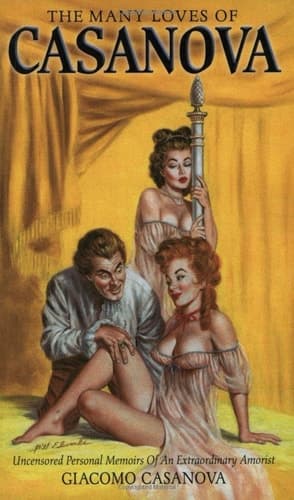
The Many Loves of Casanova Uncensored Personal Memoirs of Jacques Casanova
by Giacomo Casanova
Wait—hear me out. You've read an abridged third of the original. The unabridged Penguin Classics edition (translated by Willard R. Trask) contains passages and entire episodes cut from the popular version, including his time in Russia, his later years, and some of his most philosophically reflective writing. It's like discovering new rooms in a house you thought you knew.
View book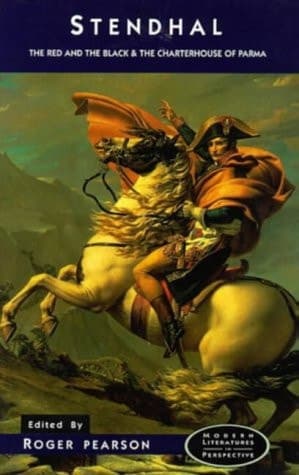
Stendhal: The Red and the Black and The Charterhouse of Parma (Modern Literatures In Perspective)
by Roger Pearson
Stendhal was writing in the generation after Casanova, and his protagonist Fabrizio del Dongo moves through Italian courts and European capitals with similar energy and moral flexibility. But Stendhal is more interested in the *psychology* of ambition and desire—he gets inside his character's head in ways that feel almost modern. The novel has that same intoxicating mix of love, politics, and adventure, but filtered through a more analytical temperament.
View bookAbout Giacomo Casanova
G
Giacomo Casanova
1725–1798
Giacomo Girolamo Casanova (Venecia; 2 de abril de 1725 - Dux, actual Duchcov, Bohemia; 4 de junio de 1798) fue un aventurero, libertino, historiador, escritor, diplomático, jurista, violonchelista, filósofo, matemático, bibliotecario y agente secreto italiano, hermano de los pintores Giovanni Battista Casanova (1730-1795) y Francesco Casanova (1727-1802). Se le conoce sobre todo como arquetipo del libertino seductor, del que se han contado 132 conquistas amorosas.1 Su obra principal fue una vasta autobiografía, la Histoire de ma vie, conocida también como Memorias de Casanova, escrita en francés porque entonces era el idioma más conocido y hablado en Europa, como acontece en el siglo XX con el inglés. (wikipedia)
View author page