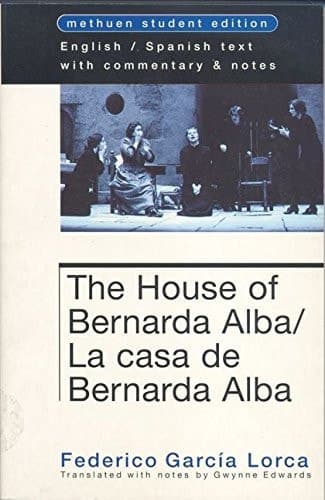
House Of Bernarda Alba (Methuen World Classics)
Federico García LorcaPublished1998
Pages208
Formatpaperback
PublisherMethuen Drama
Synopsis
Bernarda Alba is a widow, and her five daughters are incarcerated in mourning along with her. One by one they make a bid for freedom, with tragic consequences. Lorca's tale depicts the repression of women within Catholic Spain in the years before the war.
Edited with invaluable student notes - a must for students of Spanish drama
Recommendations
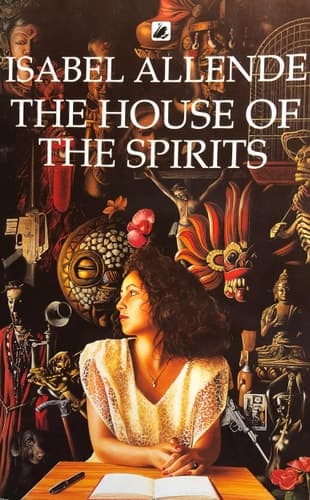
The House of the Spirits
by Isabel Allende
Like Lorca, Allende traces how political upheaval and rigid family structures crush individual desire—but she spans generations across a century, showing how women's resistance evolves across time. The magical realism gives breathing room to the emotional truths that Lorca's claustrophobic setting forces into tragedy, yet the underlying rage at patriarchal control burns just as fiercely.
View book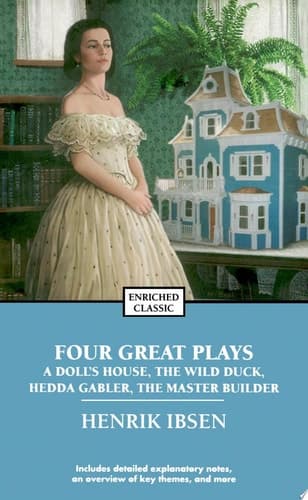
Four Great Plays of Henrik Ibsen A Doll's House, The Wild Duck, Hedda Gabler, The Master Builder
by Henrick Ibsen
Ibsen's play hits similar nerves about women trapped by social expectation and marital duty, but where Lorca's women are literally locked away, Ibsen shows how the invisible bars of respectability can be even more suffocating. The ending will feel like a conversation across decades—two playwrights asking the same question about whether escape is even possible.
View book
Safe at Last in the Middle Years The Invention of the Midlife Progress Novel : Saul Bellow, Margart Drabble, Anne Tyler, and John Updike
by Margaret Morganroth Gullette
This is the surprise pick: Ernaux abandons traditional narrative to chronicle French women's lives from 1941 onward through fragments of conversation, advertising, and cultural memory. It's sociological rather than dramatic, but it captures what Lorca was documenting—how entire generations of women internalize repression so completely it becomes invisible. Reading it after Lorca feels like seeing the same tragedy from the inside.
View book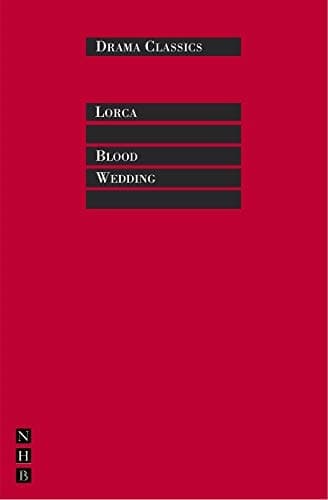
Blood Wedding
by Federico García Lorca
Wait—this is Lorca's *other* tragedy, adapted and filmed by Saura in 1981. If you haven't encountered it, this gives you another angle on Lorca's obsession with desire thwarted by honor and family obligation, but through a different formal experiment. The dance sequences transform what could be static domestic drama into something visceral and almost unbearable.
View book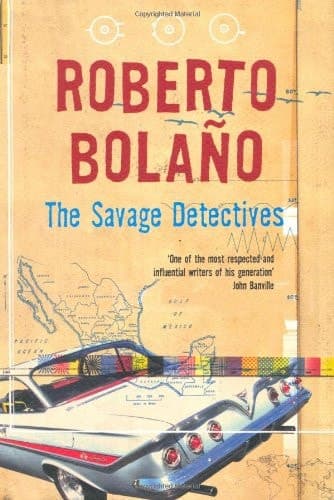
The Savage Detectives A Novel
by Roberto Bolaño
This feels like a departure, but Bolaño is obsessed with how institutions—literary movements, universities, families—consume individuals from the inside. His sprawling, chaotic structure is the opposite of Lorca's tight pressure-cooker, yet both writers are documenting the same Spanish-language world where personal freedom collides violently with collective expectation. It's Lorca's themes exploded across 600 pages of controlled chaos.
View bookAbout Federico García Lorca
Biography coming soon.
View author page