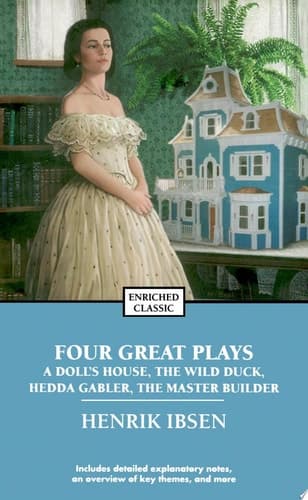
Four Great Plays of Henrik Ibsen A Doll's House, The Wild Duck, Hedda Gabler, The Master Builder
Henrick IbsenPublished2005
Pages448
Formatpaperback
PublisherSimon and Schuster
Synopsis
Four of the most popular and profound works from the playwright known as the "father of modern theater."
A Doll's House (1879) and Ghosts (1881) established Ibsen's reputation as one of the finest playwrights in Europe, but his next two plays—Hedda Gabler (1890) and The Master Builder (1892)—gave him undisputed international fame.
This edition includes:
-A concise introduction that gives readers important background information
-A chronology of the author's life and work
-A timeline of significant events that provides the book's historical context
-An outline of key themes and plot points to help readers form their own interpretations
-Detailed explanatory notes
-Critical analysis, including contemporary and modern perspectives on the work
-Discussion questions to promote lively classroom and book group interaction
-A list of recommended related books and films to broaden the reader's experience
Enriched Classics offer readers affordable editions of great works of literature enhanced by helpful notes and insightful commentary. The scholarship provided in Enriched Classics enables readers to appreciate, understand, and enjoy the world's finest books to their full potential.
Recommendations
The ghost sonata
by August Strindberg
Since you've clearly connected with Ibsen's unflinching examination of domestic secrets and moral hypocrisy, Strindberg's *Ghosts* operates in that same psychological territory—a family haunted by past sins that refuse to stay buried. Where Ibsen builds tension through dialogue and revelation, Strindberg layers it with an almost claustrophobic intensity, trapping characters in a single room where every conversation peels back another layer of deception.
View book
Oscar Wilde: 'The Importance of Being Earnest'
by Oscar Wilde
This might seem like a departure—it's a comedy, after all—but Wilde does something remarkably similar to Ibsen: he uses surface charm and wit to expose the absurdity of social conventions and the lies people construct to maintain respectability. The difference is tone: where Hedda Gabler suffocates under the weight of propriety, Wilde's characters dance through it, but both playwrights are ultimately asking the same question about authenticity versus performance.
View book
The Plays of Anton Chekhov: Nine Plays including The Sea-Gull, The Cherry Orchard, The Three Sisters and Others
by Anton Chekov
Chekhov takes the Ibsenian formula—a family in crisis, a house that represents their past—and transforms it into something quieter and more elegiac. There's no melodramatic confrontation; instead, characters talk past each other while the world changes around them. If you appreciated how Ibsen captures the gap between what people say and what they actually feel, Chekhov makes that gap the entire subject, and it's devastating.
View book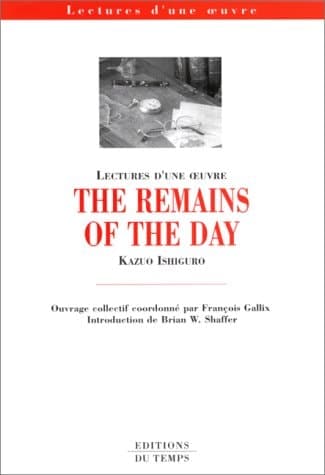
The remains of the day de Kazuo Ishiguro
by Gallix/François
A surprising pivot into 20th-century literary fiction, but hear me out: this novel does with a butler's interior life what Ibsen does with Nora's—it's a slow, agonizing revelation of how a person has constructed an entire identity around duty and propriety, only to face the possibility that they've sacrificed everything for an illusion. Ishiguro's narrator is unreliable in ways that would fascinate anyone who loved the psychological complexity of *Hedda Gabler*.
View bookAbout Henrick Ibsen
Biography coming soon.
View author page