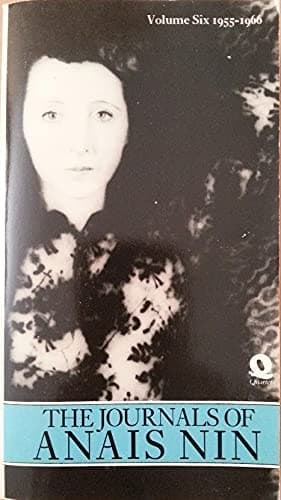
Journals of Anais Nin Volume 6
Anaïs NinPublished1979
Pages432
Formatpaperback
PublisherInterlink Publishing+group Inc
Synopsis
Nin continues her debate on the use of drugs versus the artist's imagination, portrays many famous people in the arts, and recounts her visits to Sweden, the Brussels World's Fair, Paris, and Venice. "[Nin] looks at life, love, and art with a blend of gentility and acuity that is rare in contemporary writing" (John Barkham Reviews). Edited and with a Preface by Gunther Stuhlmann; Index.
Recommendations
Gertrude Steins Autobiographien The autobiography of Alice B. Toklas und Everybody's autobiography
by Monika Hoffmann
Like Nin, Stein writes herself into the artistic landscape of early 20th-century Europe, but with a modernist twist—she narrates her own life through another's voice, creating that same blend of intimate observation and artistic philosophy. Both writers use the journal/memoir form to wrestle with what it means to be a woman creating art in a world of famous men, though Stein's approach is far more formally experimental.
View book
The Measure of Life Virginia Woolf's Last Years
by Herbert Marder
Woolf's chronicle of a family across decades captures that same quality Nin pursues—the texture of lived experience, the way consciousness moves through time and place. Where Nin's journals are intimate and immediate, Woolf's novel is more architecturally ambitious, but both writers refuse to separate the personal from the cultural, the sensual from the intellectual.
View book
The Art of Fiction Notes on Craft for Young Writers
by John Gardner
Here's the surprise: Gardner's craft manual reads almost like a philosophical dialogue, and it directly engages with the question Nin keeps returning to—how does the artist's imagination work, and what's the relationship between lived experience and creation? It's not a journal, but it has that same conversational, exploratory energy, and Gardner writes about technique with the sensuality Nin brings to her observations.
View book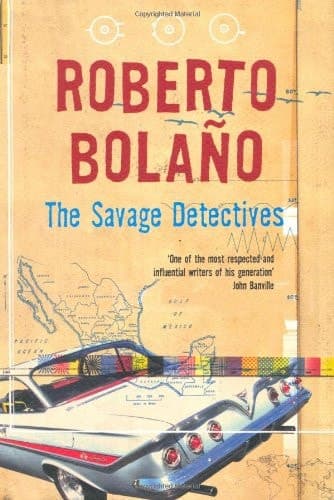
The Savage Detectives A Novel
by Roberto Bolaño
Bolaño's sprawling novel is structured like overlapping journals and testimonies from the 1970s literary underground—it has Nin's obsession with tracking artistic movements and personalities, but filtered through a more postmodern, fragmented sensibility. Both writers are fascinated by how artists live, love, and create in specific cities and moments, though Bolaño's vision is darker and more chaotic.
View book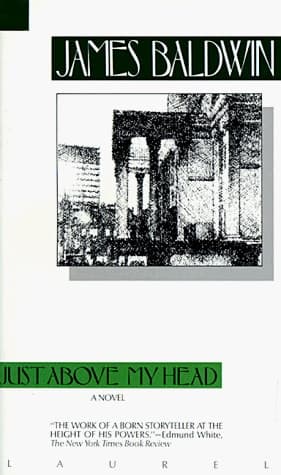
Just Above My Head
by James Baldwin
Baldwin's novel uses retrospective narration to explore a life lived intensely—art, love, sexuality, spiritual searching—with that same acuity and gentility the reviewers praised in Nin. Published in 1979 (the same year as Volume 6), it shares Nin's conviction that the personal and artistic are inseparable, and his prose has that sensory richness and psychological depth that makes you feel you're reading someone's deepest thoughts.
View bookAbout Anaïs Nin
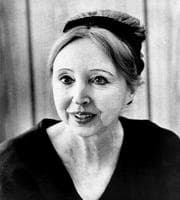
Anaïs Nin is known internationally for her diary, eleven volumes of which have been published. The 35,000 handwritten pages of her journals are currently located in the UCLA library. She was born in Paris to Cuban parents, and spent her early years in Cuba and Spain. Her young adulthood was spent in Paris and she and her husband, Hugo Guiler, moved to the United States in 1939 to avoid World War II. After meeting Rupert Pole in 1947 she engaged in a "bicoastal trapeze" living with him in Los Angeles as a married couple and maintaining her marriage with Guiler in New York. She died of cervical cancer in 1977.
View author page