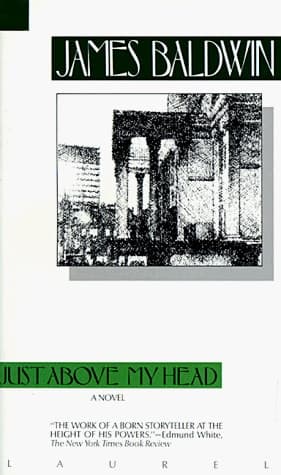
Synopsis
The stark grief of a brother mourning a brother opens this novel with a stunning, unforgettable experience. Here, in a monumental saga of love and rage, Baldwin goes back to Harlem, to a church of his groundbreaking novel "Go Tell It On The Mountain, to the homosexual passion of "Giovanni's Room, and to the political fire that enflames his nonfiction work. Here, too, the story of gospel singer Arthur Hall and his family becomes both a journey into another country of the soul and senses--and a living contemporary history of black struggle in this land.
"A work of passion... Glimpses of family life in Harlem, rapturous music-making in the churches, movements of uneasiness in even the most casual meetings between whites and blacks--scenes that Baldwin seems preternaturally gifted in understanding."--"The New York Times Book Review.
Recommendations

Ralph Ellison - Invisible Man
by Anke Balduf
Like Baldwin, Ellison constructs a narrative voice so commanding it becomes almost a character itself—a narrator wrestling with identity, invisibility, and the weight of being seen (or unseen) in America. Both novels use Harlem as a spiritual and political crucible, and both writers understand how personal grief and national trauma are inseparable.
View book
The Apocalyptic Vision of Mikhail Bulgakov's the Master and Margarita (Studies in Slavic Language & Literature)
by Edward E. Ericson
This is the surprise pick—a 1960s Russian novel that shares Baldwin's gift for weaving the sacred and profane, the personal and the political, into something that feels both fantastical and urgently real. Like *Just Above My Head*, it's a love story that refuses sentimentality, set against a backdrop of systemic oppression, and it uses spiritual/religious imagery to interrogate power itself.
View book
Toni Morrison - Beloved
by Carl Plasa
Morrison shares Baldwin's unflinching approach to trauma and family bonds, but she approaches it through a different historical lens—slavery rather than mid-century racism. The way she moves between past and present, between the living and the dead, echoes Baldwin's exploration of how history lives in the body and in memory.
View book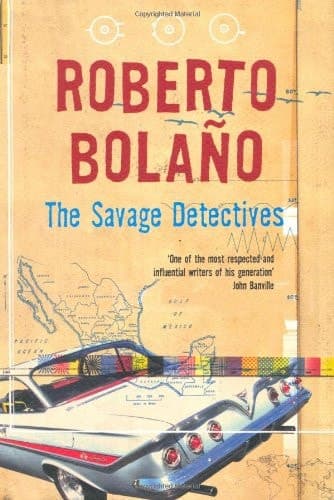
The Savage Detectives A Novel
by Roberto Bolaño
A radically different structure—fragmented, sprawling, almost chaotic—but Bolaño shares Baldwin's obsession with how artists and outsiders navigate systems that want to contain or destroy them. Both novels treat friendship and intellectual passion as matters of life and death, and both are unafraid of digression and mess.
View book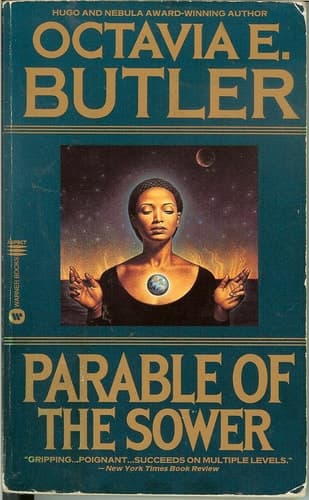
Parable of the Sower
by Octavia E. Butler
Butler's speculative fiction does something Baldwin's realism does—it takes the emotional and spiritual reality of Black American life and refuses to soften it or make it palatable. The novel's exploration of community, faith, and survival in a collapsing world carries the same moral weight and lyrical intensity as Baldwin's historical fiction.
View bookAbout James Baldwin
J
James Baldwin
1924–1987
James Arthur Baldwin was an American novelist, writer, playwright, poet, essayist and civil rights activist. Most of Baldwin's work deals with racial and sexual issues in the mid-20th century in the United States. His novels are notable for the personal way in which they explore questions of identity as well as the way in which they mine complex social and psychological pressures related to being black and homosexual well before the social, cultural or political equality of these groups was improved. Source and more information: https://en.wikipedia.org/wiki/James_Baldwin
View author page