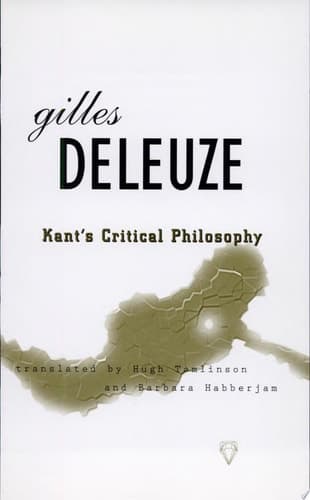
Kant's Critical Philosophy The Doctrine of the Faculties
Gilles DeleuzePublished1985
Pages80
Formatpaperback
PublisherU of Minnesota Press
Synopsis
Gilles Deleuze (1925-1995) was Professor of Philosophy at the University of Paris VII. He is a key figure in poststructuralism and one of the most influential philosophers of the twentieth century.
Kant's Critical Philosophy is an outstanding example of Deleuze's work and one of the best short introductions to Kant available. The book lays emphasis on Kant's own view of philosophy. Where most discussions of Kant's work concentrate on the Critique of Pure Reason and the moral philosophy, Deleuze gives a broad overview of the whole of the Critical Philosophy. The book makes an important and welcome contribution to the field of Kant studies.
Recommendations
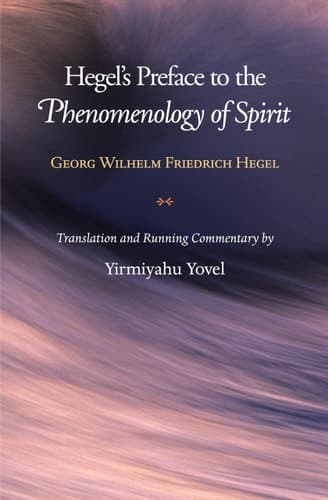
Hegel's Preface to the Phenomenology of Spirit
by Georg Wilhelm Friedrich Hegel
Since you've engaged with Deleuze's systematic unpacking of Kant's architectonic mind, Hegel's own monumental structure of consciousness will feel like the natural philosophical conversation partner—though where Deleuze emphasizes rupture and difference, Hegel traces dialectical synthesis. This is the text that haunts all poststructuralist thought, and reading it after Deleuze gives you the historical depth to understand what they're arguing against.
View book
The Order of Things An Archaeology of Human Sciences
by Michel Foucault
Foucault does for epistemology what Deleuze does for Kant—he excavates how knowledge itself is structured and historically contingent. You'll recognize the same poststructuralist sensibility here, but applied to how entire systems of thought emerge and dissolve across centuries, making Kant's Critical Philosophy look like one brilliant moment in a much larger genealogy.
View book
A Commentary on Jean-Paul Sartre's Critique of Dialectical Reason, Volume 1, Theory of Practical Ensembles
by Joseph S. Catalano
Sartre's monumental attempt to reconcile existentialism with Marxist materialism shares Deleuze's ambition to rethink foundational philosophical problems through a rigorous, almost architectural method. Where Deleuze reads Kant's faculties as generative forces, Sartre reads human freedom and social structures in constant tension—it's a different philosophical temperament but equally demanding and rewarding.
View book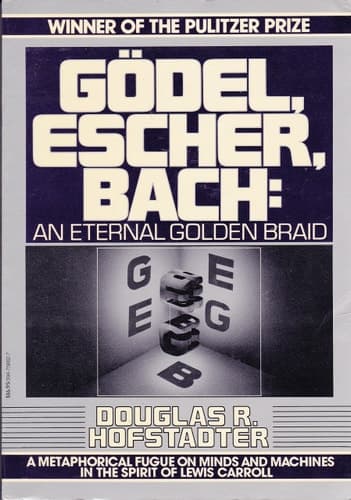
Gödel, Escher, Bach: An Eternal Golden Braid
by Douglas Hofstadter
Here's your surprise: this playful exploration of self-reference, recursion, and the limits of formal systems is doing something structurally similar to what Deleuze does with Kant—it's investigating how minds and systems organize themselves. But instead of dense philosophical prose, Hofstadter uses dialogues, Bach fugues, and Escher prints to make you *feel* the paradoxes rather than just think them. It's philosophy for readers who want their ideas embodied.
View book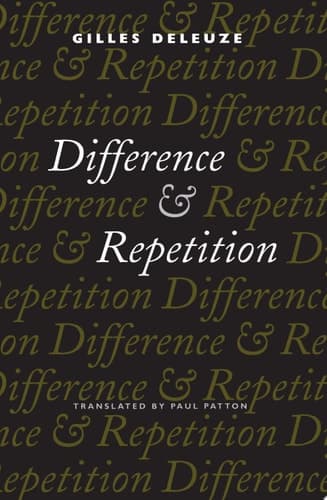
Difference and Repetition
by Gilles Deleuze
I know—same author, but this is where Deleuze fully deploys the conceptual toolkit he developed reading Kant. If *Kant's Critical Philosophy* showed you how Deleuze thinks *about* a philosopher, this book shows you how Deleuze thinks *with* philosophy to create his own system. It's denser, more demanding, but you'll recognize the moves now, and you'll see how the Kantian architectonic gets transformed into something entirely new.
View bookAbout Gilles Deleuze
Biography coming soon.
View author page