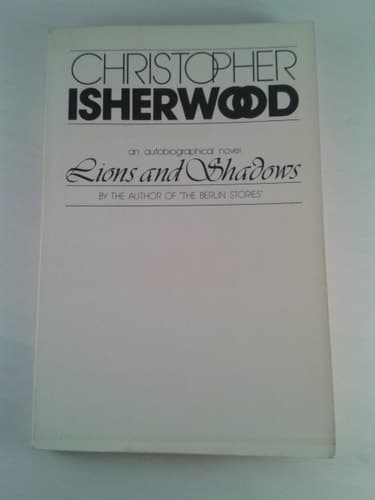
Lions and Shadows An Education in the Twenties
Christopher IsherwoodPublished2000
Pages312
Formatpaperback
PublisherUniversity of Minnesota Press
Synopsis
In 1938 the legendary Hogarth Press published the first of Christopher Isherwood's autobiographical writings, Lions and Shadows. The book evokes the atmosphere of Cambridge as Isherwood knew it and describes his life as a tutor, a medical student, and a struggling writer. Above all, Lions and Shadows is a captivating account of a young novelist's development in the literary culture of 1920s Cambridge and London and of his experiences as he forged lifelong friendships with his peers W. H. Auden, Stephen Spender, and Edward Upward.
Recommendations

The Berlin Stories
by Christopher Isherwood
I know—same author—but hear me out. You've just experienced Isherwood's reflective, intimate voice looking backward at his formative years. These interconnected stories show you the raw material he was living through in real time: 1930s Berlin with the same cast of characters and literary circles, but filtered through fiction rather than memoir. It's like watching the photograph develop.
View book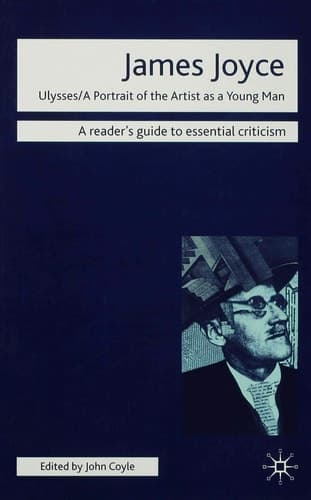
James Joyce - Ulysses/A Portrait of the Artist as a Young Man
by John Coyle
Joyce captures that same bildungsroman intensity—a young intellectual's consciousness shaping itself through university, friendships, and artistic ambition—but he does it through stream-of-consciousness rather than memoir reflection. Where Isherwood looks back with wry affection at his Cambridge years, Joyce puts you *inside* Stephen Dedalus's mind as he's actually living through the confusion and pretension of it all. The texture of intellectual life in both is remarkably similar, just experienced from opposite angles.
View book
One Day, when I was Lost A Scenario Based on Alex Haley's "The Autobiography of Malcolm X"
by James Baldwin
This is my surprise pick, but stay with me: like Isherwood, Malcolm X is writing about intellectual awakening and the friendships that shaped his thinking, but his memoir has an urgency and political dimension that Isherwood's Cambridge circles lack. Both writers are documenting how a young person becomes *themselves* through reading, conversation, and mentorship—but Malcolm X's stakes are incomparably higher. It'll deepen your appreciation for what Isherwood was doing with memoir as a form.
View book
The Loss of Traditional Values and Continuance of Faith in Evelyn Waugh's Novels: A Handful of Dust, Brideshead Revisited and Sword of Honour ... / Publications Universitaires Européennes)
by Annette Wirth
Waugh was writing about the same Oxford/Cambridge literary set in the same era, but with a novelist's eye for the absurdity and tragedy lurking beneath the aestheticism. Where Isherwood's tone is affectionate and slightly detached, Waugh is simultaneously satirizing and mourning the same world of privileged young writers. The narrator's retrospective voice—looking back at youthful friendships and artistic pretension—will feel familiar, but Waugh's darker undercurrent gives it a different emotional weight.
View bookAbout Christopher Isherwood
C
Christopher Isherwood
1904–1986
Biography coming soon.
View author page