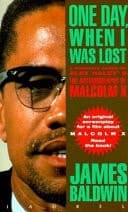
One Day, when I was Lost A Scenario Based on Alex Haley's "The Autobiography of Malcolm X"
James BaldwinPublished1990
Pages268
Formatpaperback
PublisherDell
Synopsis
James Baldwin's screenplay based on Alex Haley's now classic "The Autobiography Of Malcolm X makes immediate and terrfyingly real the stunning events that gave birth to a forceful, determined man . . . and created the atmosphere of hate that ultimately murdered him. Juxtaposing eloquence and violence, the highest of human ideals with the basest of human violence, this rare screenplay recreates Malcolm X as a symbol for his times . . . and as a flesh and blood black man who feels, loves, hates, and forgives through a life torn by pain, healed by faith, and finally ended by the bullets from a black brother's gun.
Recommendations
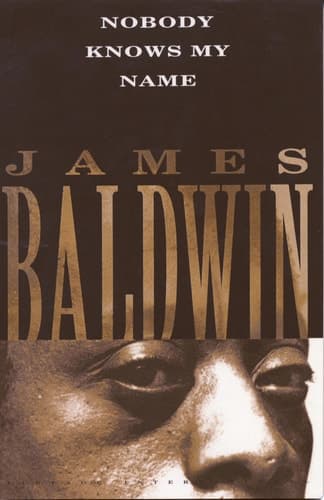
James Baldwin : Collected Essays : Notes of a Native Son / Nobody Knows My Name / The Fire Next Time / No Name in the Street / The Devil Finds Work / Other Essays (Library of America)
by James Baldwin
Wait—I know Baldwin just wrote your book, but hear me out: this essay collection is where Baldwin's moral fury and lyrical precision live in their purest form. If you found yourself moved by how the screenplay balanced Malcolm's humanity with the systemic violence surrounding him, these essays will show you Baldwin doing that same work in his own voice, wrestling with American racism and redemption with an intensity that'll stay with you.
View book
Ralph Ellison - Invisible Man
by Anke Balduf
Ellison's narrator navigates a world that refuses to see him as fully human—much like the social forces that shaped Malcolm X—but Ellison traces this invisibility through the narrator's own complicity and awakening. The novel has that same unflinching examination of identity formation under systemic pressure, but told from the inside of a consciousness being shaped and reshaped by competing ideologies.
View book
A Brief History of Saudi Arabia
by James Wynbrandt
James constructs his narrative around the 1976 assassination attempt on Bob Marley—a moment of political violence in Jamaica that echoes Malcolm's own murder. What makes this work for you is how James fragments the story across multiple voices and timelines, showing how a single violent act ripples through a community's consciousness, much like Baldwin's screenplay captures the atmosphere of hate that culminated in Malcolm's death.
View book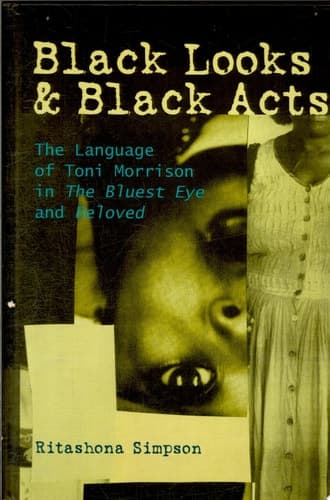
Black Looks & Black Acts The Language of Toni Morrison in The Bluest Eye and Beloved
by Ritashona Simpson
Morrison examines how internalized racism destroys a Black girl's sense of self—it's a different angle than Malcolm's story, but it's asking the same devastating question: how does a society's hatred get absorbed into the bones of those it targets? Morrison's prose has that same lyrical intensity as Baldwin's, and she's unflinching about showing damage without ever losing sight of her characters' humanity.
View book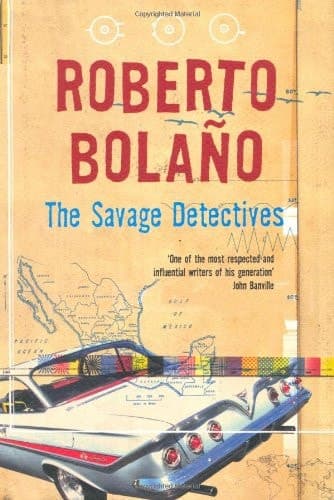
The Savage Detectives A Novel
by Roberto Bolaño
Here's your surprise pick: Bolaño's novel is a sprawling, chaotic pursuit of meaning across decades and continents, told through fragmented voices and obsessive documentation. It might seem far from Malcolm's biography, but both works share an interest in how ideology and personal transformation collide, and how the search for truth—whether spiritual, political, or literary—can consume a life. Bolaño captures that same sense of a world spinning toward violence and meaning simultaneously.
View bookAbout James Baldwin
J
James Baldwin
1924–1987
James Arthur Baldwin was an American novelist, writer, playwright, poet, essayist and civil rights activist. Most of Baldwin's work deals with racial and sexual issues in the mid-20th century in the United States. His novels are notable for the personal way in which they explore questions of identity as well as the way in which they mine complex social and psychological pressures related to being black and homosexual well before the social, cultural or political equality of these groups was improved. Source and more information: https://en.wikipedia.org/wiki/James_Baldwin
View author page