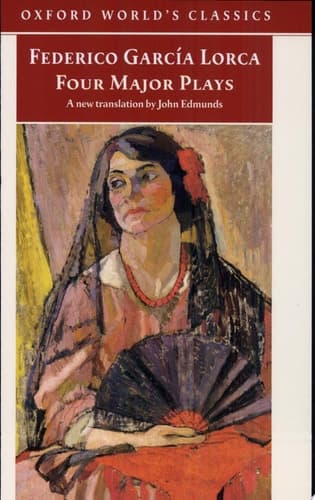
Five plays; comedies and tragicomedies
Federico García LorcaPublished1999
Pages234
Formatpaperback
PublisherOxford University Press
Synopsis
In his four last plays (Blood Wedding, Yerma, The House of Bernarda Alba, Dona Rosita the Spinster) Federico García Lorca offered his disturbed and disturbing personal vision to Spanish audiences of the 1930s---unready, as he thought them, for the sexual frankness and surreal expression of his more experimental work. The authentic sense of danger of Lorca's theatre is finely conveyed here in John Edmunds's fluent and rhythmic new translations that lend themselves admirably to performance.
Recommendations
The Maids.
by Jean Genet
Genet shares Lorca's gift for transforming domestic spaces into pressure cookers of desire and transgression, but he pushes even further into ritual and role-play. Where Lorca's women are trapped by social convention, Genet's characters actively perform their own entrapment—the theatrical artifice becomes the point rather than the vehicle.
View book
The Apocalyptic Vision of Mikhail Bulgakov's the Master and Margarita (Studies in Slavic Language & Literature)
by Edward E. Ericson
Published in 1967 (a different era entirely), this novel has the same unsettling blend of realism and the grotesque that Lorca achieved in drama. Bulgakov weaves together a Moscow love story with a Devil's visit to the city, creating that same sense of danger lurking beneath the surface of ordinary life—except here it's sprawling across 400 pages instead of confined to a stage.
View book
Georg Büchner, Woyzeck
by Georg Patzer
A 19th-century play that feels like it could have influenced Lorca directly—fragmented scenes of a man destroyed by poverty, military hierarchy, and a woman's infidelity. Büchner's dialogue is sparse and brutal in ways that anticipate modernism, and the emotional devastation builds through accumulation rather than grand speeches.
View book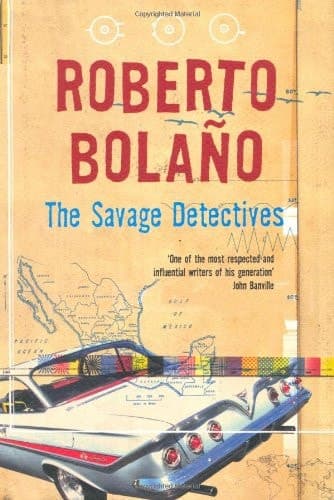
The Savage Detectives A Novel
by Roberto Bolaño
Here's the surprise: a sprawling, chaotic novel that captures something of Lorca's Spain (and Latin America more broadly) through the eyes of young poets chasing literary ghosts. Bolaño writes with the same sense of doom and sexual obsession as Lorca, but filters it through a detective story and decades of literary history—it's like watching Lorca's themes get refracted through a century of modernist experimentation.
View book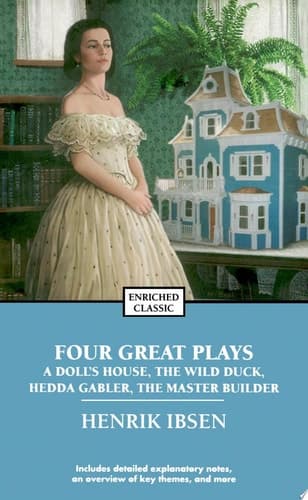
Four Great Plays of Henrik Ibsen A Doll's House, The Wild Duck, Hedda Gabler, The Master Builder
by Henrick Ibsen
Ibsen was writing about women trapped by social roles decades before Lorca, but what connects them is the moment of rupture—when the facade cracks and something true and terrible emerges. Nora's final door slam echoes through all of Lorca's heroines, and Ibsen's dialogue has that same deceptive simplicity that masks psychological complexity.
View bookAbout Federico García Lorca
Biography coming soon.
View author page