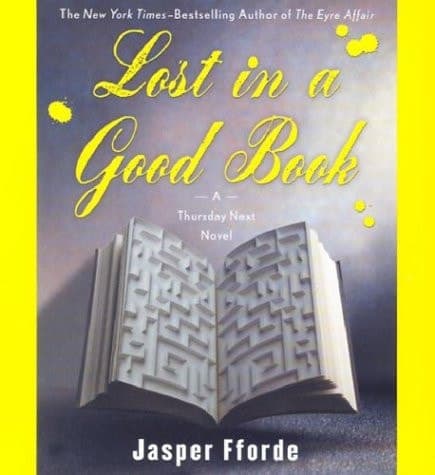
Synopsis
Thursday Next, literary detective and newlywed is back to embark on an adventure that begins, quite literally on her own doorstep. It seems that Landen, her husband of four weeks, actually drowned in an accident when he was two years old. Someone, somewhere, sometime, is responsible. Having barely caught her breath after The Eyre Affair, Thursday must battle corrupt politicians, try to save the world from extinction, and help the Neanderthals to species self-determination. Mastodon migrations, journeys into Just William, a chance meeting with the Flopsy Bunnies, and violent life-and-death struggles in the summer sales are all part of a greater plan. But whose? and why?
Recommendations

The Eyre Affair
by Jasper Fforde
Wait—I know you've likely read this since it's the first Thursday Next book, but if somehow you haven't, this is essential before continuing further into the series. It establishes the entire literary detective universe and Thursday's character in ways that make Lost in a Good Book even richer on rereading.
View book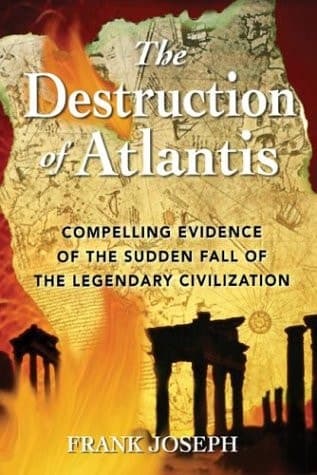
The Destruction of Atlantis Compelling Evidence of the Sudden Fall of the Legendary Civilization
by Frank Joseph
Like Fforde, Rainfield plays with the mechanics of how reality works—here, a teenage girl exists but no one can remember her or see her in photos. It has that same blend of high-stakes plotting (there's genuine danger) with moments of dark humor and the protagonist having to navigate a world operating by rules nobody else quite understands. The emotional core is heavier than Fforde, but the puzzle-box logic will feel familiar.
View book
The Apocalyptic Vision of Mikhail Bulgakov's the Master and Margarita (Studies in Slavic Language & Literature)
by Edward E. Ericson
Published in 1967, this Soviet novel shares Fforde's gift for weaving multiple timelines and realities together—here, a devil's visit to Soviet Moscow, a retelling of Pontius Pilate's story, and a doomed love affair all spiral into one another. Where Fforde mines English literature for his jokes, Bulgakov mines philosophy and theology, but both authors have that same anarchic energy and refusal to let plot follow conventional rules. Fair warning: it's denser and more philosophical, but the structural playfulness will delight you.
View book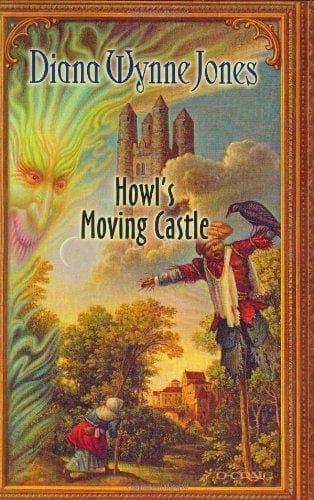
Howl's Moving Castle
by Diana Wynne Jones
Jones writes with Fforde's sense that the world operates on logic that's internally consistent but utterly bonkers—a young woman is cursed to age rapidly, so she befriends a wizard with a moving castle, and from there the plot spirals into curses, parallel worlds, and a war that may or may not be real. The dialogue crackles with the same kind of witty deflection Thursday uses, and Jones has that rare ability to make genuinely high stakes feel light and funny simultaneously.
View bookAbout Jasper Fforde
J
Jasper Fforde
Born 1961
Biography coming soon.
View author page