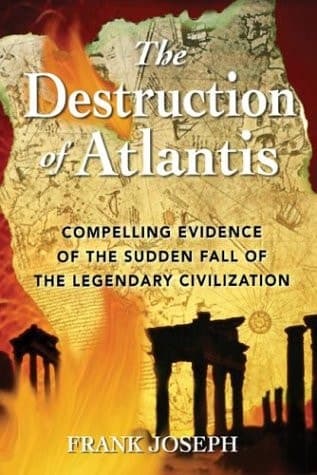
The Destruction of Atlantis Compelling Evidence of the Sudden Fall of the Legendary Civilization
Frank JosephPublished2002
Pages264
Formathardcover
PublisherBear
Synopsis
The most comprehensive reconstruction of the history and fate of the legendary ancient civilization of Atlantis.
• Draws together compelling evidence from geology, astronomy, myths, and ancient texts to prove the existence of Atlantean civilization and its catastrophic end.
• Includes a vivid narrative that re-creates the last days of Atlantis.
• Represents 20 years worth of research across the globe.
All human cultures, from classical and biblical to native North and South American, share the myth of an ancient deluge, often coinciding with a rain of fire from the heavens. What accounts for this shared myth of environmental catastrophe? Now, in The Destruction of Atlantis, author Frank Joseph links this worldwide cultural phenomenon to the story of the lost civilization of Atlantis, which in a single day and night disappeared into the sea in a violent cataclysm.
In the most comprehensive account of this legendary island, Joseph provides compelling evidence that Atlantis was at the root of all subsequent human civilizations. Brilliantly refuting years of modern skepticism, Joseph combines evidence from archaeology, geology, astronomy, and ancient lore to locate Atlantis in the context of Near Eastern Bronze Age society at the end of the 13th century B.C. The author seamlessly combines hard scientific evidence with a stunning imaginative re-creation of what it must have been like to walk the streets of Atlantis in its last days. The resulting portrait of a mighty empire corrupted by an overreaching lust for wealth and power offers an important lesson to our own materialistic civilization poised on the brink of ecological disaster.
Recommendations
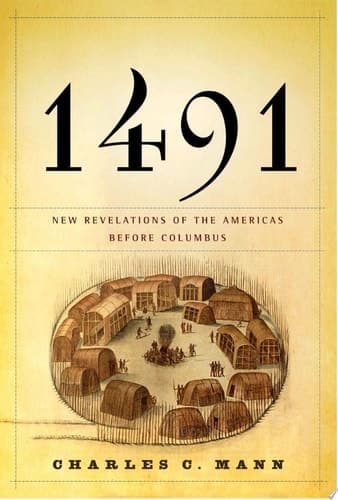
1491 New Revelations of the Americas Before Columbus
by Charles C. Mann
Mann does what Joseph does—he takes conventional wisdom about ancient civilizations and systematically dismantles it using archaeology, geology, and overlooked historical evidence. Like Joseph, he's synthesizing decades of research across multiple disciplines to argue that we've fundamentally misunderstood a lost world, and his narrative style alternates between rigorous evidence and imaginative reconstruction of how people actually lived.
View book
Fingerprints of the Gods
by Graham Hancock
Hancock shares Joseph's fascination with connecting global myths to actual geological events, and he similarly argues that mainstream archaeology has missed crucial evidence of an advanced ancient civilization. Both authors examine flood myths across cultures and propose that catastrophic natural disasters shaped human history in ways we're only beginning to understand—though Hancock pushes the timeline back even further.
View book
The End of the World as We Know It
by Kathryn Balteff
Here's where I'm sending you slightly sideways: Orlov applies rigorous systems analysis to civilizational collapse, examining how complex societies actually fail. Joseph's closing observation about our own materialistic civilization "poised on the brink of ecological disaster" is exactly what Orlov explores—but through modern economics and infrastructure rather than ancient history. It's the same warning, different lens.
View book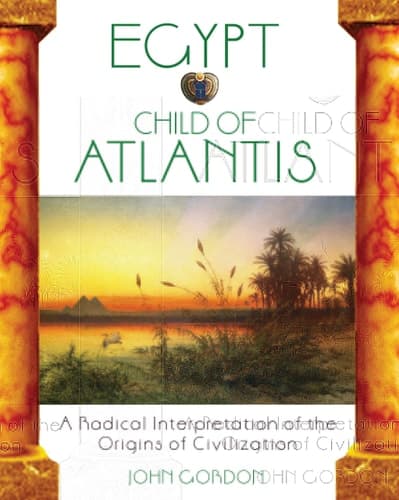
Egypt: Child of Atlantis A Radical Interpretation of the Origins of Civilization
by J. S. Gordon
Wilson brings a different investigative approach to Atlantis than Joseph—he's less interested in pinpointing the exact location and more fascinated by the technological and spiritual knowledge the ancients supposedly possessed. Where Joseph reconstructs the catastrophe, Wilson reconstructs the culture itself, and the two books complement each other like archaeological digs from different angles.
View book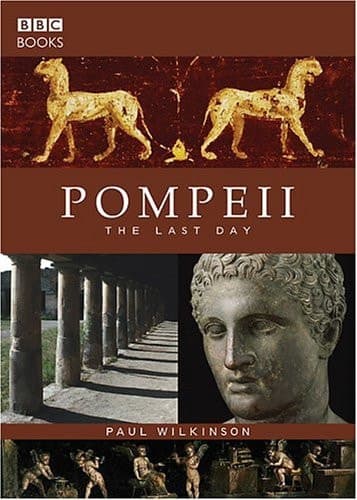
Pompeii The Last Day
by Paul Wilkinson
This is a more recent work (2017) that gives you something Joseph's 2002 book couldn't: modern forensic archaeology applied to a sudden catastrophe we can actually verify. Lazer uses cutting-edge science to reconstruct the final hours of a real civilization destroyed in a day, which provides a fascinating counterpoint to Joseph's imaginative recreation—you'll see how historians now approach exactly the kind of sudden-destruction narrative Joseph describes.
View bookAbout Frank Joseph
Biography coming soon.
View author page