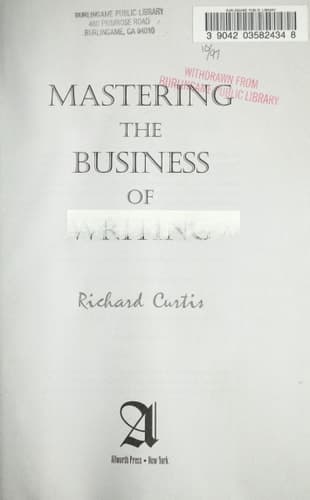
Mastering the Business of Writing
Richard CurtisPublished1996
Pages271
Formatpaperback
PublisherAllworth Pr
Synopsis
Mastering the Business of Writing is an unusual opportunity for aspiring and established professionals to benefit from an insider's straightforward take on the business of being a writer. A leading literary agent covers approaching the various markets, negotiating successful contracts, benefitting from agents, handling legalities, and strategies and skills that will benefit writers in today's publishing market.
Recommendations
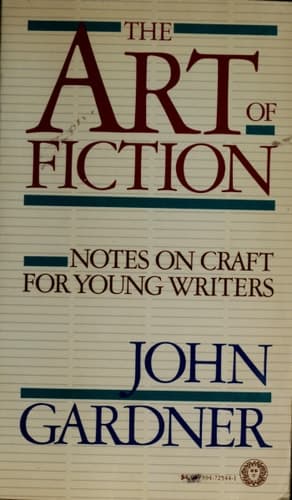
The Art of Fiction Notes on Craft for Young Writers
by John Gardner
Gardner writes like a mentor sitting across from you at a desk, breaking down the actual mechanics of how stories work—much like Curtis does for contracts and agent relationships. Where Curtis demystifies publishing infrastructure, Gardner demystifies the craft itself, and together they'd give you both sides of the professional writer's toolkit.
View book
Just My Luck A Novel
by Tajuana Butler
This is the surprise pick—it's ostensibly about typography, but Garfield writes it as a business and cultural history, tracing how design decisions ripple through publishing, marketing, and reader psychology. If you appreciated Curtis's eye for how the *business* side shapes what gets published, you'll find Garfield's examination of how fonts influence perception equally eye-opening.
View book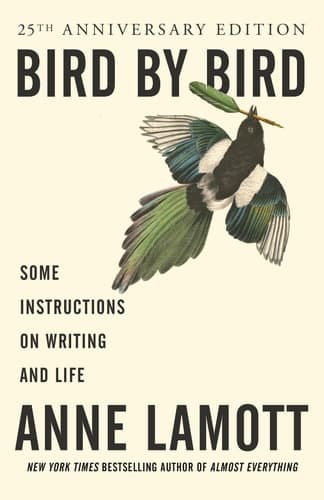
Bird by Bird Some Instructions on Writing and Life
by Anne Lamott
Lamott approaches writing advice through personal essay rather than Curtis's agent-desk perspective, but she's equally unflinching about the realities of a writing life—rejection, self-doubt, the actual economics of freelancing. Her warmth contrasts with Curtis's formality, but both refuse to romanticize the profession.
View book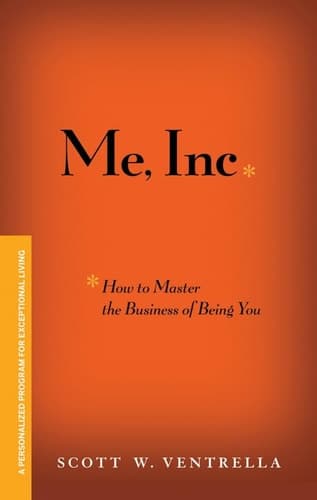
Me, Inc. How to Master the Business of Being You A Personalized Program for Exceptional Living
by Scott W. Ventrella
Published in 2013, this updates Curtis's 1996 framework for the digital age—self-publishing, social media presence, direct-to-reader sales. If you found Curtis's contract negotiation chapters useful but wondered how that advice applies now, Poynter shows you the landscape after Amazon and Kickstarter changed everything.
View book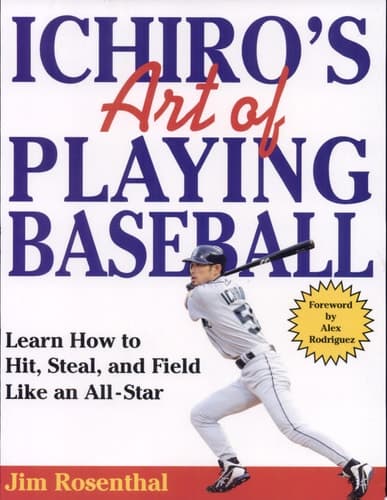
Ichiro's Art of Playing Baseball Learn How to Hit, Steal, and Field Like an All-Star
by Ichirō Suzuki
Kleon writes about the creative life as a series of practical, almost counterintuitive moves—how to build an audience, protect your work, navigate influence and originality. It's less about contracts than Curtis, but it fills the gap he doesn't address: how to think like a professional creator *before* you have an agent or a deal.
View bookAbout Richard Curtis
R
Richard Curtis
Born 1956
Biography coming soon.
View author page